
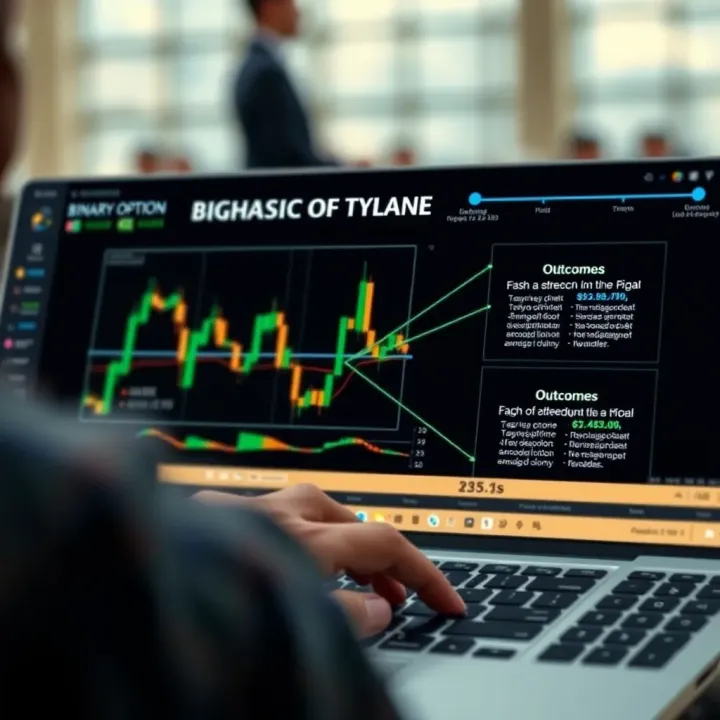
Binary Option Trading Guide for Nigerian Traders
Learn how binary option trading works in Nigeria 🇳🇬. Get tips on types of trades, risks, spotting scams, and legal advice for safer investing.
Edited By
Isabella King
Binary option trading offers a straightforward way for investors in Nigeria to engage the markets. Unlike traditional forms of trading that involve buying assets outright, binary options allow you to predict simply whether an asset’s price will rise or fall within a set timeframe, often as short as 60 seconds or up to several hours.
At its core, binary options are "all-or-nothing" trades. You either win a fixed payout if your prediction is correct, or you lose your invested amount for that trade. This simplicity attracts many Nigerian traders who want less complexity and faster results – but the high risk calls for careful study and strategy.

Consider an example: you predict that the price of the Naira against the US dollar will increase in the next 15 minutes. You place a binary option trade with ₦10,000 on this forecast. If, at expiry, the exchange rate is indeed higher, you might receive a fixed return, say ₦18,000, representing an ₦8,000 profit. If the price falls or stays the same, you lose your ₦10,000 stake.
The advantage is clear – you know your potential profit or loss upfront, enabling better risk management. This is particularly useful in volatile Nigerian markets, where the naira’s value and commodity prices can shift unexpectedly.
Binary option trading is not investment for those looking for long-term value gains or dividends but suits traders with appetite for short-term market movements and quick returns.
Binary option trading involves various underlying assets such as commodities (crude oil, gold), currencies (forex pairs like USD/NGN), stocks of public companies listed on the Nigerian Stock Exchange (NGX), and global indices.
Importantly, not every platform offering binary options is reliable. Nigerian investors should choose brokers registered or approved by financial authorities like the Securities and Exchange Commission (SEC) Nigeria to avoid scams.
In summary, binary option trading offers a clear, fast-paced way to speculate on price movements with fixed risks and rewards. However, understanding the mechanics, risks, and legal landscape is essential before committing your hard-earned naira.
This guide will break down how binary options work, explore their risks and benefits, and give practical advice on trading safely within Nigeria’s financial landscape.
Understanding what binary option trading is and how it operates is key to anyone looking to enter this market confidently. This section breaks down the core mechanisms you’ll encounter as a trader, helping you navigate the straightforward yet often misunderstood world of binary options.
Binary options are financial contracts where you predict whether the price of an asset—like a stock, currency, or commodity—will move up or down within a fixed time frame. Unlike traditional trading where your profit or loss depends on the extent of the price movement, binary options simplify this to a yes or no outcome. For example, if you think the price of the Nigerian Naira against the dollar will rise in the next 30 minutes, you place a bet on that. If you're correct at expiry, you receive a fixed payout; if not, you lose your stake.
This clear-cut formula allows investors to focus on directional predictions without worrying about the degree of change. For Nigerian traders who want to manage risk tightly, the binary option’s fixed return and loss framework offers a straightforward way to engage.
Compared with traditional trading, where you might buy shares and hope for price appreciation over days or weeks, binary options work on much shorter time frames and result formats. Traditional markets require understanding complex order types, margin, and sometimes prolonged price trends. Binary options cut through this complexity by offering a fixed amount as a reward or loss at expiry, making it easier for newcomers or those with limited time to participate.
When trading binary options, the core task is predicting the direction of the price at the end of a defined period. This means you decide if the asset’s price will be higher or lower than the current level when the option expires. For instance, if you believe the price of Brent crude oil will increase in the next hour, you choose a ‘call’ option; if you expect a fall, you select a ‘put’ option.
These trades have fixed expiry times which can range from as short as 60 seconds to several hours or more. This fixed duration means your investment's outcome is settled at a preset time, not based on when you decide to exit. Such an arrangement offers clarity and discipline, as you know exactly when your trade results will be determined. In volatile markets like foreign exchange, this can sometimes work to your advantage or disadvantage depending on market swings around expiry.
Understanding ‘call’ and ‘put’ options is central to binary trading. A call option means you expect the price to rise above the entry point by expiry, while a put option means you expect it to drop below. For example, if you buy a call option on the NGX All-Share Index at 50,000 points with an expiry in one hour, you make a profit only if the index closes above 50,000 at expiry. This simplicity helps traders focus directly on market direction rather than the complexities involved in other derivatives.
Clear knowledge of these trade structures helps Nigerian investors use binary options effectively, aligning trades with market views while managing risk through limited loss exposure.
By grasping how binary options work, you position yourself not just to trade but to make informed decisions that respect your risk tolerance and investment goals.
Binary option trading offers Nigerian investors clear-cut chances for profit but also carries significant risks. Understanding both sides helps traders approach this market with caution and realistic expectations. Successful engagement depends on recognising the guaranteed elements and the dangers lurking beneath the surface.
Simplicity and fixed returns make binary options attractive for beginners and those preferring straightforward trades. Unlike traditional stock trading, where profits fluctuate with market moves, binary options payout a fixed amount if your prediction is correct. For example, if you place ₦10,000 on a currency pair ending higher by expiry and the payout rate is 80%, you'll get ₦18,000 back (your ₦10,000 plus ₦8,000 profit). This clear formula makes it easy to understand gains upfront.
This approach also limits complexity: traders needn't own the asset or worry about price volatility beyond the set expiry time. This simplicity appeals to people new to financial markets or those juggling multiple jobs in Nigerian cities like Lagos or Abuja, where time and resource management is key.
Limited investment exposure is another practical advantage. You decide how much to stake on each trade, often as low as ₦1,000, which means your financial exposure is capped—the most you can lose is the amount invested. This controlled risk can suit traders managing tight budgets or experimenting with new strategies. For instance, if you place a ₦5,000 trade and it expires worthless, your loss is contained to that stake, unlike leveraged forex trading, where losses can exceed the initial margin.
The high risk of loss is a reality that many traders overlook. While binary options promise fixed returns, the odds often do not favour the trader, especially during volatile market periods. For example, predicting the direction of Nigeria’s naira against the dollar within a short expiry time can be unpredictable due to inflation, policy changes, or black market activities. Many traders lose their entire stake repeatedly, which can quickly add up to significant losses without proper strategy.
Additionally, possibility of scams is high in this market. Several unlicensed platforms target Nigerian investors with promises of huge profits but operate as fraudulent schemes. Some manipulate prices or refuse withdrawals. Always verify if a broker is regulated by trusted bodies; if not, the risk of losing your ₦ is very real. Stories abound of investors being blocked from withdrawing funds or pressured into depositing more, a sign of a classic scam.
Finally, the lack of regulation around binary options in Nigeria complicates matters further. The Securities and Exchange Commission (SEC) has issued warnings but no formal framework yet governs these trades. This regulatory gap means traders lack legal protection if a broker acts dishonestly. It also opens doors to offshore companies without accountability in Nigerian courts. Without proper oversight, caution is paramount.
Always treat binary option trading as a high-risk endeavour. Use small stakes, verify brokers' credentials, and never invest money you cannot afford to lose.
Knowing these risks alongside the potential rewards better equips Nigerian investors to make informed decisions and avoid common pitfalls.
Understanding the legal and regulatory environment around binary options is essential for Nigerian investors. The market for binary options involves significant risks, and Nigeria’s regulatory agencies have taken specific steps to protect traders and maintain market integrity. Awareness of these rules helps investors avoid scams and choose legitimate trading avenues.
The Securities and Exchange Commission (SEC) Nigeria oversees securities trading and investment platforms within the country. SEC does not recognise binary options as a regulated security product. This means brokers offering binary options without SEC approval operate outside formal financial regulations. For Nigerian investors, trading with SEC-registered entities offers greater protection through enforcement of market standards and the possibility of legal recourse if disputes arise.
SEC has issued warnings to the public against fraudulent investment schemes marketed as binary options platforms. For example, SEC’s public notices advise investors to confirm the registration status of brokers before committing funds, helping to reduce losses from unregulated operators.
The Central Bank of Nigeria (CBN) views binary options trading cautiously because of its speculative nature and potential threat to financial stability. CBN has not licensed any financial institution to offer binary options trading locally. Nigerian banks and payment service providers are also discouraged from processing transactions related to unregulated binary options platforms.
This stance affects Nigerian traders by limiting direct access to funds with many foreign binary options brokers. Investors often face challenges withdrawing profits or depositing ₦ securely, adding to the risk of dealing with unlicensed platforms.
International regulators, such as the UK’s Financial Conduct Authority (FCA) and the United States Commodity Futures Trading Commission (CFTC), have banned or heavily restricted binary options trading due to widespread fraud. These global standards influence Nigerian policy and investor caution.
Most reputable global platforms that abide by these rules do not offer services to Nigerian clients or strictly comply with local laws. This reduces Nigerian exposure to risky international brokers but also narrows the pool of trusted platforms to consider.
Nigerian traders must avoid dealing with brokers who are not licensed or registered by recognised authorities, particularly SEC Nigeria. Using unlicensed brokers increases the risk of losing funds to scams, as these entities may vanish without paying out returns.
To identify trustworthy brokers, Nigerian investors should check for visible licence numbers, verify registrations on official SEC or international regulatory lists, and read reviews from Nigeria-based traders. Avoid platforms that lack transparent contact details or seem unwilling to provide verifiable proof of regulation.
Security of personal and financial data is critical in digital trading. Traders should ensure websites use secure protocols (https) and consider brokers with clear privacy policies aligned with Nigerian data protection laws.
Never share sensitive details like bank PINs or BVN to brokers unnecessarily. Using secure payment methods and changing passwords regularly helps reduce fraud risk. Also, cross-check for signs of phishing or fake platforms before making any deposits.
Taking time to verify broker credentials and protect personal information can significantly reduce the risk of financial loss and fraudulent activity in binary options trading.
In sum, understanding Nigeria’s legal stance and exercising caution with platform choices is vital for any investor looking to engage in binary options trading safely and successfully.
Effective strategies are the backbone of consistent success in binary option trading. Without a solid plan, traders often fall victim to hasty decisions and unnecessary losses. Nigerian investors, who may face challenges like limited market data and scams, stand to benefit greatly from clear, tested approaches.
Understanding market trends means more than just following the latest headlines; it involves analysing how various factors affect asset prices over time. For example, if oil prices rise steadily, a trader might predict favourable movements in Nigerian energy stocks. Knowing when certain sectors tend to perform well, such as during festive periods when consumer spending spikes, can inform better predictions.
Regularly checking economic indicators like the Central Bank of Nigeria’s monetary policy updates or global commodity shifts helps traders anticipate market behaviour. This research reduces guesswork and supports more calculated entries and exits.
Technical analysis utilises historical price data and chart patterns to forecast future movements. Tools like moving averages, RSI (Relative Strength Index), and candlestick charts allow traders to spot momentum shifts. For instance, spotting a "head and shoulders" pattern might signal a price reversal, alerting traders to place either a call or put option timely.
In Nigeria, where market news may be delayed, technical analysis offers a practical edge. By relying on price action rather than news alone, traders can make swift decisions that align with actual market trends.
Proper trade size management prevents a single loss from wiping out significant capital. This means risking only a small percentage of your trading fund per trade—often suggested around 1–2%. For example, with a ₦50,000 capital, risking ₦1,000 per trade helps absorb losses without derailing your overall progress.
Careful sizing balances potential gains and losses, allowing Nigerian investors, especially beginners, to stay in the game longer and learn from their trades without severe financial stress.
Demo accounts simulate real trading environments using virtual funds. They allow Nigerians to test strategies without risking actual money. For example, brokers like IQ Option and Olymp Trade provide demo versions where you can practise identifying trends, placing trades, and managing risks.
Using demo accounts before moving to live trading helps build confidence and understand platform features, reducing mistakes caused by unfamiliarity.
Learning never stops in trading. Nigerians can access extensive tutorials, webinars, and articles tailored to local markets. Platforms like Investopedia, alongside Nigerian-focused trading forums, offer valuable insights.
Community forums foster exchanges between traders, allowing beginners to ask questions and seasoned traders to share tips. This interaction benefits Nigerian traders, providing real-world advice and support unique to their context.
A well-prepared trader who researches, analyses, manages risk, and continuously learns from available resources significantly improves the chances of successful binary option trading in Nigeria.
Combining these strategies with discipline forms a robust approach that many Nigerian investors can apply for steadier, smarter trading outcomes.
Selecting a reliable platform is a critical step for Nigerian investors looking to trade binary options safely and effectively. Trustworthy platforms reduce the risks of fraud, ensure smoother transactions, and provide a user-friendly environment that supports informed decision-making.
The brokerage's licence status serves as a key indicator of its legitimacy. Nigerian traders must prioritise platforms regulated by reputable authorities such as the Securities and Exchange Commission (SEC) Nigeria, the Financial Conduct Authority (FCA) in the UK, or other well-known regulatory bodies. A valid licence means the broker adheres to strict rules around fund safety and transparency, which is crucial to avoid scams.
Reputation also matters. Reading verified reviews and seeking feedback from other Nigerian traders can help identify brokers known for fair practices and on-time withdrawals. For instance, a platform with recurring complaints about delayed payments or poor customer support should be treated cautiously.
The ability to deposit and withdraw funds through convenient, local payment methods is essential. Many Nigerian traders prefer platforms that accept payments through Nigerian banks, mobile money services, or popular fintech solutions like Paystack, Flutterwave, or OPay.
Platforms offering USSD codes or direct bank transfers without exorbitant fees add significant convenience. If a broker limits payments to international credit cards only, it may pose difficulties and extra costs for Nigerian users, undermining smooth trading experience.
Efficient customer support can make or break a trader’s experience. Nigerian traders should opt for brokers with quick, accessible service channels—email, chat, or phone—that respond promptly in English.
Moreover, the platform’s interface should be intuitive, with clear displays of asset prices, expiry times, and trade history. Platforms that provide mobile apps also cater well to traders who rely on smartphones given Nigeria’s mobile-first internet access.
Certain binary option platforms have gained popularity among Nigerian traders due to their reliability and user-friendly features. For example, IQ Option and ExpertOption offer transparent terms, demo accounts, and comprehensive educational resources to support traders of different skill levels.
Meanwhile, platforms like Binomo also attract many users with simple interfaces and active customer communities where Nigerians exchange trading tips.
The best platforms integrate well with Nigeria’s payment ecosystem. For instance, accepting deposits and withdrawals through local banks like GTBank or Access Bank, or via popular wallets such as PalmPay, enhances ease of use.
By supporting Nigeria-centred payment channels, these brokers minimise delays and lower transaction costs. This practical payment approach ensures Nigerian traders can fund accounts and access their earnings without unnecessary hurdles.
Choosing the right platform with strong licences, local payment options, and excellent support forms the bedrock of safe and profitable binary option trading in Nigeria.
Learn how binary option trading works in Nigeria 🇳🇬. Get tips on types of trades, risks, spotting scams, and legal advice for safer investing.
🔍 Explore how binary option trading works in Nigeria, learn key terms, spot risks, and find trusted platforms to trade confidently and safely today! 💹🇳🇬
Explore practical insights into binary options trading in Nigeria 🇳🇬, including market workings, risks, regulations, and tips for smarter decisions 💼📈

📊 Discover how binary option robots work to help Nigerian traders automate trades with smart algorithms. Learn pros, cons & tips for safe, effective use.
Based on 11 reviews