
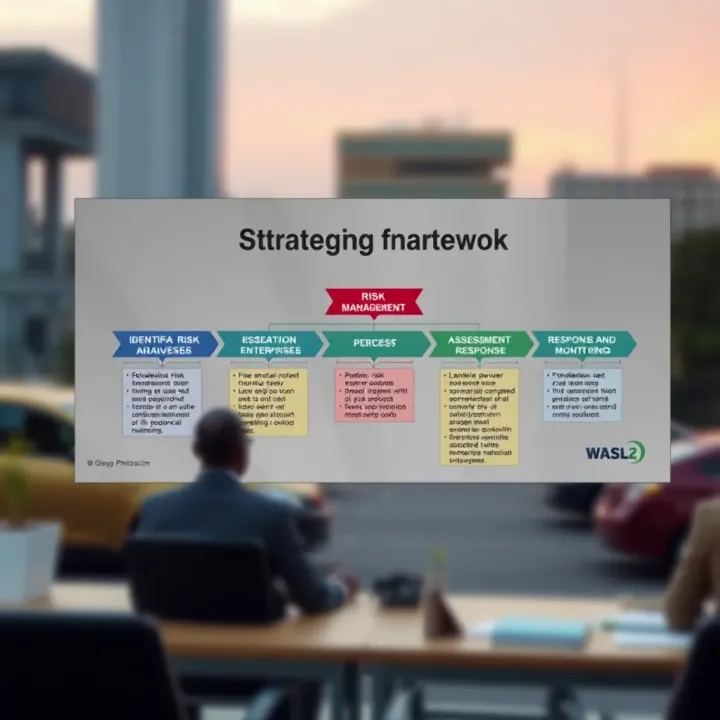
Strategic Risk Management for Nigerian Businesses
📊 Learn how Nigerian businesses can manage strategic risks amid market swings, regulatory updates, and operational challenges to safeguard growth and profits.
Edited By
Amelia Wright
Every Nigerian business, whether a bustling trading firm in Lagos or a growing agro-processing outfit in Kaduna, must have a solid grip on risk management from the very beginning. Starting the risk management process means recognising potential threats that could disrupt operations or drain finances, then setting out a clear plan to tackle them. It saves companies from surprises that could otherwise lead to losses of ₦millions or worse.

Nigeria’s business environment is full of variables — from fluctuating naira exchange rates to infrastructural challenges like erratic power supply and fuel scarcity. If you leave risk unaddressed, you might find yourself caught in last-minute firefighting rather than strategic problem-solving. Kicking off early with risk management helps you spot trouble before it grows into a crisis.
Risk Identification:
This is about spotting the risks your business faces. These could be economic, such as inflation pushing up costs; operational, like generator failure; or even regulatory, like changes in tax policy by the Federal Inland Revenue Service (FIRS).
Conduct brainstorming sessions with your team or use real case scenarios your industry has faced, for example, a logistics company considering the impact of danfo strikes in Lagos.
Risk Assessment:
After identifying risks, you need to evaluate their likelihood and impact. Which risks could shut down your operations? Which ones might cause small but steady financial leaks?
Use simple tools like a risk matrix to rank risks, focusing your effort on those that can cause big damage.
Risk Planning:
This step is about deciding what actions to take. Will you avoid, reduce, transfer, or accept the risk? For instance, you might decide to buy insurance for cargo shipment to mitigate losses from potential theft, a very real problem in some transport corridors.
Communication and Documentation:
Put your findings and plans in writing. This record helps guide your team and serves as evidence if regulators or investors ask about your risk controls.
Getting risk management started is not a one-off event but an ongoing process. The earliest steps build the foundation for protecting your business’s future.
Businesses that manage risks well often survive Nigeria’s embers months turmoil and even thrive during economic shocks. Starting right means you can deal with life’s twists — be it forex shortages or supply chain hiccups — with confidence.
Keep in mind, no one-size-fits-all; tailor your risk process to your sector, region, and business scale. This practical approach sets the stage for deliberate, clear-headed decisions aimed at shielding your enterprise and your hard-earned naira.
Understanding why risk management matters is the first step Nigerian businesses must take to protect themselves from avoidable loss. Every firm, whether a small mama put or a large factory in Aba, faces uncertainties—from daily market fluctuations to power outages affecting production. Recognising that these risks exist is crucial because ignoring them can lead to severe financial strain or operational failure. For example, a Lagos-based textile company that overlooks supply chain risks might suddenly find it hard to get imported fabrics, halting production for weeks.
Nigerian businesses operate in a uniquely challenging environment marked by economic volatility, infrastructure gaps, and regulatory changes. Prioritising risk management helps companies stay resilient in the face of these challenges. Consider the impact of sudden naira depreciation on imported goods cost or the fuel scarcity that drives up running generator expenses. Businesses without proper plans often pass these costs to customers or absorb heavy losses. On the other hand, those with strong risk processes can adapt quickly, securing alternative suppliers or adjusting pricing strategies before losses accumulate.
Moreover, risk management increases investor confidence. Nigerian investors and analysts pay close attention to how firms manage risks, especially in sectors like fintech and oil & gas where the stakes are high. A company that transparently identifies and deals with risks signals that it is serious about long-term growth and protects shareholders' interests. This, in turn, makes access to finance and partnerships more straightforward.
Nigerian businesses face a mix of operational, financial, and regulatory risks that vary by location and sector. Key examples include:
Economic Instability: Frequent currency fluctuations and inflation affect input costs and pricing strategies.
Power Supply Issues: Unreliable electricity forces many businesses to rely on costly diesel generators, inflating operational costs.
Security Concerns: From petty theft to organised crime, physical security risks disrupt daily activities, especially in volatile regions.
Regulatory Changes: Sudden changes in tax laws, import bans, or industry regulations require quick adaptation.
Supply Chain Disruptions: Delays and shortages caused by poor infrastructure or policy restrictions affect production timelines.
Understanding these risks is the foundation for building a solid risk management plan. Identifying how each factor can hit your specific business allows you to prepare concrete responses, reducing shock and enhancing continuity.
The sooner Nigerian businesses recognise and prioritise their unique risks, the better positioned they are to safeguard assets and seize opportunities in an often unpredictable market.
This initial awareness phase helps set the tone for proactive steps ahead, such as tailoring risk assessments and creating effective mitigation strategies that suit local realities.
Setting clear objectives and defining the scope are vital first steps in managing risk effectively within Nigerian businesses. They lay the foundation on which all risk assessment and mitigation efforts build. Without this clarity, businesses can waste time addressing irrelevant risks or miss out on critical threats that impact their core goals.

Risk management must complement the primary aims of an organisation. For example, a Lagos-based agribusiness targeting increased export to ECOWAS countries will have different risk priorities compared to a fintech startup focused on Lagos city alone. Aligning risk objectives with broader business goals ensures efforts directly protect and promote what the business values most.
Consider a retail company whose goal is to expand its chain of stores across southwestern Nigeria. Their risk management objectives might focus more on supply chain interruptions, regulatory compliance with local government policies, and physical security challenges. These targets keep risk efforts relevant and measurable.
Moreover, when risk goals reflect business aims, it becomes easier to communicate priorities internally. Board members, managers, and operational staff understand why certain risks demand urgent attention, while others can be monitored less frequently. This alignment sharpens decision-making and resource allocation.
Setting a clear scope for the risk process is equally important. Nigerian firms often face diverse and complex risks—from fluctuating naira exchange rates to unpredictable power supply. Attempting to tackle every potential threat without limits can overwhelm available capacity and dilute focus.
Defining boundaries involves deciding which parts of the business to assess, the types of risks to include, and timeframes to cover. For instance, a manufacturing outfit may decide to concentrate on operational and financial risks within the next 12 months, leaving strategic or reputational risks for later phases. This helps manage workload and ensures depth over breadth.
Also, boundaries clarify responsibilities. Different departments or regions within a business might face unique risks. For example, a tech company with offices in Lagos and Abuja may carry out separate assessments due to varying security and infrastructure challenges.
Setting specific, realistic scope and objectives keeps risk management practical and actionable. It prevents scattergun approaches and focuses effort where it matters most.
In practice, Nigerian businesses should document these objectives and scope clearly. This might include lists of key business objectives to protect, the geographical areas covered, risk categories considered, and the assessment period. Such clarity prevents confusion down the line and guides effective risk management tailored to the Nigerian context.
Identifying risks marks the first concrete step in the risk management process, laying the groundwork for all subsequent actions. For Nigerian businesses, this step is especially vital given the unique challenges such as infrastructural deficits, regulatory changes, and economic fluctuations. Pinpointing risks early ensures that firms can make informed decisions to safeguard their operations and naira assets before threats manifest into losses.
Practical approaches to discovering risks involve combining both traditional and context-specific methods. A widely effective technique is conducting detailed process mapping, where each business function—from supply chain logistics to sales—is examined systematically for weak points. For example, a Lagos-based trading company might map its delivery routes, paying attention to bottlenecks caused by heavy danfo traffic or frequent power outages affecting cold storage.
Another method is environmental scanning, which can reveal emerging economic, political, or social threats. For example, monitoring announcements from the Central Bank of Nigeria (CBN) or local government policies can highlight risks related to exchange rate volatility or fuel price hikes. Additionally, using scenario analysis helps businesses anticipate outcomes from unpredictable events such as protests disrupting market activities or sudden import restrictions.
Engaging those directly involved in day-to-day operations enriches risk identification. Employees often spot operational risks before management does. Encouraging open dialogue sessions or anonymous feedback channels allows frontline staff, like drivers or mama put operators contracted by the firm, to raise concerns without fear.
Besides internal input, including stakeholders such as suppliers, customers, and industry experts can reveal risks that might otherwise be overlooked. For example, a supplier may warn about potential delays due to seasonally poor road conditions or changes in import tariffs. Involving diverse voices helps create a more comprehensive risk profile, making it easier to prioritise real threats.
Early and thorough identification of risks is essential for Nigerian businesses to prevent costly surprises. By using practical techniques and actively gathering input from everyone involved, companies can build a solid base to manage risks effectively.
In summary, identifying risks is not just a paperwork exercise—it demands hands-on assessment and collaboration unique to the Nigerian business environment. This step helps traders, investors, and analysts recognise vulnerabilities clearly, setting the stage for well-targeted mitigation strategies.
Understanding the impact of risks is a crucial step for Nigerian businesses as they lay the foundation for effective risk management. This stage helps companies to quantify not just the chances of a risk happening but also the scale of damage it may cause. Without clear assessment, firms risk either ignoring serious threats or wasting resources on unlikely ones.
Businesses need to estimate two main factors: the likelihood of a risk event occurring and the possible consequences if it does. For example, a Lagos-based logistics company may evaluate the likelihood of road closures due to protests or danfo accidents as high because of frequent traffic problems. The consequence could be delays in deliveries, loss of clients, and increased operational costs. Assessing these together gives a clearer picture; a risk with low chance but catastrophic consequence, such as a major fire in a warehouse, demands attention even if rare.
A practical approach involves
Reviewing past incidents and industry reports
Consulting employees and local experts
Considering external factors like political stability and economic trends
Assigning qualitative terms like "high", "medium", and "low" or numeric scores helps standardise assessments for comparison.
Once you understand likelihood and consequence, next step is to prioritise risks. Not all risks warrant the same focus—some may need immediate action, while others require monitoring only. For example, a small boutique in Abuja might rank theft risk high due to past break-ins but rank hurricane risk low owing to geographic location.
Prioritisation allows firms to allocate resources efficiently. A risk that threatens business continuity, like currency fluctuations affecting import costs, should rank higher than minor operational hiccups. Creating a risk matrix chart—plotting likelihood against impact—can help visualise priorities clearly.
Accurate risk assessment and prioritisation enable Nigerian businesses to confront challenges head-on, protecting both their operations and naira investments.
Understanding these aspects of risk ensures your business prepares adequately rather than react blindly. The process sharpens your focus, improves decision-making, and strengthens resilience against the unpredictable Nigerian economic and social environment.
Clear documentation and communication of the risk management process's initial findings form the backbone of any effective risk strategy. In Nigeria, businesses face unique challenges—from fluctuating exchange rates to regulatory changes and infrastructural issues—that require precise record-keeping. Without proper documentation, it becomes difficult to track risks, monitor progress, or make informed decisions.
A risk register is more than just a checklist; it captures the nuances of your operating environment. For Nigerian businesses, it should include context-specific factors such as exposure to security challenges in particular regions, impact of fuel scarcity on logistics, and vulnerability to power disruptions causing downtime. The register must list each risk with a clear description, likelihood rating, potential impact (financial, operational, reputational), and assigned ownership.
For example, a Lagos-based logistics company might record the risk of danfo strikes impacting last-mile delivery, assigning a high likelihood and moderate impact rating. Including mitigation steps like alternative routing or partnerships with private keke operators would make the register actionable.
To keep the register relevant, regular updates are essential—especially during volatile periods like the ember months when risks tend to spike. Digital tools like Google Sheets or Nigerian fintech platforms with project management capabilities can help businesses maintain a live, accessible risk register even if resources are limited.
Communicating initial risk assessment results to key decision-makers ensures timely action and resource allocation. Presenting the risk register along with a concise summary of top priorities makes the information digestible. Nigerian business leaders often juggle multiple issues; therefore, focus on highlighting risks that threaten cash flow, regulatory compliance, or customer trust.
For instance, if a fintech company uncovers cyberfraud as a critical risk, the insights should prompt swift engagement with IT security teams and possibly investment in fraud detection systems. Using simple charts or heatmaps can illustrate risk severity and urgency effectively.
Beyond internal teams, sharing findings with external stakeholders—like investors or regulatory bodies—can demonstrate proactive governance and instil confidence. However, sensitive information must be carefully handled to avoid reputational damage or competitive disadvantage.
Efficient documentation and communication transform risk management from a paper exercise to a driving force that safeguards Nigerian businesses against surprises.
In summary, creating a customised risk register and actively sharing findings with decision-makers helps embed risk awareness into business culture, which is crucial for navigating Nigeria’s challenging economic environment.
📊 Learn how Nigerian businesses can manage strategic risks amid market swings, regulatory updates, and operational challenges to safeguard growth and profits.

Protect your Nigerian business from currency swings, power shocks, and changing laws with clear risk management steps 🔍💼. Stay resilient and grow your assets.

Learn practical steps in risk management for Nigerian businesses 🇳🇬. Identify, assess, and handle risks smartly to safeguard your assets and boost resilience 💼🔒.

🔍 Learn how Nigerian businesses can spot and manage risks smartly. Understand risk appetite, align with goals, and stay resilient in our unique regulatory and economic setup.
Based on 11 reviews