

Understanding Risk Management for Nigerian Businesses
Protect your Nigerian business from currency swings, power shocks, and changing laws with clear risk management steps 🔍💼. Stay resilient and grow your assets.
Edited By
Isabella Clarke
Strategic risk management is key for Nigerian businesses aiming to protect their long-term goals against unexpected disruptions. The Nigerian market faces unique challenges like currency fluctuations, regulatory shifts from bodies such as the Central Bank of Nigeria (CBN), and supply chain issues often caused by power outages or fuel scarcity. Understanding these risks and managing them proactively guards businesses from costly shocks.
Strategic risk goes beyond everyday operational hiccups; it deals with threats that could alter the direction or survival of a company. For instance, a fintech startup in Lagos must consider risks from security breaches that might erode customer trust—something that could cripple growth. Similarly, an agro-processing firm in the North must account for climate risk affecting crop yields, which impacts production and revenue.
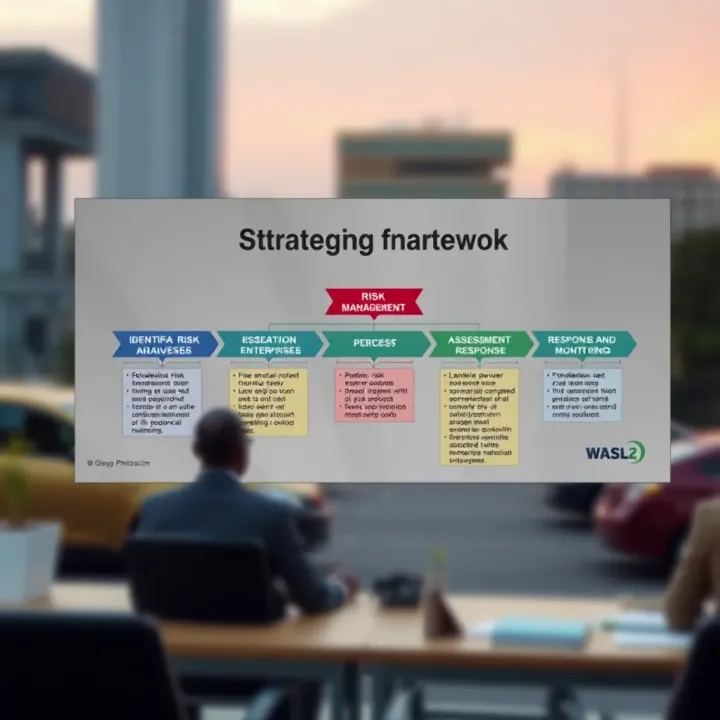
Effective strategic risk management involves four key steps:
Risk Identification: Pinpoint risks that can disrupt your business goals. This could range from regulatory changes in import tariffs affecting raw materials to shifts in consumer behaviour driven by economic conditions.
Risk Assessment: Evaluate the likelihood and potential impact of identified risks. For example, how probable is a currency devaluation, and what effect would it have on profit margins?
Risk Response: Develop strategies such as diversifying suppliers to reduce dependency on one source, or purchasing insurance to buffer against losses.
Risk Monitoring: Continuously track risk factors and adjust plans as needed. The business environment in Nigeria changes quickly, so staying alert helps prevent surprises.
Businesses that integrate strategic risk into their decision-making tend to navigate market swings better, ensuring steady growth even under difficult conditions.
By applying these practical steps, Nigerian businesses can turn uncertainty into manageable challenges, securing their future in a dynamic economy.
Strategic risk management involves identifying, assessing, and addressing risks that could derail a business from achieving its long-term objectives. For Nigerian businesses, understanding and defining strategic risk clearly is not just academic—it's essential to surviving volatile markets, fluctuating naira exchange rates, and evolving regulations.
A clear definition allows businesses to pinpoint risks that matter most to their growth and competitive edge. For instance, a fintech startup in Lagos must consider cybersecurity threats as a strategic risk because a breach could damage trust and investor confidence significantly. In contrast, a cocoa export company may prioritise risks linked to international trade policies and agricultural pests.
Strategic risks are uncertainties that affect an organisation's ability to meet its core goals. These risks often come from choices made about market direction, product development, partnerships, or resource allocation. Unlike everyday operational hiccups, strategic risks shape the future path of the business.
Take a Nigerian oil company deciding to invest heavily in renewable energy. The risk here is not just financial but also involves regulatory acceptance, customer demand shifts, and technology success. If these factors don't align as expected, the company may lose its market position or face costly adjustments.
It is crucial to distinguish strategic risks from other types of risks. Operational risks relate to daily activities—for example, a logistics company facing delays due to road repairs in Lagos or power outages affecting production lines in Aba. These are generally immediate and manageable with proper processes.
Financial risks, on the other hand, involve money matters such as credit risks, liquidity problems, or currency fluctuations like the naira’s exchange rate against the dollar. For example, a Nigerian importer might struggle if the naira weakens sharply against the dollar, increasing costs unexpectedly.
Strategic risks focus on broader issues affecting the business direction or market relevance. They require forward-looking assessments and decisions. Companies that mix these risk categories may miss the bigger picture or fail to prepare adequately.
Defining strategic risk distinctly helps Nigerian businesses allocate resources wisely, balance short-term operational needs with long-term ambitions, and respond proactively to a dynamic environment.
By understanding what strategic risk means and how it differs from operational and financial risks, businesses can sharpen their focus and enhance resilience in the face of challenges common to Nigerian markets.
Identifying and assessing strategic risks is the cornerstone of effective risk management. For Nigerian businesses, understanding which risks might derail long-term objectives allows for timely and targeted responses. This process reduces surprises, improves decision-making, and safeguards investments even amid Nigeria's market challenges, fluctuating exchange rates, and regulatory shifts.
Stakeholder interviews involve discussing with individuals and groups who influence or are affected by the business. These could be shareholders, senior managers, suppliers, or even loyal customers. In a Nigerian context, tapping into the knowledge of local distributors or market experts can reveal hidden risks such as supply chain disruptions caused by road closures or fuel scarcity.

By directly engaging stakeholders, businesses gather nuanced insights on emerging threats and opportunities. For instance, a regional manager might warn about community unrest affecting logistics, which might not be apparent in general reports.
SWOT (Strengths, Weaknesses, Opportunities, Threats) is a classic yet practical tool for risk spotting. It encourages businesses to critically look inward and outward, identifying internal weaknesses or external threats that could impact strategy.
In Nigeria, a firm might identify a strength in robust local networks but a weakness in dependence on volatile naira exchange rates. This analysis helps prioritise risks that stem from the business environment or internal constraints, making it easier to craft realistic mitigation plans.
Scenario planning helps organisations anticipate various future states by creating detailed "what-if" situations. It is particularly useful in Nigeria where economic and political climates can shift suddenly.
For example, a business might model scenarios like sudden fuel price hikes, changes in government policy on import licenses, or power outage durations increasing. This forward-looking approach prepares companies to adapt strategies swiftly, ensuring resilience amid uncertainty.
Risk ranking involves scoring identified risks based on their potential impact and how likely they are to occur. This step channels attention and resources to the most threatening risks.
For Nigerian businesses, assigning ranks helps manage limited resources efficiently. For example, a company may rate power supply interruptions as high impact and high likelihood due to frequent NEPA/DISCO challenges but rate cybersecurity threats lower.
A risk matrix is a visual tool that plots risks on a grid of impact versus likelihood. Nigerian firms can use this to easily communicate risk priorities to management and teams.
Plotting risks such as exchange rate volatility, political instability, or supply disruptions on this matrix clarifies which risks demand immediate action versus those acceptable for monitoring. It also aids in setting thresholds for risk tolerance, improving board-level discussions and strategy adjustments.
An effective identification and assessment system equips Nigerian businesses to spot risks early, weigh their seriousness, and channel efforts strategically — essential steps in protecting growth and maintaining competitive advantage in a challenging market.
Designing risk response strategies is a vital stage in strategic risk management, especially for Nigerian businesses navigating uncertain markets and regulatory environments. Once risks are identified and assessed, businesses must decide how to respond effectively to minimise negative impacts while seizing opportunities. This ensures that strategic goals remain achievable despite disruptions.
Responding to risk involves choosing between four main approaches: avoiding, reducing, transferring, or accepting the risk. Avoidance works when a risk threatens to derail an organisation’s objectives with severe consequences — for example, a fintech startup in Lagos may decide not to enter a high-risk market segment prone to cyberattacks.
Reducing risk aims at lowering its likelihood or impact. A typical example is a manufacturing firm investing in backup generators or uninterrupted power supplies to tackle Nigeria’s unreliable electricity, thereby reducing production downtime.
Transferring risk frequently involves insurance or contractual agreements that shift financial exposure to third parties. For instance, a logistics company handling fragile goods on Nigeria’s challenging road networks may use insurance policies to transfer damage risks, limiting potential losses.
Sometimes, businesses accept risks consciously when the cost of mitigation exceeds potential losses or when risks are minor. A small e-commerce merchant might accept occasional delivery delays due to traffic congestion, balancing cost and customer tolerance.
Effective risk response is a balance between cost, potential impact, and business capacity. Nigerian companies should tailor these strategies to local realities like inflation, infrastructure challenges, and regulatory shifts.
Contingency planning strengthens organisational resilience by preparing clear actions in response to risk materialisation. Nigerian businesses often face sudden policy changes or supply chain disruptions; without a plan, they may suffer operational paralysis.
A food processing company, for example, can set up alternative suppliers or temporary storage solutions to manage raw material shortages during border closures. Such plans should detail triggers, roles, resources, and communication protocols to activate swiftly.
By proactively building contingencies, companies limit downtime and maintain customer trust, reducing reputational damage and financial loss. Realistic simulations or drills help ensure readiness and uncover weaknesses.
In practice, integrating response strategies with contingency plans forms a robust framework to handle both foreseen and unexpected risks, improving long-term stability for Nigerian businesses operating in volatile environments.
Monitoring and reviewing risk management processes are essential steps that ensure a business’s risk strategies stay effective over time. Nigerian businesses operate in a dynamic environment marked by market volatility, regulatory shifts, and infrastructure challenges, so continuous oversight is not just advisable but necessary. Without regular monitoring, risks can evolve unnoticed, and earlier strategies may become obsolete. Tracking risk management progress helps leaders spot emerging threats or weaknesses early, allowing timely adjustments that protect long-term goals.
Key Risk Indicators (KRIs) are measurable signs that help businesses spot changes in risk levels before they escalate. Choosing relevant KRIs depends on the specific risks faced – for example, a manufacturing firm might track machine downtime rates as a risk indicator, while a financial services company could monitor loan default rates or currency fluctuations. Regular reporting of these KRIs to decision-makers keeps risk conversations active and grounded in data.
Effective reporting should be clear, concise, and timely. Nigerian companies can implement dashboards that update KRIs in real time using accessible spreadsheet software or simple business intelligence tools. These reports enable traders, analysts, and investors to grasp risk trends quickly, supporting better decisions. For instance, a spike in exchange rate volatility—tracked via KRIs—can prompt swift hedging or price adjustments, mitigating profit erosion.
Accurate and consistent risk reporting ensures the business stays alert and responsive in a fast-changing environment.
Nigeria’s business landscape shifts due to factors like monetary policy changes from the Central Bank of Nigeria (CBN), political developments, or variations in power supply reliability. Risk management plans designed last year might no longer be relevant today. Regularly reviewing risks and their controls ensures the business adapts quickly.
For example, rising inflation often affects input costs. A manufacturing company that monitored inflation-related KRIs can revise supplier contracts or adjust product pricing before costs spiral out of control. Likewise, regulatory changes around taxes or trade rules require immediate updates to compliance checks to avoid fines from agencies such as the Federal Inland Revenue Service (FIRS).
Periodic risk reviews also support learning from past incidents. If a logistics firm experienced disruptions due to road closures or fuel scarcity, revisiting risk scenarios helps update contingency plans, ensuring the business remains resilient.
In summary, persistent monitoring and reviewing of risk management processes are vital for Nigerian businesses to stay ahead. Regular KRI tracking and timely reporting feed the information loop, while ongoing adaptations ensure strategies keep pace with local realities. This approach not only safeguards operations but builds confidence among investors, traders, and stakeholders alike.
Strategic risk management is not a one-size-fits-all approach. Nigerian businesses face unique challenges that require tailored strategies. From exchange rate swings to regulatory shifts and infrastructural gaps, understanding these local factors can protect your business goals and give you a real edge.
Naira volatility poses a serious threat to business stability. Companies that rely on imported goods or foreign financing feel the pinch when the exchange rate jumps unpredictably. For example, a Lagos-based electronics retailer importing devices from China may see costs soar in a matter of days. Managing this risk involves hedging strategies such as forward contracts or using local sourcing alternatives where possible. Monitoring inflation trends also helps businesses adjust pricing and wage policies promptly, preventing erosion of profit margins.
Nigeria’s regulatory environment can change abruptly, with new policies or tax rules introduced by the Federal Inland Revenue Service (FIRS) or sector regulators. For instance, sudden changes in import duty structures or fintech regulations can disrupt operations. Businesses should establish a dedicated compliance team that keeps track of government communications and industry updates. Participation in industry associations also provides early warnings. Strategic risk management here means not only complying but anticipating regulatory shifts to adapt swiftly, avoiding fines or operational stoppages.
Infrastructure deficits remain a daily hurdle. Erratic power supply, poor road conditions, and limited broadband connectivity push costs up and complicate service delivery. A manufacturing firm in Aba that relies on daily fuel for generators faces higher operating expenses that eat into profits. Incorporating contingency plans like power backup systems, alternate logistics routes, or investing in digital solutions such as mobile money platforms can mitigate these risks. Practical strategies must consider local realities around transport, energy, and communication to build resilience.
Nigerian businesses that actively manage strategic risks related to exchange rates, regulations, and infrastructure are better positioned to survive shocks and spot growth opportunities.
By recognising these specific risk factors and preparing for them, Nigerian companies can safeguard their objectives and secure sustainable growth in a challenging market.
Protect your Nigerian business from currency swings, power shocks, and changing laws with clear risk management steps 🔍💼. Stay resilient and grow your assets.

Learn practical steps in risk management for Nigerian businesses 🇳🇬. Identify, assess, and handle risks smartly to safeguard your assets and boost resilience 💼🔒.

🔍 Learn how Nigerian businesses can spot and manage risks smartly. Understand risk appetite, align with goals, and stay resilient in our unique regulatory and economic setup.

Ensure your Nigerian business stays strong with practical compliance and risk strategies 📊. Learn how technology and monitoring cut costs and protect your ₦assets.
Based on 10 reviews