

Steps in Risk Management for Nigerian Businesses
Learn practical steps in risk management for Nigerian businesses 🇳🇬. Identify, assess, and handle risks smartly to safeguard your assets and boost resilience 💼🔒.
Edited By
Lucas Mitchell
Risk management is a necessary discipline for Nigerian businesses to survive and thrive in today’s unpredictable environment. Simply put, it’s about spotting potential threats to your assets and income, then taking steps to reduce their impact.
In Nigeria, businesses face unique risks compared to other markets. The naira’s frequent fluctuations, erratic power supply, delayed regulatory updates, and infrastructure challenges create hurdles that can quickly spiral out of control without proper planning.

Ignoring risk management is like driving a keke napep in Lagos without brakes — sooner or later, something will go wrong.
Currency Volatility: Businesses that rely on imported goods or foreign exchange earnings must manage foreign exchange risk to avoid sudden losses.
Power Supply Interruptions: Diesel and generator fuel costs add up quickly. Planning for alternative energy or energy efficiency can cut unexpected expenses.
Regulatory Changes: Nigerian laws and tax policies often change with little notice. Staying informed helps businesses avoid penalties and adapt smoothly.
Risk Identification: List all internal and external threats that could affect your operations. For example, a retailer should consider supply chain delays and inflation.
Risk Assessment: Evaluate how likely each risk is and its possible financial impact. This helps prioritise where to focus efforts.
Risk Control: Put measures in place—such as contractual clauses, insurance, or diversification—to reduce risks.
Monitoring: Risks evolve, so regular reviews keep your strategies fresh and effective.
Effective risk management is not just about defence; it’s a tool to unleash opportunities. A trader, for example, who understands market risks can identify when to buy or sell, benefiting from market swings rather than being blindsided by them.
In subsequent sections, we will explore practical tools and best practices tailored for the Nigerian business landscape, looking closely at real-world challenges and how to handle them with confidence.
Risk management involves recognising, evaluating, and handling potential threats that could harm a business’s goals or assets. In practice, this means putting systems in place to identify risks early—be they financial, operational, or legal—and planning ways to reduce their impact. For instance, a Lagos-based retailer might face risks from currency fluctuations affecting import costs. By understanding these risks upfront, they can adjust pricing strategies or negotiate better payment terms to maintain profits. The main purpose is to protect the business from surprises that could stall growth or cause losses.
Handling risks well keeps a business steady, even when unexpected challenges arise. Consider a manufacturing firm in Kano that regularly deals with power outages. By investing in reliable generators and planning production schedules around power availability, the business avoids costly downtimes. This practical approach not only keeps operations running but also builds trust with customers and suppliers. Businesses that ignore risk may find themselves scrambling during crises; those that prepare can maintain steady cash flow, protect their reputation, and continue to grow.
Many believe risk management is only about buying insurance or avoiding all risks, but it goes beyond that. It's not about eliminating risk entirely—that would be impossible, especially in Nigeria’s dynamic business environment—but about managing risks smartly. Another misconception is that risk management is only for large companies with formal structures. In reality, even small traders and startups benefit from assessing risks like fluctuating supply prices or changes in government policy. Some also think risk management is a one-off task, but it requires constant review and adjustment as business conditions evolve.
Effective risk management is a continuous process that helps Nigerian businesses navigate challenges from naira depreciation to power irregularities, giving them confidence to invest and expand.
In summary, risk management means more than paperwork or policies; it’s a practical toolkit to withstand shocks and seize opportunities in Nigeria’s complex market. With a clear understanding, businesses can move ahead securely and sustainably.
Understanding the types of risks Nigerian businesses commonly encounter is key to managing uncertainty and sustaining growth. These risks differ in nature but are interlinked, often impacting multiple parts of a business simultaneously. Knowing these specific challenges helps business owners and investors prepare practical measures to safeguard their operations and earnings.
Financial risks pose a constant challenge for Nigerian businesses, especially those dealing with imports, exports, or forex-sensitive transactions. The naira’s fluctuating exchange rate against the dollar and other major currencies can drastically affect costs and profit margins overnight. For example, a Lagos-based textile company importing raw materials might suddenly face a 20% increase in expenses due to naira depreciation. Inflation also erodes purchasing power, raising operational costs from fuel to staff salaries. Businesses without robust financial buffers or hedging strategies often find it difficult to maintain stable cash flow under these pressures.
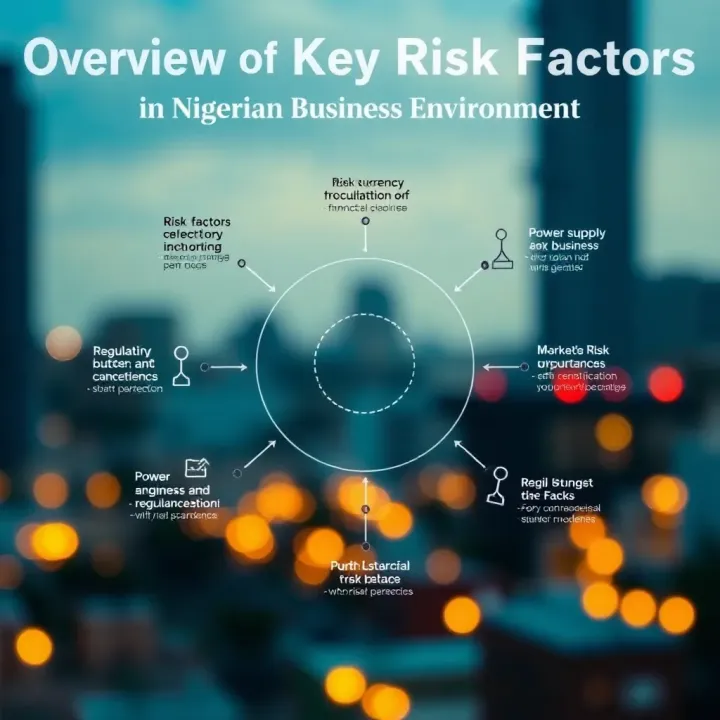
Power instability remains a notorious operational risk across Nigeria. Frequent outages force many businesses to rely heavily on generators, increasing fuel expenses and maintenance costs. A small manufacturing firm in Kano could see production delays not because of market demand but due to inconsistent electricity supply. Infrastructure deficits, such as poor road networks, affect distribution logistics, causing late deliveries and harming reputation. Operational downtime directly translates to lost revenue, making contingency planning around infrastructure risks vital.
Nigeria’s dynamic regulatory landscape presents compliance challenges that can disrupt business activities. Frequent changes in taxation, import-export laws, or industry-specific regulations require businesses to stay alert and adapt quickly. Failure to comply can lead to fines or licence revocation. For instance, a fintech startup must adhere to Central Bank of Nigeria (CBN) regulations on data security and customer verification (BVN). Non-compliance risks not only legal penalties but also damage to brand credibility.
Nigerian markets are highly competitive and sensitive to economic trends. Sudden shifts in consumer preferences, entry of new players, or price wars can threaten a business’s market share. The retail sector, for example, faces stiff competition from online platforms like Jumia Nigeria and Konga, along with local traders at open markets. Businesses must continuously innovate and monitor competition to avoid losing customers or being outpriced.
Nigerian entrepreneurs should treat risk management not as an option but a necessity, recognising how financial, operational, regulatory, and competitive risks intertwine to influence their ventures’ survival and growth.
By clearly identifying these risk types, stakeholders can tailor strategies that reflect Nigeria’s unique business environment, ensuring resilience amid uncertainty.
Managing risk effectively requires a clear, step-by-step method that helps Nigerian businesses navigate uncertainties. The risk management process isn't a one-off task; it demands ongoing attention and adjustment based on fresh information or changes in business conditions. By following a structured approach, businesses can tackle threats proactively instead of reacting only after problems arise.
The first step is to spot potential risks before they become full-blown headaches. For Nigerian businesses, this could mean looking at everything from naira depreciation, unstable power supply, to regulatory changes by agencies like the Corporate Affairs Commission (CAC) or the Nigerian Customs Service. Imagine a small manufacturer in Lagos; they must consider risks such as inconsistent electricity forcing reliance on diesel generators and rising fuel costs. Brainstorming with your team and reviewing past incidents helps capture a broad list of risks. Tools like SWOT analysis (Strengths, Weaknesses, Opportunities, Threats) are quite useful here.
Not all risks carry the same weight, so it’s vital to evaluate each based on likelihood and potential impact. For example, a trading company may face operational risks from transport strikes (like danfo or okada disruptions) and financial risks from naira volatility. Assigning scores to risks helps prioritise efforts—risks with high impact and high likelihood, like sudden customs duty hikes or inflation spikes, get the most attention. This step helps direct limited resources effectively, avoiding wasted efforts on minor threats.
After risk assessment, the next move is to design actions that either reduce the chance of risks occurring or lessen their effect. For power instability, investing in solar panels or partnering with a company supplying stable electricity can be a mitigation option. For currency risk, businesses might negotiate contracts in stable foreign currencies or engage in forward contracts through banks like GTBank or Access Bank. The key is tailoring responses based on risk priority and what’s feasible financially and operationally.
Risk management isn’t a set-and-forget exercise. Companies need to keep a close watch on risk factors, especially in volatile environments like Nigeria’s. Market conditions, government policies, and local events can change rapidly affecting risk profiles. Regular review meetings, updating risk registers, and feedback from frontline staff all ensure risk strategies stay relevant. A construction firm, for example, should adjust plans based on weather changes, material price swings, or new safety laws.
Taking a hands-on, periodic approach to risk management keeps Nigerian businesses agile, helping them spot troubles early and respond before damage escalates.
By mastering these key steps, Nigerian traders, investors, and analysts stand a better chance of steering their businesses clear of preventable losses, preserving earnings, and seizing opportunities with greater confidence.
Managing risks effectively depends largely on using the right tools and techniques that fit your business size, sector, and specific challenges. Nigerian businesses face a unique mix of risks, from fluctuating exchange rates to unreliable power supply. Practical tools help you spot, measure, and tackle these risks systematically.
A risk register is your business’s central list of all identified risks, detailing their causes, potential impact, and the measures in place. It enables smaller companies and large corporations alike to track risks easily rather than rely on memory or informal notes. For example, a Lagos-based manufacturer might list power outages as a frequent risk, noting how often it occurs and the downtime effect on production.
Paired with this is the risk assessment matrix, which ranks each risk based on likelihood and severity. Colour coding often highlights urgent versus mild risks. A forex trader in Abuja could use this matrix to see that volatile naira-dollar rates are both frequent and impactful, prompting faster hedging decisions.
Insurance provides a safety net against unexpected losses from property damage, theft, or accidents. Nigerian businesses need insurance tailored to local contexts, such as cover for generator breakdowns or fire outbreaks, which remain common. Although insurance premiums add to costs, they prevent crippling losses during disasters.
Hedging refers to financial strategies to guard against market fluctuations, like currency swings. Companies trading internationally might use forward contracts or options to set fixed rates. A Nigerian exporter shipping goods abroad benefits when the naira falls unpredictably, preserving revenue value.
Digital tools improve efficiency and accuracy in risk management. Risk management software enables real-time monitoring, scenario analysis, and automated alerts. Local fintech solutions like Paystack or Flutterwave provide insights on payment delays and fraud detection, helping SMEs spot operational risks early.
Cloud-based platforms offer affordable access even for smaller businesses, helping maintain risk data securely and allowing easy updates. For instance, a Lagos SME using an online risk register can collaborate with remote teams without physical meetings.
Even the best tools fail without well-trained staff who understand risk policies and protocols. Regular training raises awareness among employees about common risks such as cyber threats, fraud, or workplace safety.
Training also encourages a proactive risk culture where staff report hazards early. For example, banks like GTBank regularly hold workshops to keep employees alert to phishing attempts. This vigilance reduces the chance of financial losses and reputation harm.
Effective risk management combines practical tools with informed people. For Nigerian businesses, using these techniques is not just about compliance; it is about survival and growth amidst local uncertainties.
Putting these tools and approaches to work helps Nigerian businesses stay ready for disruptions and adapt faster when challenges appear. The right mix depends on your business type, but all firms gain by being systematic and informed in managing risks.
Risk management isn't just theory; applying it effectively can shield Nigerian businesses from real threats. This section focuses on practical ways to implement risk management that account for Nigerian economic, social, and regulatory realities. Doing so helps businesses not just survive but adapt and grow.
Every market has its nuances; Nigeria's business environment demands risk strategies that reflect its unique challenges. For instance, power outages remain a serious threat to operations. Rather than relying solely on backup generators, savvy firms invest in solar power or hybrid energy solutions to reduce high fuel costs. Similarly, dealing with currency fluctuations needs more than just hedging; businesses often maintain dollar accounts with local lenders or use Nigerian fintech platforms like Paystack to manage foreign exchange risks. Plus, the informal market size means companies must consider trade credit risks differently compared to developed economies. Tailoring risk frameworks to factor in these local conditions makes management both realistic and actionable.
Consider a Lagos-based tech startup that secured multiple revenue streams to cushion against unstable internet and power supply. By diversifying income and investing in mobile data and generators, they reduced operational downtime. On a larger scale, a Nigerian bank implemented advanced fraud detection software alongside rigorous staff training—counteracting rising cyber risks amid increasing digital banking. Another example is an agribusiness in Kaduna that used weather monitoring tools and partnered with local cooperatives to manage seasonal risks and supply chain disruptions caused by poor road networks. These examples show how customised, hands-on approaches help different sectors address their specific vulnerabilities.
Businesses often face hurdles in risk management such as limited access to affordable insurance or poor risk awareness among staff. To tackle insurance gaps, companies can pool resources through industry associations for group policies, lowering premiums and improving coverage. Training staff regularly about evolving risks helps build a risk-conscious culture, vital where formal processes are still maturing. Nigerian businesses also grapple with fast-changing regulations; staying connected to industry groups or legal advisors ensures compliance and reduces penalties. Moreover, it is essential to review risk plans often—especially around the ember months when economic activities spike, and risks like theft or fraud tend to increase.
Implementing risk management with an understanding of Nigeria's peculiar business hurdles can transform vulnerability into opportunity, securing your assets amid uncertainty.
Effective risk management in Nigeria demands practical steps grounded in local experience. By adapting strategies, learning from real-life cases, and addressing common obstacles, Nigerian traders, investors, brokers, and analysts can build greater resilience and confidence in their operations.
Learn practical steps in risk management for Nigerian businesses 🇳🇬. Identify, assess, and handle risks smartly to safeguard your assets and boost resilience 💼🔒.

🔍 Learn how Nigerian businesses can spot and manage risks smartly. Understand risk appetite, align with goals, and stay resilient in our unique regulatory and economic setup.

Ensure your Nigerian business stays strong with practical compliance and risk strategies 📊. Learn how technology and monitoring cut costs and protect your ₦assets.

📚 Understand risk management in Nigeria's business world. Explore courses covering essentials, career steps, and practical apps across sectors like retail, oil & gas.
Based on 11 reviews