
Effective Binary Options Trading Strategies
📊 Discover effective binary options strategies tailored for Nigerian traders! Learn key indicators, risk management, and tips for consistent profits and reduced losses.
Edited By
Oliver Bennett
Binary trading offers a straightforward way to profit from market shifts by predicting price movements within short time frames. For Nigerian investors, understanding this space means recognising local market conditions and adapting strategies that suit the financial and economic realities here.
Unlike traditional investing, binary options boil down to a simple yes/no proposition: will an asset's price rise or fall by expiry? This simplicity is why it has grabbed interest, especially among younger traders in Lagos and Abuja looking for faster returns than what traditional stock markets offer.

However, the binary landscape also comes with intense risks, amplified by Nigeria’s fluctuating exchange rate and occasional liquidity crunches in financial markets. For example, a sudden naira depreciation can skew the performance of assets like oil prices or equities listed on the Nigerian Stock Exchange (NGX), impacting binary trade outcomes unexpectedly.
Successful binary trading requires blending technical skill with local market knowledge to predict short-term movements accurately.
In this article, you will find practical strategies tailored for Nigerian traders:
How to apply technical indicators like Moving Averages and Relative Strength Index (RSI) specifically in the Nigerian market context
Using fundamental analysis to weigh factors such as CBN monetary policy changes or NSE market sentiment
Risk management tactics to preserve your capital during volatile periods, including setting tight expiry times and stop-loss thresholds
Common pitfalls among Nigerian investors, like overtrading or neglecting macroeconomic news, and how to avoid them
With these insights, you’ll get a clear roadmap to navigate binary trading more confidently. Whether you’re a broker advising clients or an investor ready to explore this avenue, applying tested methods while staying aware of Nigeria’s economic landscape is key to staying ahead.
Next, we’ll break down vital technical tools and how to make them work for you in our market.
Grasping the fundamentals of binary trading is essential for Nigerian investors aiming to navigate the market effectively. Knowing how binary options operate, the types of instruments available, and the mechanics behind the trades sets a solid foundation to avoid costly mistakes and enhances decision-making quality.
Binary trading is a simplified form of options trading where you predict whether an asset’s price will rise or fall within a set time. Instead of owning the asset, you place a wager (or trade) on its price direction. This fixed-risk, fixed-reward nature appeals to many Nigerian traders who seek clarity about potential gains and losses upfront. For example, you might predict that the price of a particular currency pair like USD/NGN will increase in the next 15 minutes; if correct at expiry, you gain a predetermined payout, otherwise, you lose the stake.
Forex currency pairs are the most common assets in binary trading, notably major ones like USD/EUR or USD/NGN. For Nigerian investors, focusing on forex pairs involving the naira (₦) can connect trading decisions to local economic news like CBN policy changes or naira fluctuation. Currency pairs are popular due to their liquidity and constant movement, offering frequent trading opportunities even during Nigeria’s daytime hours.
Binary trading also involves commodities such as crude oil, gold, and agricultural products. Considering Nigeria's oil-dependent economy, crude oil contracts attract local investor interest. Price swings in crude oil can be influenced by global supply, OPEC decisions, or local disruptions. Commodities provide exposure beyond currencies, giving traders another avenue to diversify their portfolio targeting short-term market moves.
Indices represent the collective performance of a basket of stocks from a particular country or sector. For instance, the Nigerian Stock Exchange (NGX) All-Share Index reflects overall market health. Online brokers may offer indices like the NGX, Dow Jones, or FTSE 100 as binary trading options. Trading indices allows investors to speculate on broader market trends, offering a different risk profile than individual stocks or currencies.
Individual stocks are also available in binary trading, including popular Nigerian companies like Dangote Cement or MTN Nigeria. By trading stock binaries, investors bet on the short-term price moves rather than long-term ownership. This is useful if one expects a company’s share price to react quickly to earnings announcements, government policies, or sectoral changes. Stocks may show greater volatility, requiring careful analysis before trading.
In practice, binary options present a clear, high-stakes decision: will the price end above or below a chosen level at a specific time? The trader selects the amount to risk, the underlying asset, the expiry period, and the direction (call or put). If the prediction holds when the option expires, a fixed payout, often between 70% and 90%, rewards the trader. If not, the trader loses the initial stake.
This simplicity makes binary trading accessible but demands precise timing and market understanding to be profitable. Nigerian traders should combine local market insight with technical tools to increase their edge while managing risks carefully.
Understanding these basics paves the way for applying effective strategies tailored to Nigeria’s unique trading environment. The next steps involve mastering key trading techniques and risk controls essential for consistent success.
Binary trading success depends heavily on using the right strategies tailored to market conditions. Nigerian investors must grasp practical approaches that suit short-term investments, balancing risk and reward effectively. This section covers major strategies such as trend following, range trading, and breakout methods, each offering clear ways to spot market movements and make informed decisions.
Identifying trends on charts is one of the simplest yet most effective ways to trade binary options. Trends show the general direction of market price—upwards, downwards, or sideways—over a specific period. For instance, if the price of the Naira/Dollar currency pair consistently rises over several sessions, it's an upward trend. Recognising this early means a trader could predict price movement with better accuracy, placing trades that benefit from continuing momentum rather than noise.
Using moving averages supports trend identification by smoothing out price fluctuations. A moving average shows the average price over a set number of periods—for example, 10 or 20 days—and helps traders avoid reacting to short-term volatility. When the short-term moving average crosses above the long-term one, it often signals a bullish (upward) trend. Nigerian traders can use this simple cue to time entries, buying binary options that profit if prices keep climbing within the contract timeframe.
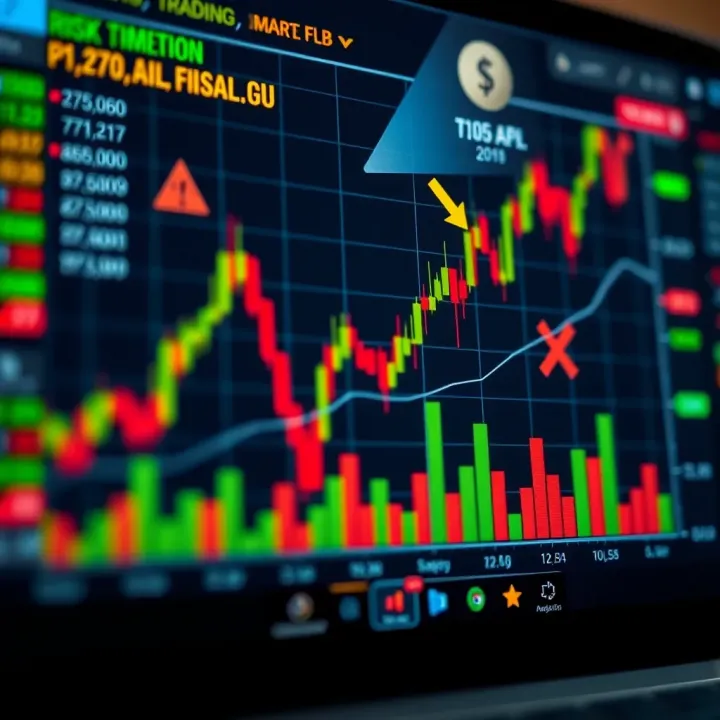
Spotting support and resistance levels is essential in range trading. Support is a price level where buying interest usually stops prices falling further. Resistance is the opposite – a price point where selling pressure tends to cap further rises. For example, the price of Brent crude might bounce repeatedly between ₦15,000 and ₦17,000 per barrel, marking a clear range. Knowing these levels lets traders place trades anticipating price movements to reverse near support or resistance.
Trading within price ranges involves capitalising on the predictable up-and-down movements between these support and resistance points. Nigerian investors can buy 'Put' options near resistance where prices are expected to drop, or 'Call' options close to support expecting a bounce up. This strategy works best in stable markets where no strong trends dominate, helping traders avoid unnecessary risks during sideways price action.
Understanding breakout signals means recognising when prices move decisively outside established ranges, often signalling a new trend beginning. For example, if the NGX All-Share Index breaks past the previous high with strong volume, this could signal a breakout. Traders monitor these bursts of volatility as chances to profit from fresh momentum, entering binary trades predicting sustained moves beyond typical price barriers.
Managing entries and exits during breakouts requires discipline. Entering too early risks false breakouts where prices snap back into range. Nigerian traders benefit from waiting for confirmation, such as a close beyond the breakout point or increased volume before placing trades. Similarly, timely exits avoid giving back profits if markets reverse. Combining this with stop-loss settings or preset profit targets preserves capital and locks in gains effectively.
Successful binary trading rests on applying clear strategies consistently. Trend following, range trading, and breakout methods each offer practical paths to read market signals, helping Nigerian investors improve trade accuracy while managing risks carefully.
Technical indicators are a powerful tool for Nigerian binary traders, helping to make sense of market data beyond simple price movements. They provide objective signals based on historical price and volume, which can improve decision-making and timing in binary options. Using indicators helps cut through market noise and can highlight potential entry and exit points, increasing the chance of success in the fast-paced binary trading environment.
For instance, with Nigeria’s often volatile currency pairs like USD/NGN, indicators help track momentum and key turning points, giving investors a clearer edge in predicting short-term price direction. Without these, traders risk relying on guesswork or emotional impulses, which often leads to losses. "Using the right indicator at the right time" is a simple principle but can be decisive.
RSI measures the speed and change of price movements to identify overbought or oversold conditions. Typically set on a 14-period scale, RSI ranges between 0 and 100. An RSI above 70 suggests an asset might be overbought and due for a pullback, while below 30 points to oversold conditions, indicating potential buying opportunities.
For Nigerian traders dealing with assets like oil prices or local stocks, RSI helps avoid jumping into trades at the wrong moment. For example, if Nigerian Stock Exchange shares show an RSI near 80, waiting for a pullback before trading can prevent losses from price corrections. It's a straightforward tool that signals when the market might reverse, crucial for time-sensitive binary options.
MACD tracks the relationship between two moving averages (usually 12-day and 26-day) to signal trend shifts and momentum. The MACD line crossing above the signal line often suggests upward momentum, while crossing below indicates potential declines.
Nigerian traders can use MACD to confirm signals from other tools or spot early trend changes in assets like currency pairs or commodities. For instance, when the MACD line crosses above its signal line for the naira-dollar exchange rate, it can confirm a buy signal, helping traders enter precisely. This indicator adds depth by showing how shifts in momentum align with price actions.
Bollinger Bands consist of a moving average centre line and two bands set two standard deviations away, capturing price volatility. When price moves close to the upper band, the asset may be overbought; near the lower band suggests oversold conditions.
For Nigerian investors tracking commodities such as cocoa or petrol futures, Bollinger Bands show when prices have stretched too far and might recoil. For example, if Brent crude prices hit the upper band, traders can anticipate potential pullbacks, using binary options to capitalise on these reversals. This indicator is especially useful during volatile periods common in Nigerian markets.
Using a single indicator alone may lead to misleading signals. Combining tools like RSI with MACD or Bollinger Bands provides confirmation, reducing false signals. For instance, if RSI shows oversold and Bollinger Bands indicate price touching the lower band simultaneously, it offers a stronger buy signal.
Nigerian traders can adopt this multi-indicator approach to balance momentum, volatility, and trend analysis. This method helps avoid mistakes from relying on one perspective, allowing better entry and exit timing for binary trades. However, it’s essential to keep the combination manageable—using too many indicators can cause confusion rather than clarity.
Successful binary trading often hinges on reading multiple technical signals together to pinpoint solid opportunities and manage risks effectively.
In sum, Nigerian binary traders should focus on learning and applying these key technical indicators, tailoring their use to local market behaviours and trading instruments. This combination of analysis sharpens decision-making and boosts chances of consistent profits.
Managing risks is the foundation of any successful binary trading venture, especially for Nigerian investors who face unique market challenges such as naira volatility and occasional liquidity constraints. Protecting your capital means minimising losses to stay in the game longer and avoid wiping out your trading account after a few wrong moves.
One crucial step in risk management is setting clear investment limits. For example, never risk more than 2-3% of your total trading capital on a single trade. If you have ₦100,000 for trading, limit each binary option to about ₦2,000 to ₦3,000. This approach ensures you won’t lose a significant chunk of your funds on one bad bet, allowing room to adjust and come back stronger. It also helps you control your emotions because when the stakes are manageable, panic decisions lessen.
Many beginners fall into the trap of overtrading to recover losses or because they feel “lucky” after a win. This behaviour usually leads to more losses. In Nigeria's market environment, where news like fuel subsidy changes or monetary policy updates can cause sudden price swings, staying patient is vital. Stick to your trading plan and avoid chasing after every tempting signal. For instance, if you lose two trades in a row, step back and assess the market again instead of diving straight back in. Emotional decisions hurt your capital much faster than careful analysis.
Before committing real money, Nigerian traders should make full use of demo accounts offered by brokers like IQ Option or Binomo. These platforms simulate real trading conditions without risking your naira. Practicing on demo accounts helps you understand market movements, test strategies, and build confidence. For instance, you can test how different expiry times or asset choices affect your success rate. Demo trading is particularly valuable since actual market conditions in Nigeria sometimes differ due to fluctuating internet quality and delays, so you can safely adapt your approach accordingly.
Protecting your capital isn’t just about limiting losses. It's about building discipline and confidence to thrive in binary trading over time.
By setting investment limits, avoiding emotional traps, and practising with demo accounts, you solidify your foundation in binary trading, boosting your chances of steady, long-term success in the Nigerian market.
Binary trading appeals to many Nigerian investors because of its simplicity and quick potential returns. However, there are typical mistakes that can cost traders heavily if they are not cautious. Knowing these pitfalls helps you trade smarter and protects your capital.
Ignoring economic and political news can quickly lead to unexpected losses in binary trading. Markets in Nigeria, especially currency pairs like USD/NGN or commodities such as crude oil, often react sharply to government policy changes, CBN monetary announcements, or geopolitical tensions. For example, if the Central Bank announces a change in monetary policy without you factoring that news in, your binary options position might suddenly become worthless. Staying updated through trusted sources like business newspapers or economic reports allows you to adjust your trades in time.
It’s common to feel the urge to recover a loss quickly by increasing your bets. This ‘chasing losses’ approach generally backfires, leading to even bigger losses. Suppose you lose ₦50,000 on a trade predicting the direction of the oil price. Instead of stopping to analyze why the trade went wrong — such as poor timing or lack of market insight — you simply double your next investment to ₦100,000 hoping to win it back. This gambler’s mindset often drains your trading account. Wise traders take a step back to review their strategy and market conditions before committing more money.
Relying on numerous technical indicators can cause confusion and contradictory signals, which impairs decision-making during binary trades. Many Nigerian traders jump on popular indicators like RSI, MACD, Bollinger Bands, and moving averages all at once, expecting precise guidance. Instead, this overload clouds judgement. For instance, while RSI might show an asset as oversold, MACD could be signalling a weakening trend, leaving you unsure whether to buy or sell. Choose a few complementary indicators and understand them well rather than overcrowding your chart. This focused approach sharpens your timing and improves trade accuracy.
Most importantly, the goal is to develop a consistent, informed trading routine rather than reacting impulsively or overcomplicating your strategy.
Avoiding these mistakes not only safeguards your investments but also builds discipline—the key to long-term success in Nigeria’s binary trading space.
Starting binary trading in Nigeria demands careful steps, largely because the market offers both opportunities and risks unique to the local setting. For Nigerian investors, understanding how to approach this trading style can significantly affect profit chances. From choosing the right broker to preparing a solid plan and making use of local tools, every element counts towards building a strong foundation.
Picking a reliable broker involves looking closely at their regulatory standing. In Nigeria, the Central Bank of Nigeria (CBN) and the Securities and Exchange Commission (SEC) provide oversight related to financial trading activities. Although many binary trading brokers operate internationally, Nigerian traders benefit from selecting brokers either licensed by these bodies or those compliant with reputable international regulators such as the Financial Conduct Authority (FCA) or Cyprus Securities and Exchange Commission (CySEC). This reduces risks such as fraud or unfair trading practices.
Considering regulatory compliance isn't just about safety; it also determines legal recourse should conflicts arise. For instance, traders who use brokers lacking proper regulation risk losing hard-earned savings without much chance of recovery.
Practical access to funds plays a critical role. In Nigeria, diverse payment methods affect how smoothly traders can deposit or withdraw money. Brokers who support local options like bank transfers to Nigerian banks (GTBank, Access Bank, Zenith Bank) or mobile money platforms (such as OPay or PalmPay) make trading more convenient.
Withdrawal processing time is another key factor. Some brokers take weeks to process withdrawal requests, leading to unnecessary cash flow problems for traders. Reliable brokers often process withdrawals within 24 to 72 hours, giving traders better control over their funds.
A trading plan acts as your roadmap. For Nigerian traders, this means clearly defining your daily or weekly investment budget in naira (₦), selecting preferred markets—whether currency pairs like USD/NGN, commodities such as crude oil, or indices like the NSE-ASI—and outlining entry and exit conditions based on technical or fundamental analyses.
Without a firm plan, trading decisions become guesswork, which usually leads to losses. For example, setting a maximum loss limit, say 10% of capital per week, helps prevent reckless chases for quick profits. Including a strategy to review and adjust based on results also improves long-term success.
The rise in smartphone adoption has made mobile trading enormously important. Apps like Olymp Trade, IQ Option, and Pocket Option enjoy popularity among Nigerian binary traders. These platforms offer user-friendly interfaces, real-time price updates, and instant trade execution—all crucial for effective binary trading.
The convenience of trading anytime, anywhere, especially given Nigeria’s sometimes unpredictable power supply, allows investors to make quick decisions even while commuting in danfo or waiting at the barbing salon.
Joining learning platforms online such as Investopedia, BabyPips, or Nigerian community forums dedicated to trading helps sharpen skills. Forums provide space to exchange ideas, ask questions, and learn from others’ experiences and mistakes.
For many Nigerians, access to quality education on binary trading is limited, so leveraging free or low-cost courses and webinars can provide a quality edge. Some local fintech startups also offer tailored content to match the Nigerian market environment, making these resources highly relevant.
Starting binary trading without selecting a trustworthy broker or crafting a clear plan is like setting off on a motorbike without a helmet. Investing time upfront ensures your trading journey in Nigeria begins on the right foot.
By using local apps and learning platforms, you tap into tools designed to suit Nigerian realities—power issues, banking limits, and market conditions—improving your chances to navigate the binary trading space successfully.
📊 Discover effective binary options strategies tailored for Nigerian traders! Learn key indicators, risk management, and tips for consistent profits and reduced losses.
🔍 Explore how binary option trading works in Nigeria, learn key terms, spot risks, and find trusted platforms to trade confidently and safely today! 💹🇳🇬

📈 Explore smart Forex trading strategies tailored for Nigeria 🇳🇬. Learn essential tools, risk management, market analysis & avoid common trader mistakes.

Explore practical forex trading strategies tailored for Nigerian traders 🇳🇬. Learn essential principles, proven techniques, and risk management tips to boost your trading skills 📈.
Based on 12 reviews