

Best Times to Trade Forex for Nigerian Traders
📈 Discover the best forex trading times for Nigerian traders by understanding global market hours, currency pairs, and volatile sessions to boost your profits.
Edited By
James Whitaker
Forex trading days mark the specific times when traders around the world can buy and sell currencies. Unlike stock markets that often operate within set local hours, the forex market runs 24 hours a day on weekdays, reflecting its global nature. This continuous operation results from the overlapping schedules of key forex centres like London, New York, Tokyo, and Sydney.
Trading begins in Sydney at 10 pm WAT (West Africa Time) and moves across time zones to Tokyo, then London, and finally New York before the cycle restarts. However, the market closes over the weekend, from Friday 5 pm WAT to Sunday 10 pm WAT, when major centres shut down, limiting trade opportunities.
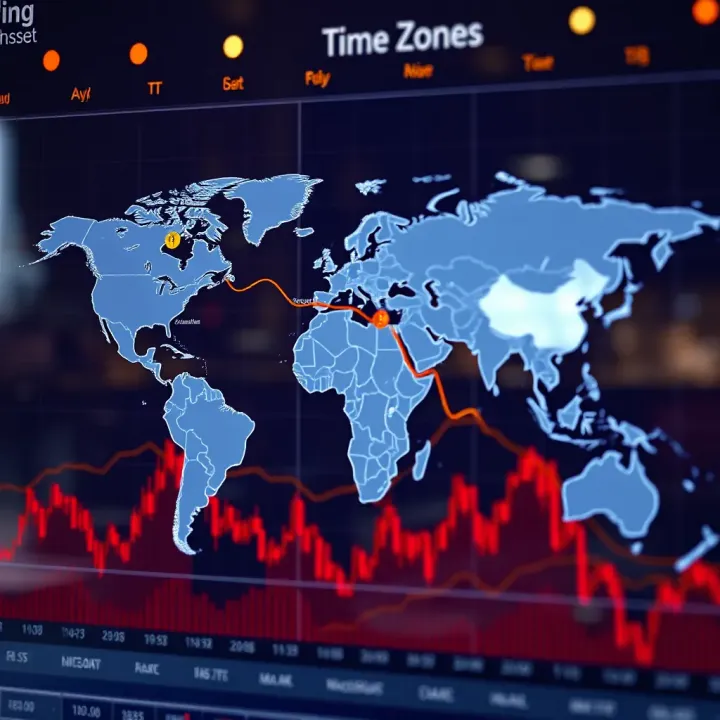
Understanding these trading days is essential for Nigerian traders who want to optimise their strategies and manage risks effectively. Market volatility varies throughout the day, influenced by the opening and closing of these sessions.
Sydney Session: Starts 10 pm WAT, low volatility but useful for analysing early market direction.
Tokyo Session: Opens at 12 am WAT, brings moderate activity, especially in JPY and Asian currency pairs.
London Session: Begins 8 am WAT, highest trading volume globally, characterised by significant price movements.
New York Session: Opens 1 pm WAT, overlaps with London for a few hours, causing peak volatility.
Nigerian traders often prefer trading during the London and New York overlap (1 pm – 4 pm WAT) due to increased liquidity and clearer price trends.
Though forex markets run five days a week, weekends halt trading. Holidays such as Christmas, New Year, and national holidays in major financial centres like the US and UK can reduce liquidity and widen spreads. Nigerian traders should anticipate slower markets during these periods and avoid opening large positions just before market closures.
Plan trades around London/New York session for better price action.
Avoid holding volatile positions overnight from Friday into the weekend due to gap risks.
Monitor global holidays affecting liquidity.
Use economic calendars to track market openings and news releases that cause spikes.
Knowing the forex trading days and their behaviour helps Nigerian investors align their trading hours, make informed decisions, and better manage risks in a market influenced by multiple time zones and regional factors.
The forex market runs 24 hours a day from Monday to Friday, providing traders with a unique chance to engage at almost any time. This continuous operation is due to the market’s global nature, where different financial centres across the world open and close at various times. For Nigerian traders, understanding this around-the-clock schedule helps in planning trades more strategically and taking advantage of market volatility when liquidity peaks.
Unlike stock markets that close at set hours, forex never fully sleeps during weekdays. Trading starts on Monday morning in Sydney, Australia, and flows across time zones, moving westward through Tokyo, London, and New York before circling back to Sydney. This continuous cycle means Nigerian traders can access active markets at varying times, but liquidity and trading volume change depending on which centres are active. For instance, the London-New York overlap between 2 pm and 5 pm WAT often sees the highest liquidity, making it favourable for tighter spreads and more predictable price action.
The London session plays a critical role in forex, especially for pairs involving the British Pound (GBP), Euro (EUR), and US Dollar (USD). It operates roughly from 8 am to 5 pm GMT, which translates to 9 am to 6 pm WAT in Nigeria. During these hours, market activity surges, driven by significant banks and financial institutions. The London market sets the tone for the European trading day, often responding sharply to economic data releases and political news.
New York’s forex market hours run from 8:00 am to 5:00 pm EST, which corresponds roughly to 1 pm to 10 pm WAT. This session overlaps with London for a few hours, boosting trading volume and volatility. USD-related pairs such as USD/NGN receive heightened attention. Traders who prefer afternoon or evening trading in Nigeria find the New York session convenient. Economic events like the release of the US Nonfarm Payroll data often create significant price movements during this period.
Tokyo session spans 9 am to 6 pm JST, roughly 1 am to 10 am WAT. This session primarily influences pairs involving the Japanese Yen (JPY) and other Asia-Pacific currencies like AUD and NZD. Nigerian traders who are up early or prefer overnight trading can take advantage of the Tokyo session, although liquidity tends to be lower compared to London or New York hours. The release of Japanese economic data during this time can prompt swift price changes, particularly in JPY pairs.
Sydney marks the start of the global forex trading day, open from 7 am to 4 pm AEST, which is about 10 pm to 7 am WAT. Though smaller in market size compared to other centres, the Sydney session is essential for trading AUD pairs and offers early clues to market sentiment for the day ahead. Nigerian traders active late at night or very early in the morning can spot opportunities here before other major centres open.
Understanding these trading sessions gives Nigerian traders an edge to plan entry and exit points around peak hours and anticipate market moves linked to specific regional events or data releases.
To sum up, forex trading happens nonstop during weekdays because markets in different parts of the world open sequentially. Knowing the timing of London, New York, Tokyo, and Sydney sessions allows you to trade wisely in relation to volatility and liquidity flows.
Trading days in the forex market refer to the days when currency pairs can be actively bought and sold. Unlike stock markets that have fixed trading hours, forex operates over multiple global centres, which collectively cover the week from Monday to Friday. Understanding which days are open for forex trading shapes a trader’s strategy, risk management, and planning.
Forex trading is generally inactive from Friday evening to Sunday evening, accounting for a weekend break. This gap highlights the importance of recognising specific market closure days to avoid surprises with open trades. For Nigerian traders, whose local time overlaps with some major forex centres, knowing these days precisely helps in timing orders and managing exposure efficiently.
The forex market officially opens at 5 pm on Sunday in New York Time (22:00 WAT) and runs continuously until 5 pm on Friday (22:00 WAT). This schedule means trading is available from Monday through Friday across overlapping sessions of four major centres: Sydney, Tokyo, London, and New York. Each trading day cycles through different market activities depending on which centres are active. For example, Nigerian traders see vibrant market actions in the London and New York overlaps during the afternoon hours, providing ample liquidity and often better price spreads.
The significance of forex trading days Monday to Friday lies in consistency and liquidity. Most banks, financial institutions, brokers, and liquidity providers are active only on these days, ensuring reliable price movements and trade execution. Trades placed during these days also benefit from tighter spreads and more predictable volatility. For instance, during the week, currency pairs like USD/NGN or EUR/USD experience more consistent price action compared to weekends.
When forex markets close on Friday evening, any open positions remain exposed to risk without the possibility of adjustment until the market reopens. This closure means traders can face unexpected price shifts if a significant global event happens over the weekend. For example, during political unrest or an unexpected central bank announcement on a Saturday, forex prices can gap when the market resumes, impacting opened trades with sudden losses or gains.
Traders have to consider weekend closures carefully by perhaps reducing position sizes or using stop-loss orders to protect their capital. Since no trading occurs from Friday evening until Sunday evening, active risk management is vital to avoid significant weekend exposure.
When the forex market opens on Sunday evening (22:00 WAT), price levels often differ from the Friday close, creating what is called a “market gap.” This gap occurs because news and events during the weekend influence traders’ sentiments, reflected in changed prices when markets restart. For example, if economic data from China or the US released over the weekend impacts the global outlook, currency pairs like USD/JPY or GBP/USD may open several points away from Friday’s closing price.
Such gaps can present opportunities or risks. Traders might see gaps as chances to open trades that capitalise on sudden price movements. However, gaps can also trigger stop-loss orders or result in slippage, where trades execute at prices worse than expected. Hence, awareness of weekend gaps helps traders prepare better by adjusting strategies and examining market news even when trading is technically paused.
Knowing the precise forex trading days and the consequences of weekend closures helps you plan better, manage risks, and avoid surprises in the volatile currency market.
In short, forex trading happens Monday to Friday, with weekends acting as a pause where market dynamics can shift unseen. For Nigerian traders, understanding these days alongside local time differences guides more confident and informed trading decisions.
Holidays in major forex centres directly affect market activity and liquidity, which traders need to watch closely. When markets in key cities like London or New York shut for public holidays, trading volumes often drop sharply. This can lead to slower price movements or wider spreads, impacting trade execution and strategies. For Nigerian traders, understanding these holiday patterns helps avoid unexpected risks and plan trades when the market is more active.
The forex markets in London and New York, two of the largest centres, close during official public holidays such as Christmas, New Year’s Day, and national observances like the Independence Day in the USA and Boxing Day in the UK. For example, the London Stock Exchange and the New York Fed close on 25 December, signalling a pause in forex activities tied to these regions. The impact here is pronounced, as both markets combined account for a significant portion of global forex turnover; when they close, overall liquidity falls.
Traders often find tighter spreads and less volatility before these holidays as many institutional players reduce market exposure. It’s a good practice to check public holiday calendars for these countries, especially around December and January, to adjust trading plans accordingly.
The Tokyo and Sydney forex markets also observe their respective holidays, such as Golden Week in Japan (end April to early May) and Australia Day in January. During these periods, the Japanese yen (JPY) and Australian dollar (AUD) can exhibit unusual trading patterns. Liquidity often declines, and price gaps might appear upon reopening.
For instance, during Golden Week, many Japanese banks and financial institutions close, limiting forex activity involving JPY. Australian public holidays like ANZAC Day can lead to reduced AUD trading volumes. Nigerian forex traders focusing on JPY or AUD pairs should be mindful of such breaks and consider suspending or adjusting trades to mitigate undue risks.
Nigerian public holidays such as Independence Day (1 October) and Christmas (25 December) generally don't affect the global forex market’s operation. However, local factors like reduced staffing at brokerages or banks, especially during extended holidays, can disrupt transaction processing and fund transfers.
Moreover, infrastructure challenges during holidays—like inconsistent power supply or limited Internet service in some areas—may affect a trader’s ability to monitor or execute trades promptly. Nigerian traders should prepare for these potential disruptions by setting stop-loss orders and confirming that their platforms and funds are accessible ahead of holidays.
Awareness of both global and Nigerian holiday schedules ensures forex traders can anticipate market slowdowns, manage trade timing better, and reduce exposure to unexpected market gaps or liquidity drops.
This knowledge, combined with careful planning, gives Nigerian traders an edge in navigating the forex market effectively throughout the year.
Knowing the best times to trade forex is key for Nigerian traders to maximise profits and reduce risks. Forex is a global market, so its activity peaks at different hours depending on the main trading centres. Nigerian traders must consider these hours to engage when the market is most liquid and volatile, increasing chances for better trades.
Forex markets operate 24 hours from Monday to Friday, but not every hour is equal. The busiest hours fall within the London and New York sessions, roughly between 2 pm and 10 pm West Africa Time (WAT). During these periods, currency pairs involving USD, GBP, and EUR experience higher volume and tighter spreads, making trading more active and cheaper.
The overlap between the London and New York sessions, often called the “golden hours”, stands out. For example, from 2 pm to 5 pm WAT, both centres are open, leading to increased activity and price swings. Conversely, the Asian session, which runs from 12 am to 9 am WAT, shows less volatility but offers opportunities especially for currencies like JPY and AUD.
Currency pairs involving the US Dollar (USD), Euro (EUR), and British Pound (GBP) are often best traded during the London and New York sessions. For Nigerian traders, this means focusing on hours between early afternoon and late evening WAT. For instance, the EUR/USD or GBP/USD pairs tend to show clearer trends and better liquidity from about 2 pm to 10 pm WAT.
This timing aligns with business hours in London and New York, where banks, financial institutions, and big traders are most active. Nigerian traders benefit from sharper price movements and tighter bid-ask spreads, which reduces trading costs and enhances profit potential.
Japanese Yen (JPY) and Australian Dollar (AUD) pairs perform best during the Asian and early Sydney sessions. Since Tokyo starts operation around 12 am WAT and Sydney follows afterwards, traders interested in USD/JPY or AUD/USD should focus on late-night to early morning trading hours.
For example, a Nigerian trader wanting to trade AUD/USD could plan to trade between 1 am and 8 am WAT, coinciding with Sydney and Tokyo market openings. Although volatility is generally lower than in London or New York sessions, these times often present unique trends influenced by Asian and Australian economic news, which savvy traders can exploit.
For Nigerian forex traders, timing is not just about when the market opens but matching trading hours with currency pair activity to maximise opportunities and control costs effectively.
Forex trading does not run non-stop without pause. Understanding how to adapt to breaks and market closures is key for any serious trader, especially in Nigeria where timing and local circumstances matter a lot. Traders who miss these nuances risk exposing themselves to unexpected losses or missed opportunities.
Outside the standard Monday to Friday trading window, the forex market is technically closed. However, traders can still place orders through their brokers' platforms, which queue these orders for execution when the market reopens. This pause is critical because any positions left open over weekends or holidays carry risks due to price gaps that may occur once the market resumes. For example, if you bought USD/NGN late on Friday and a major economic event happens over the weekend, you might find your trade affected by a price jump on Monday, which could be hard to react against.
Managing trades during these off days requires vigilance. It's wise to close vulnerable positions before breaks or use stop-loss orders to limit potential damage. Nigerian traders should also watch for local holidays that might affect liquidity, particularly when major counterparties in the trade are offline.
Trading over the weekend poses distinct dangers. Since the market is closed, the currency prices remain frozen until the next session. Any geopolitical events, unexpected announcements, or shifts in commodity prices (which heavily influence currencies like the Nigerian Naira) may lead to sudden price shifts or gaps. These gaps can leave traders with losses beyond their stop-loss limits or margin calls. For instance, a sudden drop in oil prices over a weekend often causes a sharp reaction in Nigerian Naira pairs once the forex market reopens.
To guard against weekend risks, consider the following practical tips:
Avoid opening new trades late on Friday unless you have a strong risk management plan.
Use guaranteed stop-loss orders where brokers provide this protection.
Monitor global news closely during weekends for potential risk factors.
Stay informed about public holidays in major forex centres that may extend breaks.
Forex market breaks and closures are like the danfo traffic jams of trading — unavoidable but manageable when you prepare well.
Adapting to these pauses means not only understanding the scheduled closures but also actively managing your trades to cushion against volatility when the market wakes again. Nigerian traders who master this timing dance can safeguard their capital and seize the best moments to buy or sell in the dynamic forex landscape.
📈 Discover the best forex trading times for Nigerian traders by understanding global market hours, currency pairs, and volatile sessions to boost your profits.
📈 Explore smart Forex trading strategies tailored for Nigeria 🇳🇬. Learn essential tools, risk management, market analysis & avoid common trader mistakes.

🤖Explore how to pick the best forex trading robot for your style. Learn key features, risk tips, and top platforms trusted by Nigerian traders.💡

Explore top forex trading tips and strategies tailored for Nigerian traders 🇳🇬. Learn to choose platforms, manage risks, and understand market rules for better results 💹.
Based on 9 reviews