

Understanding Binary Fission with Examples
Explore how binary fission, a simple asexual reproduction in prokaryotes, helps growth and survival with real-life examples 🦠🔬🌱
Edited By
Oliver Reed
Binary recursion is a programming technique where a function calls itself twice during its execution. Unlike simple recursion, which makes a single recursive call, binary recursion splits a problem into two smaller parts, solving each by recursive calls. This approach is especially useful when tackling problems naturally expressed as binary trees or when dealing with algorithms that need to explore two possibilities at once.
At the heart of binary recursion is the divide-and-conquer principle. A problem is broken down into two subproblems of the same type, each solved recursively. Once both subproblems return their results, the function combines these answers to produce the final solution. This pattern is common in tasks such as calculating terms in the Fibonacci sequence, processing binary trees, or performing certain search algorithms.
Binary recursion can quickly grow the number of function calls, so understanding its flow is vital to writing efficient code.
To illustrate, consider the calculation of Fibonacci numbers. The function calls itself twice to find the two preceding Fibonacci numbers before adding them:
python def fib(n): if n = 1: return n return fib(n - 1) + fib(n - 2)
Here, `fib(n)` calls both `fib(n - 1)` and `fib(n - 2)`. While straightforward, this naive approach can lead to repeated computations. Recognising such pitfalls guides you to implement optimisations like memoisation.

Binary recursion shows clear value in tree traversals and decision-making algorithms common in trading or financial analysis software. For example, assessing risk in two directions or exploring branching investment scenarios benefits from this pattern.

In essence, binary recursion offers a powerful way to handle problems demanding concurrent evaluation of two pathways. However, it requires careful design to avoid excessive resource use. The next sections will dive deeper into examples, advantages, and practical uses within Nigeria’s growing tech and finance sectors.

## What Is Binary Recursion?

Binary recursion is a technique where a function calls itself twice within its own definition. This method is especially useful for solving problems involving structures that split naturally into two parts, like binary trees or certain divide-and-conquer algorithms. Understanding this concept is fundamental for traders, analysts, educators, and investors who engage with algorithms in coding or financial modelling, as it helps in designing efficient and elegant solutions.

### Basic Definition and Mechanics

#### Function calling itself twice

At its core, binary recursion means a function triggers two recursive calls during each invocation. For example, consider a function that calculates Fibonacci numbers. To compute `fib(n)`, it calls itself to compute both `fib(n-1)` and `fib(n-2)`. Each of these calls then further invokes two more recursive calls, creating a branching structure of calls. This recursive doubling allows the function to explore all possible solutions but risks duplicating work.

This feature is practical in scenarios where problems naturally split into two independent subproblems. For instance, when traversing a binary tree, you visit the left subtree and the right subtree separately, making two recursive calls. This approach simplifies coding such problems and makes the logic clear and intuitive.

#### Difference between binary and linear recursion

Binary recursion differs from linear recursion mainly in the number of recursive calls per function activation. While linear recursion involves a single self-call per step, binary recursion makes two. This means binary recursion can double the amount of work and calls very rapidly, which affects performance.

From a practical standpoint, linear recursion suits problems with a single path of recursion, such as finding the factorial of a number or traversing a linked list. Binary recursion, however, is a better fit for tree structures or problems dividing into two subproblems, such as merge sort, where exploring both halves concurrently is necessary.

### Visualising Recursive Calls

#### Recursive call tree structure

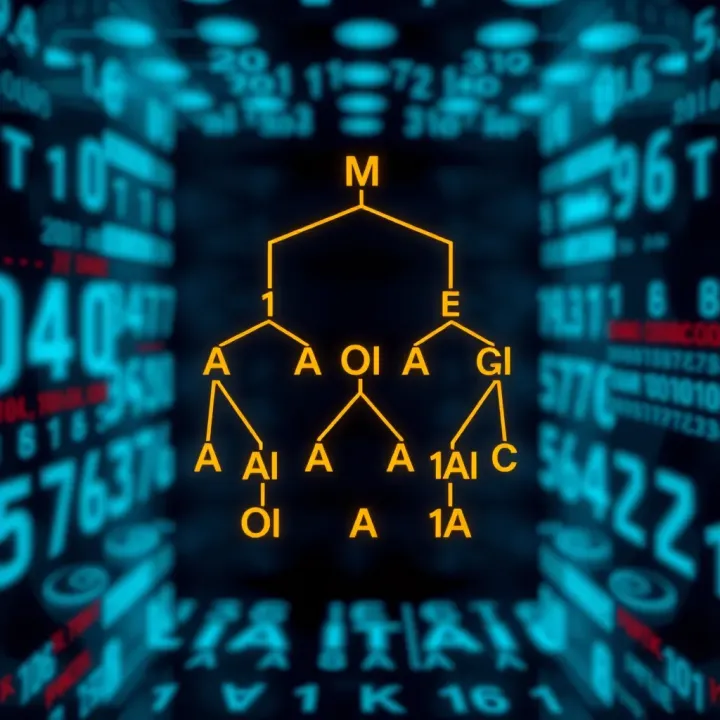
To visualise a [binary](/articles/understanding-binary-fission-examples/) recursive function, imagine a tree branching out with each function call splitting into two new calls below it. This recursive call tree helps track the sequence and structure of calls. The root node represents the original function call, and each level represents deeper recursive calls. This structure naturally reflects problems like binary trees or divide-and-conquer methods.

Understanding this tree is vital for traders and analysts who use recursive algorithms; it helps identify where computational effort concentrates and potential redundancies. For instance, seeing repeated calls to the same subproblems suggests optimisation through memoisation or iteration.

#### How depth and breadth grow

In binary recursion, depth grows with the [number](/articles/understanding-binary-number-multiplication/) of nested calls, while breadth doubles with each level. For example, the call tree's width at level `k` is roughly `2^k`. This exponential growth means that the total number of calls can become very large quickly, causing high memory and time consumption.

This growth pattern is critical when working with large inputs to avoid stack overflows or slow execution. Recognising how depth and breadth expand enables you to decide when to use binary recursion and when to consider other strategies like dynamic programming or iterative solutions. Anticipating these resource demands helps maintain efficient and reliable application performance.

> Visualising the call tree not only clarifies how your code executes but also reveals performance bottlenecks and optimisation opportunities.


## Examples of Binary Recursion in Programming

Understanding binary recursion is easier when you see it in action. Programmers often use this technique when solving problems that naturally split into two parts. Binary recursion helps break down tasks like calculating certain sequences or navigating tree structures, making code simpler and clearer.

### Calculating Fibonacci [Numbers](/articles/understanding-binary-numbers-math-applications/)

A classic example is calculating Fibonacci numbers. Here, the recursive function calls itself twice to find the two preceding numbers, then adds them. For instance, to find the 5th Fibonacci number, the function finds the 4th and 3rd numbers first, each by further breaking down the problem similarly.

python
def fibonacci(n):
    if n = 1:
        return n
    return fibonacci(n-1) + fibonacci(n-2)
This implementation clearly shows how binary recursion models the problem’s structure, matching the mathematical definition closely. It’s intuitive and easy to write, which is useful when prototyping or teaching recursive methods.
However, this approach has significant performance drawbacks. It recalculates the same Fibonacci terms many times, leading to exponential time complexity. For larger values of n, this quickly becomes impractical due to long runtimes and heavy memory use from deep recursive calls.
Optimising usually involves memoisation—storing already calculated values—or switching to iterative methods. This reduces redundant work and improves speed, which is vital when performance matters, such as in trading algorithms or data analytics tools that depend on efficient computation.
Binary recursion shines in traversing binary trees, a fundamental structure in computer science. There are three main ways to traverse such trees: inorder, preorder, and postorder. Each method visits nodes in a different sequence, suitable for different use cases.
Inorder traversal visits the left child, then the node itself, followed by the right child. This is useful for retrieving values in sorted order when applied to binary search trees.
Preorder traversal visits the current node before its children, suitable for copying or expressing tree structure.
Postorder traversal processes children before the node itself, helpful for deleting trees or evaluating expressions.
Each traversal calls the function recursively on the left and right children, naturally following the binary recursion pattern.
In practice, these traversals underpin many real-world applications:
Parsing and evaluating mathematical expressions in calculators or compilers.
Navigating hierarchical data, like file systems or organisational charts.
Implementing search and sort tasks in finance software, such as portfolio management tools that organise assets by various criteria.
Binary recursion’s clarity in handling binary trees makes it indispensable in developing reliable and maintainable software that works with branching data structures.
Overall, these examples highlight how binary recursion fits certain problems perfectly while signalling when alternative methods might be necessary for efficiency.
Binary recursion offers a straightforward way to tackle certain problems by breaking them down into two smaller subproblems, but it also brings resource challenges that every programmer needs to weigh carefully. Understanding both sides helps in deciding when using binary recursion is the right call in your software design.
Binary recursion naturally fits divide-and-conquer strategies, where a complex problem splits into two manageable parts recursively. For example, in sorting algorithms like merge sort, the array is continually divided into halves until single elements remain, which are then merged back in order. This recursive approach simplifies the code and mirrors the problem's structure, making it easier to write and maintain.
This simplicity also speeds up development when tackling algorithms that inherently involve splitting data, such as searching or computational geometry. For instance, binary search on a sorted array uses recursion by checking the middle element and then continuing on one half, halving the search space with each call.
Another practical benefit is for tree data structures, where each node branches into two or more children. Binary recursion fits seamlessly here because functions can call themselves on the left and right child nodes naturally. Traversals like inorder, preorder, and postorder are classic examples where binary recursion provides an intuitive method to visit every node.
In real-world applications such as parsing expressions or evaluating decision trees, this pattern shines. For example, expression trees represent mathematical expressions where leaves are operands and internal nodes are operators; recursive processing of these trees simplifies evaluating or transforming expressions without iterative complexity.
Binary recursion, while elegant, often suffers performance setbacks due to exponential growth in the number of calls. Each function call spawns two more calls, doubling quickly and consuming significant stack memory. Without careful controls, this can lead to stack overflow errors, especially with deep recursion on large inputs.
Take the naive Fibonacci implementation: computing the nth number requires recalculating many smaller Fibonacci numbers repeatedly. This redundant repetition inflates both time and memory use, making the approach impractical for larger values.
To tame these inefficiencies, memoisation stores results of expensive function calls and reuses them, avoiding repeated calculations. In the Fibonacci case, caching previously computed values brings complexity back down to linear time and prevents excessive stack consumption.
Alternatively, iterative solutions replace recursion with loops, maintaining state explicitly without risking stack overflows. Although this may lose some of recursion's elegance, it offers better control over memory and execution time, which is valuable in production systems dealing with large datasets.
Balancing the clarity of binary recursion against its resource demands is key. Use memoisation or iterative methods as needed, especially when handling big inputs or performance-critical applications.
Binary recursion features prominently in several practical computing tasks, especially where problems can be broken into smaller, similar parts. Its ability to manage branching and subdividing makes it invaluable for algorithm design and working with complex data structures. For traders, analysts, and educators, understanding these applications can illuminate how recursive approaches power efficient solutions across many domains.
Divide and conquer algorithms harness binary recursion by splitting a problem into two smaller subproblems that are solved independently and then combined. This approach suits many classic algorithms, such as merge sort and quicksort. For instance, merge sort recursively divides an array into halves until each segment has one element, then merges them back in sorted order. This reduces the sorting complexity drastically compared to straightforward methods.
In trading platforms, algorithms that run divide and conquer logic can quickly process large datasets like stock prices or order books, improving response times and accuracy. These recursive algorithms provide clear paths for parallel processing, enabling efficient handling of big data relevant to investors and brokers.
Sorting and searching methods rely heavily on binary recursion to optimise performance. Binary search, for example, recursively splits search intervals in half until it locates the target or confirms its absence. This reduces search time from a linear scan to logarithmic speed, which is crucial for databases with millions of transaction records or asset histories.
Similarly, recursive sorting algorithms aid in cleansing and ordering financial data streams, ensuring analysts work with precise and timely information. This clarity and speed matter greatly where milliseconds can translate to significant gains or losses.
Manipulating binary trees and graphs is a natural fit for binary recursion. Trees inherently branch out, making recursive traversal a clean solution. Operations like searching, inserting, or deleting nodes in a binary search tree typically use recursive calls to navigate left and right child nodes, reflecting binary recursion's core pattern.
For example, in portfolio management systems, recursive tree traversals help structure and query hierarchical data like asset allocation or risk categories efficiently. Graph algorithms extending these principles manage connections in complex networks, such as financial transaction flows or trade relationships.
Parsing expressions often involves breaking down complex statements into simpler parts, aligning with binary recursion. Compilers and interpreters use recursive parsing to analyse nested expressions, such as mathematical formulas or query statements. Each expression splits into sub-expressions evaluated in a binary recursive manner.
In algorithmic trading, proper parsing of rules and conditions allows systems to execute strategies accurately. Recursive parsing ensures every part of a formula is understood, from simple additions to layered conditional statements taxing decision engines.
Mastery of binary recursion in algorithm design and data structures unlocks practical tools that sharpen efficiency in trading, investment analysis, and tech development within finance.
To sum up:
Binary recursion breaks down complex problems into manageable parts across algorithms and data structures.
It enables faster sorting, searching, and parsing – vital for processing vast financial data.
Data structures like trees and graphs leverage binary recursion to organise and retrieve information elegantly.
Applying these concepts allows industry professionals to build robust, efficient systems that keep pace with Nigeria's fast-moving financial markets and technological landscape.
Binary recursion is powerful, but to use it well, following certain best practices is essential. Poorly written recursive functions can lead to confusing bugs, excessive resource use, and inefficiency. On the other hand, clear and efficient recursive design makes your code easier to maintain and faster in execution. Traders and analysts working with algorithms, especially those involving binary trees or divide-and-conquer methods, will find these tips useful for refining their implementations.
Every recursive function needs a base case—a condition that stops recursion. Without this, the function will call itself endlessly, leading to a stack overflow error and crashing your programme. For example, in calculating Fibonacci numbers using binary recursion, the base cases typically check if the input is 0 or 1; at these points, the function returns immediately without further recursion.
A precise base case ensures your function terminates correctly and avoids unnecessary computation. When writing your binary recursive function, explicitly define these exit points early in the code. This clarity helps prevent logic errors and improves readability, which is particularly vital for traders coding complex algorithms where mistakes could translate to financial loss.
Binary recursion often suffers from repeating the same calculations multiple times. Take the naïve Fibonacci example: the function recomputes Fibonacci(n-2) and Fibonacci(n-1) repeatedly. This redundancy dramatically increases computation time, especially for larger inputs.
To reduce this overhead, incorporate techniques like memoisation—storing previously computed results in a simple cache. This way, when the function needs a result it has already found, it retrieves it instantly instead of recalculating. Alternatively, consider bottom-up dynamic programming approaches as a better way to optimise heavily recursive problems.
Binary recursion creates a call tree that can grow exponentially with input size. This leads to large numbers of active function calls, heavily consuming stack memory. With very large inputs, the system’s call stack can overflow, causing crashes or freezes.
For instance, a binary recursive function processing thousands of elements without optimisation may exceed typical stack sizes. This risk is significant for real-time trading systems or data processing platforms where crashes disrupt operations and lead to losses. It is better to be cautious and anticipate the stack limitations of your environment.
When dealing with large datasets or performance-critical code, iteration or dynamic programming often outperforms recursion. Iterative solutions use loops and explicit data structures to track progress, eliminating the risk of stack overflow.
Dynamic programming improves upon recursion by systematically solving smaller subproblems once and reusing these solutions. This cuts down on repeated work and keeps resource use manageable. Many common binary recursion problems, like Fibonacci calculation or parsing syntax trees, have iterative or DP versions that scale better in production.
In summary, understanding when to use or avoid binary recursion and mastering clear, efficient implementation makes your code robust. These practices save time, memory, and frustration — all vital in the fast-paced Nigerian tech and trading scenes.
Clear base cases and memoisation are your best friends. They protect your app from runaway calls and keep performance in check, essential for reliable, real-time systems.
Explore how binary fission, a simple asexual reproduction in prokaryotes, helps growth and survival with real-life examples 🦠🔬🌱
Explore binary operations in math 🔢 and their role in computer science 💻 and algebra 📐. Understand key properties and real-world uses in Nigeria and beyond.
Explore how binary numbers work in math and tech 💻. Learn conversions, arithmetic, and their role beyond computing for everyday understanding.
🔐 Discover how binary login systems work and their security benefits. Learn applications, compare with traditional logins, and stay ahead with best practices.
Based on 6 reviews