

Top Forex Trading Strategies for Nigerian Traders
📈 Explore smart Forex trading strategies tailored for Nigeria 🇳🇬. Learn essential tools, risk management, market analysis & avoid common trader mistakes.
Edited By
Isabella Clarke
In forex trading, understanding what a pip is can actually change how you see your profits or loss. A pip, short for "percentage in point", is the smallest price move a currency pair can make on the trading platform. For Nigerian traders, knowing how to measure these tiny movements in the market with precision is key to making smart trading decisions.
Typically, for most currency pairs, a pip is equal to 0.0001 of the quoted price. For example, if the EUR/USD pair moves from 1.1200 to 1.1201, that one-digit change in the fourth decimal place represents one pip. However, pairs involving the Japanese Yen (JPY) use two decimal places for pip calculation, so one pip equals 0.01 movements in that context.
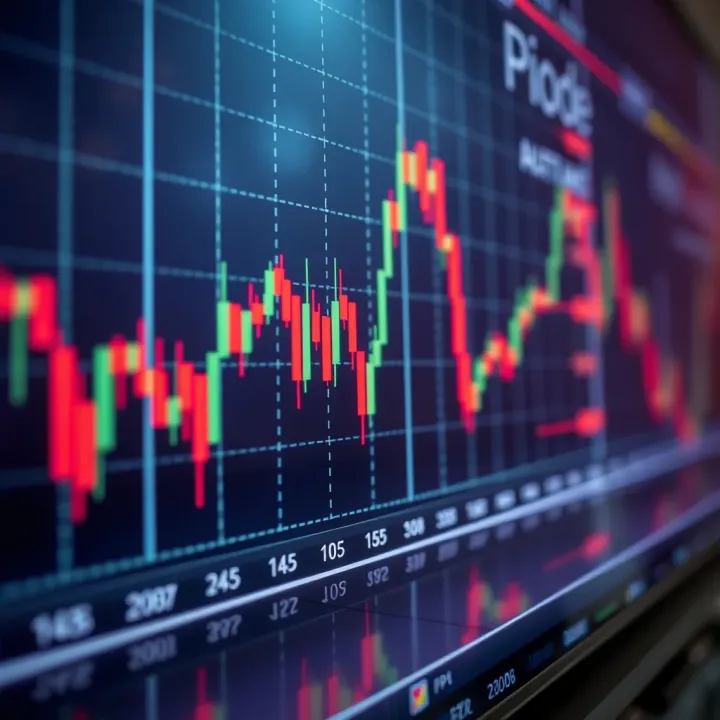
Understanding the pip's role in forex helps you spot how price swings affect your trading positions clearly.
Pips help traders measure profits and losses in a standard way, regardless of the currency pair. For example, if you bought USD/NGN at 460.00 and sold it at 460.50, you gained 50 pips. While that might seem small, if your trade size is big, those 50 pips translate into meaningful profits in naira.
Calculating Profit and Loss: Multiply your pip change by the pip value to see how much you gain or lose.
Setting Stop Loss and Take Profit: Pips inform how far or near your exit points should be to manage risk.
Comparing Different Currency Pairs: Since pip values vary with currency pairs, understanding their value in ₦ helps decide which trades can yield better returns.
The pip value in Nigerian naira depends on factors like the currency pair you trade and the size of your position. For popular pairs like USD/NGN, one pip might represent roughly ₦0.01 if you trade one unit of currency. But for larger lots, the pip value scales accordingly. Knowing this relation gives Nigerian traders an edge in estimating earnings more precisely.
In summary, once you grasp what pips represent and how to calculate their value, it becomes easier to plan your trades, calculate your gains or losses, and manage your risks effectively in the forex market. This foundational knowledge is essential for every Nigerian trader serious about increasing their chances of success.
In forex trading, a pip is the standard unit used to measure price movement between currency pairs. Knowing what a pip is helps you understand how much a currency’s value has changed, which is essential for making trading decisions and calculating profits or losses.
Let’s say you're trading the USD/NGN pair, and the price moves from 410.50 to 410.60. That change of 0.10 is measured in pips depending on the currency pair's decimal settings. For Nigerian traders, understanding pips is even more critical because it directly impacts how you manage risk and assess your trading position in naira (₦).
A pip, short for "percentage in point," represents the smallest price change a currency pair can make based on market convention. Usually, a pip is equivalent to 0.0001 for most currency pairs, but for pairs involving the Japanese yen, it’s often 0.01. This tiny measure helps traders track even the smallest fluctuations in currency values.
For example, if the GBP/USD moves from 1.3000 to 1.3001, that 0.0001 difference is one pip. This measurement standardises how traders talk about price movements, regardless of the currency’s actual value.
Pips show exactly how much the exchange rate changes over time. They let traders quantify gains and losses clearly. If you understand how many pips a price has moved, you can better judge market trends or price stability.
Imagine you bought EUR/USD at 1.2000 and it rises to 1.2050. That 50-pip gain translates into your profit depending on your trade size. If you don’t understand pips, it’s like watching a film without knowing the storyline—the movements won’t make sense.
Pips are the bread and butter of forex trading because they tie price changes to real money. When you enter a trade, how many pips the market moves in your favour or against you determines if you make or lose money.
Besides, understanding pips helps in setting stop-loss and take-profit orders with precision. Nigerian traders often deal with volatile pairs like USD/NGN or GBP/USD, so knowing exactly how pips work aids in managing risk and avoiding costly mistakes.
Mastering pips is like learning to read a map—you’ll navigate the forex market more confidently and avoid costly detours.
By grasping the concept of pips, Nigerian traders strengthen their ability to make informed decisions, protect their investment, and seize trading opportunities with clarity. This foundation paves the way for deeper knowledge of forex mechanics and better trading results.
Understanding how pips work with currency pairs is fundamental in forex trading. Pips reflect the smallest price movement a currency pair can make, helping traders measure gains and losses precisely. In Nigeria, where trading often revolves around pairs including the naira and major global currencies, knowing this relationship aids informed decisions.
Currency pairs are always quoted with two currencies: the base currency and the quote currency. The base currency is the first in the pair and represents the amount of currency you buy or sell, while the quote currency is what you pay or receive for one unit of the base currency. For example, in USD/NGN, the US dollar (USD) is the base currency, and the Nigerian naira (NGN) is the quote currency. If the quote reads 460.50, it means 1 USD equals ₦460.50.
This structure is key because pips measure how much the quote currency changes against the base currency. If USD/NGN moves from 460.50 to 460.60, that's a change of 10 pips, representing the small fluctuations traders exploit.
Pips represent a standardised unit for price movement, making it easier to track changes across different pairs. Since forex prices often move in very small amounts, pips help traders understand profit or loss without confusion over decimal points.
Standard currency pairs usually involve major currencies like USD, EUR, GBP, and JPY. These pairs tend to have more stable and predictable pip values. For instance, EUR/USD’s pip is typically 0.0001, representing the fourth decimal place in the price quote. On the other hand, exotic pairs involve currencies from developing or smaller markets, such as USD/NGN or USD/ZAR (South African rand). Exotic pairs often have higher spreads and pip values due to lower liquidity and higher volatility.
This distinction matters because Nigerian traders working with USD/NGN will notice pip movements in whole numbers rather than fractions, unlike standard pairs. For example, a 1-pip move in USD/NGN equals a one-naira change, which is easier to grasp for local traders.
Furthermore, pip precision varies by currency pairs. Standard pairs typically quote prices to four decimal places (0.0001), but pairs involving the Japanese yen quote to two decimal places (0.01), meaning a pip is the second decimal place. Exotic pairs sometimes include additional decimal digits for precision, called fractional pips or pipettes, which are one-tenth of a pip. These differences affect how traders calculate profits or losses and decide on trade sizes.
Knowing the pip value relative to the currency pair you're trading is critical. It determines your exposure and guides risk management on every trade.
In summary, understanding currency pair quotes alongside how pips measure price changes is vital for effective forex trading in Nigeria. It helps you calculate gains, losses, and make informed decisions based on real market movements within your local context.
Knowing how to calculate the value of a pip is essential for Nigerian traders who want to manage their forex trades effectively. The pip value helps you understand the exact financial impact of price movements in your trades, allowing better control of risk and clearer measurement of profits and losses.
For standard lot sizes, which typically represent 100,000 units of the base currency, the value of one pip usually equals $10 for currency pairs where the US dollar is the quote currency. This means if the price moves by one pip, your trade gains or loses $10. For example, trading the USD/JPY with a standard lot, a change of one pip (0.01) results in a $10 change in your position’s value.
Adjusting the pip value based on lot size is also important. If you trade mini lots (10,000 units) or micro lots (1,000 units), the pip value will be proportionally smaller — $1 for a mini lot and $0.10 for a micro lot when USD is the quote currency. This flexibility helps traders with smaller capital manage risk appropriately while participating in the market.
To understand how pip movements affect your gains or losses in Naira, you need to convert the pip value using the current exchange rate between the US dollar (or another quote currency) and the Naira. Since the naira-dollar exchange rate fluctuates regularly, staying updated ensures accurate calculations. For instance, if $1 equals ₦460, then a $10 pip movement translates to ₦4,600.
Practical examples make this clearer. Suppose you trade EUR/USD with a standard lot, and the pip value is $10. With the current exchange rate at ₦460 to $1, each pip movement affects your position by ₦4,600. For USD/NGN currency pairs or others involving the naira directly, the pip value corresponds even more straightforwardly to your local currency, aiding faster decision-making.
Understanding how to calculate and convert pip values empowers Nigerian traders to engage forex markets confidently, tailoring position sizes and risk management strategies to their financial goals and capital.
Calculating pip values correctly is not just academic; it impacts how much you risk per trade and helps you set stop-loss orders responsibly. Traders should regularly adjust these calculations as market rates and lot sizes change, especially given the volatility sometimes seen in the naira exchange rate.
By mastering pip value calculations and conversions, you gain clarity on potential outcomes for each trade and avoid surprises when profits or losses reflect in your naira-denominated account.
For Nigerian traders, grasping what pips represent goes beyond just knowing market terminology. It directly impacts how you manage risk, measure profits, and make trading decisions that protect your investment. Since the forex market can change rapidly, understanding pips helps you set practical goals and avoid costly mistakes, especially in Nigeria’s often volatile economic environment.
Using pip calculations to control losses is essential in forex trading. When you enter a trade, deciding where to place your stop-loss order in terms of pips allows you to cap potential losses. For instance, if you set a stop-loss 20 pips away from your entry price, you know in advance the maximum loss you’re willing to accept. This clarity is crucial when the naira fluctuates or unexpected market news shifts currency prices.
Stop-loss orders based on pips give you a clear risk framework. By planning your trade size and stop distance, you avoid risking too much of your capital on one trade. Many Nigerian traders overlook this and end up with heavy losses, especially when trading volatile pairs like USD/NGN or exotic currencies influenced by local events.
Discipline in trading comes from consistent risk management. Knowing how to use pips to control losses enforces strict adherence to your trading plan. It takes away emotional decisions like panic selling or holding losing positions hoping for a turnaround. Over time, this discipline helps build steady trading performance rather than occasional luck.
Tracking your gains in pips provides a standardised way to understand your trading results. Regardless of currency pairs or lot sizes, measuring increases or decreases in pips simplifies performance evaluation. For example, a 50-pip gain on EUR/USD or USD/NGN does not need conversion to know you made a profit, which makes your trading journal clean and organized.
However, translating pips into real financial outcomes, especially in Nigerian Naira, is what truly matters. Since pip values vary depending on the pair and lot size, knowing how many pips translate to ₦5000 or ₦10,000 helps you set meaningful profit targets. Suppose you trade one standard lot of EUR/USD and earn 30 pips; knowing this equates to roughly ₦15,000 profit (depending on exchange rate) helps you gauge if the trade is worth the effort.
Understanding pips empowers you to manage risks and profits precisely, ensuring you don’t trade blindly in Nigeria’s unpredictable forex environment.
In summary, pips form the backbone of practical forex trading. Nigerian traders who understand how to use them for stop-loss levels and measuring gains tend to perform better and protect their hard-earned capital from unexpected losses.
Forex trading comes with its fair share of questions, especially around pips — the smallest unit measuring price movement. For Nigerian traders, understanding these common questions helps avoid costly mistakes and improves trading outcomes. Clarity on these points ensures traders can apply pip knowledge to manage risks properly and maximise profits, especially given the naira’s volatility and market fluctuations.
Pips are not necessarily the same across all currency pairs. Most major currency pairs, like USD/NGN or EUR/USD, quote prices to four decimal places with one pip equal to 0.0001. However, some pairs involving the Japanese yen or certain exotic pairs quote to only two decimal places, where one pip equals 0.01. For instance, in USD/JPY, a pip change from 109.15 to 109.20 is a five-pip move, unlike the four-decimal standard. This difference affects how you calculate profit and loss, so understanding the pip structure of each currency pair you trade is critical.
Pips directly influence how traders set goals, limits, and stop losses. For example, if a trader decides on a 50-pip stop loss on the USD/NGN pair, it means they'll exit the position if the price moves 0.0050 against them (given four decimal places). Such precision helps control risk and ensures positions are closed before losses grow too large. Similarly, profit targets expressed in pips guide when to take profits. Different strategies, like scalping or swing trading, use pips differently — scalpers aim for smaller pip gains repeatedly, while swing traders may target higher pip ranges over days or weeks. Without pip awareness, these strategies lose precision.
Pip values can change when the exchange rates involved fluctuate, especially against the Nigerian naira. For example, if you trade USD/NGN, the pip value in naira depends on the current USD/NGN exchange rate. When naira weakens against the dollar, the naira value of a single pip moves higher. Also, lot sizes and leverage impact pip value; a standard lot has a different pip worth compared to a mini or micro lot. Sudden market volatility, typical during ember months or election periods, can influence spreads and pip costs, indirectly affecting trading costs. Traders must monitor these variables continuously to adjust their risk calculations.
Understanding these common questions about pips helps Nigerian traders apply precise calculations tailored to local conditions and improve daily trading decisions.
In summary, pips vary by currency pair, affect trading strategy setup, and their value shifts with market conditions. Staying informed about these aspects prevents surprises and supports robust trade management in the dynamic forex market familiar to Nigerian traders.
📈 Explore smart Forex trading strategies tailored for Nigeria 🇳🇬. Learn essential tools, risk management, market analysis & avoid common trader mistakes.

🤖Explore how to pick the best forex trading robot for your style. Learn key features, risk tips, and top platforms trusted by Nigerian traders.💡

Explore top forex trading tips and strategies tailored for Nigerian traders 🇳🇬. Learn to choose platforms, manage risks, and understand market rules for better results 💹.

Explore practical forex trading strategies tailored for Nigerian traders 🇳🇬. Learn essential principles, proven techniques, and risk management tips to boost your trading skills 📈.
Based on 6 reviews