
Beginner's Guide to Forex Trading in Nigeria
📈 Ready to start forex trading in Nigeria? Learn essential terms, market basics, risk tips, and how to build a solid trading plan step-by-step.
Edited By
Oliver Reed
Forex trading is quickly becoming a popular way to make money in Nigeria, especially with increasing access to internet and mobile platforms like MTN Online, Airtel, and Glo. Simply put, forex trading involves buying and selling currencies to profit from price movements. The market runs 24 hours a day, five days a week, offering flexibility to fit around your schedule.
Understanding the basic setup is key. The forex market is the largest financial market globally, with daily transactions exceeding US$6 trillion. In Nigeria, traders mostly operate through brokers who provide the platform to access international currency pairs such as USD/NGN, EUR/USD, and GBP/USD. These brokers often offer tools that let you analyse price charts, set stop-loss orders to control risk, and execute trades quickly.
Getting started means familiarising yourself with key terms like "pip" (the smallest price move a currency pair can make), "spread" (the difference between buy and sell price), and "leverage" (how much more than your deposited amount you can trade). For example, if you have ₦50,000 in your trading account and your broker offers 1:100 leverage, you can trade up to ₦5,000,000 worth of currency.
Before putting real money on the line, practising on demo accounts is vital. These virtual platforms mimic real market conditions without risking cash, allowing you to try out strategies and learn market patterns. While swing trading involves holding positions for days to weeks, scalping is faster-paced with trades lasting minutes or even seconds. Knowing what suits your style helps manage stress and improves decision-making.
Always remember, forex trading carries significant risk. It’s not about luck but discipline, education, and careful money management. Avoid jumping in with guesses; rely on reliable data, economic indicators, and a clear plan.
Risk management should be a priority. Limit your losses to a small percentage of your trading capital on each deal, and avoid chasing losses. Nigerian traders face unique challenges such as naira volatility and power outages affecting online access — so ensure your setup is resilient.
This course will guide you step-by-step, covering market structure, strategies suited for beginners, risk controls, and common pitfalls to sidestep. By the end, you’ll know how to place trades confidently, stay updated on economic news, and protect your investment in Nigeria’s dynamic forex market.
Understanding forex trading lays the groundwork for anyone who wants to navigate the currency markets successfully. It reveals how currencies move, the forces behind price changes, and why this market operates differently from others you might be familiar with. Mastering these basics helps you make smarter decisions, avoid pitfalls, and potentially increase your returns in this dynamic environment.
Forex trading involves buying one currency while selling another simultaneously. Currencies always trade in pairs — like the US dollar against the euro (USD/EUR). If you believe the dollar will strengthen against the euro, you buy USD/EUR; if you expect it to weaken, you sell. This simple exchange of currencies underpins all forex transactions.
For practical context, think of a Nigerian businessman who imports goods priced in dollars. If the naira weakens, he needs more naira to buy the same dollar amount, increasing his costs. Forex trading enables individuals or companies to hedge against such risks or profit from currency moves.
The forex market is a decentralized global network where currencies trade 24 hours a day across major financial centres — Lagos, London, New York, Tokyo, and others. Because it's not confined to one location, forex trading flows continuously, reacting instantly to economic news, geopolitical events, and market sentiment.
For example, when Nigeria's Central Bank changes its policy rate, the naira's value can shift sharply against other currencies in minutes, reflecting those decisions instantly worldwide. This nonstop activity creates plenty of opportunities but demands trader vigilance.
Unlike stock markets which mostly operate during fixed hours on exchanges, forex is open nearly 24/5. Also, forex lacks a central exchange which makes liquidity very high, especially for major currency pairs. That means entering and exiting trades is typically faster and easier than dealing in stocks.
Commodities like oil or gold respond mainly to supply-demand factors. Forex, on the other hand, reacts broadly to economic policies, interest rates, political stability, and even speculative flows. Understanding these distinct drivers is key to developing effective forex strategies, especially if you’re used to stock trading.
Central banks like the Central Bank of Nigeria (CBN) influence forex markets through monetary policies, interventions, and foreign reserves management. Their actions can stabilise or destabilise currencies.
For instance, if the CBN decides to sell dollars from its reserves to support the naira, this might strengthen the local currency temporarily. Traders watch such moves closely as they can create ripple effects across the market.
Commercial banks are big market-makers in forex, executing high-volume trades for clients and themselves. Investment banks might speculate or hedge assets internationally.
If Zenith Bank processes a large forex transaction for an importer or exporter, it impacts supply-demand dynamics momentarily. These institutions also provide liquidity and set bid-ask spreads that impact retail traders.
Retail traders in Nigeria often access forex via brokers who offer platforms like MetaTrader 4 or 5. Though smaller in volume compared to banks, retail traders contribute to market depth and exist in a highly competitive environment.
Brokers connect you to the market, offering services such as leverage, account types, and educational resources. Choosing a regulated broker ensures your investments are safer in Nigeria’s dynamic forex scene.
Understanding who moves the forex market helps you anticipate price swings better and place trades with clearer expectations. Knowing the roles and motivations of each player is a solid step toward informed trading.
Knowing key forex terms is not just about sounding smart in trading circles. It’s practical knowledge that helps you make smarter decisions, manage risks, and understand market movements clearly. When you grasp these concepts early, you avoid confusion and costly mistakes that many beginners fall into.
In forex, currencies are always traded in pairs. Each pair has a base currency and a quote currency. The base currency is the first currency listed, while the quote currency is the second. For example, in the pair USD/NGN, the US dollar (USD) is the base and the Nigerian naira (NGN) is the quote currency. The price of the pair tells you how much of the quote currency you need to buy one unit of the base currency. So if USD/NGN quotes 800, it means ₦800 is needed to buy $1.
Understanding which currency is base or quote is important because it affects how you interpret price changes. If the pair rises, it means the base currency is gaining strength against the quote currency. For Nigerian traders, pairs involving the naira (NGN) or US dollar (USD) are especially relevant since they reflect local import/export costs and economic policies.
When we talk about major, minor, and exotic pairs, we’re categorising currency pairs according to their trading volume and demand. Major pairs always include the USD and are the most traded globally, like EUR/USD or USD/JPY. Because of their high liquidity, major pairs usually have lower spreads and more stable pricing.
Minor pairs do not include the USD but consist of other major currencies such as EUR/GBP or AUD/NZD. These pairs can be more volatile and have slightly higher transaction costs but offer good trading opportunities.
Exotic pairs combine a major currency with that of an emerging market, like USD/TRY (Turkish lira) or USD/NGN. These pairs can provide bigger profits but also come with higher risks like wider spreads and less liquidity, so traders should approach them with caution.
Understanding terms like pips, lots, leverage, and margin is fundamental. A pip stands for "percentage in point" and is the smallest price movement in the forex market, usually the fourth decimal place (0.0001) for most pairs. This precision helps traders measure gains or losses accurately. For example, if EUR/USD moves from 1.1200 to 1.1210, that’s a 10-pip change.
Lots refer to the size of the trade. A standard lot equals 100,000 units of the base currency, but many brokers offer mini (10,000) or micro lots (1,000) for beginners. Choosing the appropriate lot size helps manage risk properly.
Leverage enables you to control a large trade with a small deposit. For example, a 100:1 leverage means ₦1,000 controls ₦100,000 of currency. While leverage can magnify profits, it also increases the risk of losses. Margin is the amount you put forward to open a trade with leverage. Knowing how much margin your broker requires helps avoid unexpected margin calls.
The spread is the difference between the bid (selling price) and the ask (buying price). Brokers make their profit from spreads. For example, if EUR/USD has a bid of 1.1200 and an ask of 1.1202, the spread is 2 pips. Narrow spreads mean cheaper trading costs.
Swap rates apply when you hold a position overnight. This is the interest paid or earned based on the currency pair’s interest rate differential. If the interest rate of the currency you bought is higher than the one you sold, you may earn positive swap; otherwise, it could cost you.
Finally, understanding bid and ask prices keeps you aware of market liquidity. The bid price is what buyers pay to sell a currency, while the ask price is what sellers ask to sell it. Knowing the spread between these prices helps you decide entry points and manage slippage, especially in fast-moving markets.
Master these terms early, and you’ll trade with confidence instead of confusion. It’s not just knowing the words but applying them wisely that builds trading strength.
When starting forex trading, having solid strategies isn't just helpful—it can make the difference between steady gains and costly losses. For beginners, understanding core strategies opens the door to more informed decisions and reduces guesswork. Strategies provide a framework that blends analysis, risk control, and timing, which are crucial in the highly volatile forex market.
Technical analysis revolves around reading charts to spot how price moves over time. Price patterns such as head and shoulders, double tops, or flags hint at possible future moves. For example, if a currency pair like USD/NGN forms a 'double bottom' pattern on a 4-hour chart, this often signals a reversal from a downtrend to an uptrend, presenting a buying opportunity.
Charts give traders visual cues, making it easier to time entries and exits rather than trading blindly. Nigerian traders, especially those active on platforms like MetaTrader, can apply these patterns to anticipate market behaviour and plan trades accordingly.
Indicators help quantify market sentiment and price momentum. Moving averages (MA) smooth out price data, showing trend directions. A simple 50-day MA crossing above the 200-day MA, known as a "golden cross," generally signals a bullish trend.
The Relative Strength Index (RSI) measures how strongly a currency pair has moved recently. It flags overbought conditions over 70 and oversold conditions below 30. If EUR/USD hits an RSI of 80, it may be due for a correction, advising caution to traders.
These indicators work best combined with chart patterns for confirmation before placing trades. Nigerian beginners often find these tools straightforward and practical for making routine decisions.
Fundamental analysis looks beyond charts to the economic health influencing currencies. Indicators like Nigeria’s inflation rate, GDP growth, Central Bank interest rate decisions, and unemployment figures directly affect the naira’s strength.
For instance, if the Central Bank of Nigeria (CBN) hikes interest rates, the naira often gains because higher rates attract foreign investment. Watching such data helps traders anticipate market swings and adjust positions.
Global happenings — elections, oil price changes, geopolitical tensions — shake forex markets instantly. Since Nigeria is an oil-exporting country, sharp drops in crude prices can weaken the naira, while political stability can boost investor confidence.
Real-life examples include how US Federal Reserve announcements—whether tightening or easing monetary policy—affect USD pairs and ripple into Nigeria’s forex scene. Keeping updated with reliable news sources allows traders to avoid surprises and spot trade triggers.
No single approach works perfectly alone. Combining technical and fundamental analysis gives a fuller market view. Beginners might use technical setups for entry and exit points, then check fundamental news to confirm the trade’s soundness.
For example, a trader spots a bullish chart pattern on GBP/USD, but upcoming UK economic data suggest weakness. Combining both signals leads to caution or adjusting trade size.
Consider a Nigerian trader who sees a technical breakout for USD/NGN but learns that declining oil revenues and CBN policy changes will likely keep the naira weak. She postpones entering the trade despite strong charts, saving potential losses.
In contrast, when both analyses align, like a positive economic report coinciding with bullish price action, the chance of a successful trade increases. Such real-world examples teach beginners the value of balanced strategies, avoiding blind spots, and trading confidently.
Mastering forex trading in Nigeria means understanding both the art of reading markets and the realities shaping currencies. Combining strategies, using charts, tracking economic indicators, and factoring in global news will better position you to profit consistently and protect your capital.
Managing risks and protecting your capital are foundational to lasting success in forex trading. Without solid risk management, even the best trading strategies can crumble after a few bad trades. In Nigeria, where market volatility and economic shifts can hit unexpectedly, preserving your trading capital is especially essential. This means you should always approach forex with a plan that limits potential losses and safeguards your funds.
Why risk management is essential
Stop losses and take profits help you set clear boundaries on your trades. A stop loss prevents a trade from bleeding beyond a level you can't afford, cutting losses automatically. Take profit levels, on the other hand, lock in gains once a target price is reached. Together, they remove emotion from trading decisions and protect your capital against sudden market swings.
For example, if you buy the USD/NGN pair hoping it will rise from ₦460 to ₦470, placing a stop loss at ₦455 will cap your loss if the market turns sour. Meanwhile, setting a take profit at ₦470 ensures your profit is secured without needing to watch the screen constantly.
Practical tips for placing stop losses
When setting stop losses, consider key support and resistance levels rather than arbitrary amounts. Placing a stop too tight might close your trade on normal market noise, while a too-wide stop increases potential loss. Use charts to identify zones where price has reversed before and set your stop a few pips beyond those levels.
Additionally, never move your stop loss to accommodate losses. It defeats the purpose of risk controls and can lead to larger losses. Stick to your initial plan and accept small defeats as part of trading.
Risks of high leverage
Leverage lets you control large positions with small amounts of capital, but it’s a double-edged sword. High leverage can multiply gains, but it also magnifies losses and can wipe out your account in no time. Many beginners fall into the trap of using maximum leverage offered by brokers, which often leads to reckless trades and big financial damage.
In Nigeria, where access to forex can be via mobile brokers offering leverage of up to 1:500, this risk becomes more severe. Losing ₦50,000 in a few minutes is possible if unmanaged.
Recommended leverage levels for beginners
To protect your capital, start with low leverage — say, between 1:10 and 1:20. This provides some exposure to the market without excessive risk. As you gain experience and understand market movements better, you can cautiously increase leverage.
Remember, many experienced traders prefer lower leverage precisely to survive the ups and downs over the longer term. It’s better to trade smaller amounts consistently than chasing big returns with dangerous leverage.
Emotional trading pitfalls
Emotions like fear and greed often push traders to act impulsively. For instance, after a few losses, a trader might increase position sizes out of frustration or try to recover losses quickly by overriding their strategy. This emotional trading damages capital and confidence.
It’s important to develop discipline and stick to your trading plan. Using stop losses and take profits helps clamp down on emotional decisions since trades close automatically regardless of feelings.
Overtrading and ignoring analyses
Trading too frequently to recover losses or chasing the market without thorough analysis leads to poor decisions. Overtrading drains your funds on unnecessary spreads and commissions. Also, neglecting technical and fundamental indicators often causes you to miss key market signals.
Create a trading routine where you only take high-probability trades based on your analysis. Quality over quantity applies heavily here. In forex, patience and a steady hand pay off better than frantic attempts to jump on every move.
Protecting your capital means treating trading like a business. Every rule you follow reduces risk and builds your chance to be a consistent, profitable trader in Nigeria’s dynamic market.
Starting forex trading in Nigeria requires careful steps to ensure your money is safe and your trading journey begins on the right foot. The forex market can be tricky, especially without proper guidance, so understanding how to choose a broker, fund your account, and use trading platforms is key.
Your broker should be properly regulated to protect your funds and ensure fair trading practices. In Nigeria, look for brokers registered by the Securities and Exchange Commission (SEC) or those authorised by international regulators like the Financial Conduct Authority (FCA) or Australian Securities and Investments Commission (ASIC). These regulations help prevent scams and ensure brokers follow industry standards.
Without regulation, you risk dealing with brokers who might delay withdrawals or manipulate prices. For example, some unregulated platforms have been reported to freeze accounts suddenly. So, always verify regulatory status before committing.
Among the trusted names operating here, FXTM, HotForex, and IG Markets stand out due to their regulatory compliance and good reputations. They offer user-friendly platforms, Nigerian Naira options, and customer support tailored for Nigerian traders.
These brokers usually provide access to major currency pairs and educational resources, which is vital for beginners. For instance, FXTM often runs webinars suited to Nigerian market conditions, helping you understand local and global influences on forex.
Most brokers offer various account types, including micro, standard, and VIP accounts. For beginners, micro accounts require a lower deposit—sometimes as little as ₦10,000—allowing you to trade smaller amounts while learning.
Choosing the right account matters because it affects leverage, spreads, and the minimum trade size. For example, a standard account might require ₦100,000 but offer tighter spreads, which reduce trading costs.
Funding your account should be straightforward. Nigerian traders can use local bank transfers, USSD codes, and even mobile money services linked to banks like GTBank, Access Bank, or Zenith.
USSD payment options are particularly useful where internet access is limited or where quick transfers are needed. Some brokers also accept card payments and e-wallets, but local bank transfers remain the most common and reliable for funding your trading account.
MetaTrader 4 (MT4) and MetaTrader 5 (MT5) are the most commonly used forex trading platforms in Nigeria. They offer charting tools, automated trading options via Expert Advisors (EAs), and real-time price alerts.
MT5 is newer with added features like more timeframes and market depth data, but MT4 remains popular for its simplicity and broad broker support. Both platforms allow you to backtest strategies and operate demo accounts to practice before risking real money.
Given Nigeria's growing mobile internet coverage, mobile trading apps play a significant role. Most brokers offer MT4 and MT5 apps available on Android and iOS, letting you monitor trades, execute orders, and analyse charts on the go.
This flexibility means you can react swiftly to market moves without being tied to a desktop. For example, during volatile ember months or unexpected global events, mobile trading apps help you stay connected and manage risks effectively.
Starting forex trading in Nigeria is practical if you choose the right broker, fund your account wisely, and use reliable platforms. These steps form the foundation for a safer and more confident trading experience.
📈 Ready to start forex trading in Nigeria? Learn essential terms, market basics, risk tips, and how to build a solid trading plan step-by-step.
Learn forex trading basics, strategies, risks, and best platforms tailored for Nigerian traders. Gain practical tips to trade confidently and securely 📈💱🇳🇬
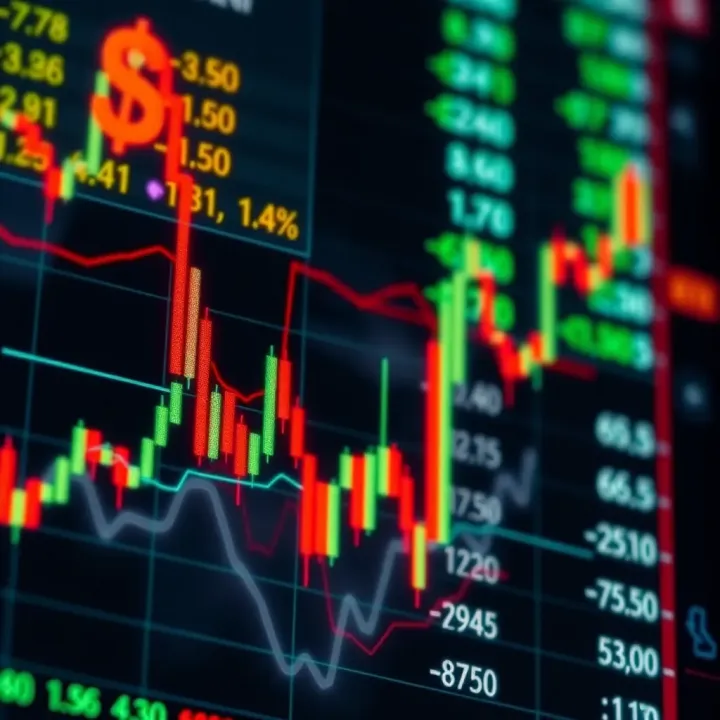
Explore forex trading in Nigeria with insights on regulations, local market, top platforms, risks & tips for beginners. Start smart today! 💹🇳🇬
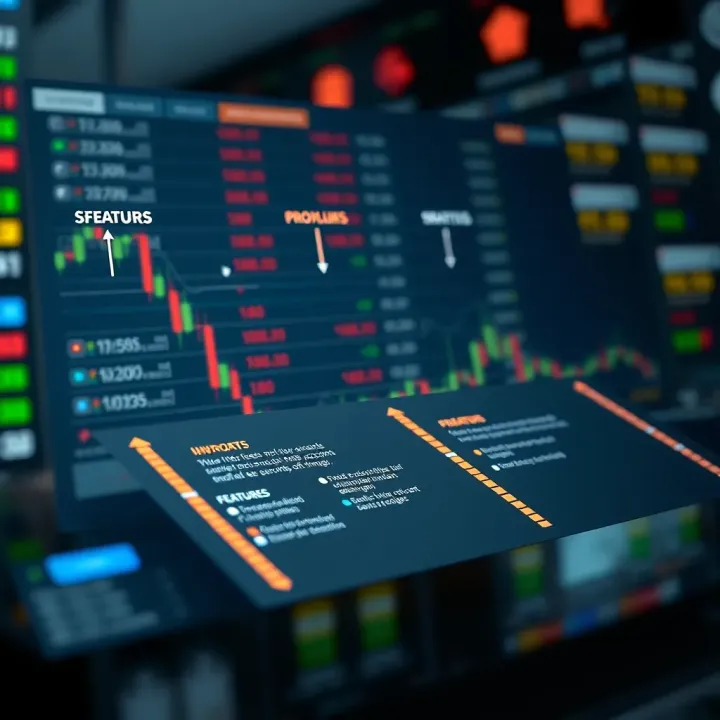
Discover how to open and manage a forex trading account in Nigeria 🇳🇬. Learn types, broker features, risks, and smart tips to trade forex like a pro ₦.
Based on 14 reviews