
Top Forex Trading Strategies for Nigerian Traders
📈 Explore smart Forex trading strategies tailored for Nigeria 🇳🇬. Learn essential tools, risk management, market analysis & avoid common trader mistakes.
Edited By
Isabella Green
Forex trading in Nigeria demands more than just luck or hunches. To succeed, traders must blend strong strategies with an understanding of Nigeria’s unique financial environment. This includes grappling with naira volatility, limited access to some global platforms, and local regulations that influence capital flow.
Successful trading begins with grasping the foundations of both fundamental and technical analysis. Fundamental analysis dives into economic indicators—like Nigeria’s inflation rate, foreign reserves levels, or Central Bank of Nigeria (CBN) monetary policy shifts—to predict how currency pairs might move. Technical analysis, on the other hand, examines charts and price patterns to identify entry and exit points.
A solid grasp of risk management separates consistent traders from those chasing losses. Forex trading involves high leverage, and in Nigeria, where external shocks regularly affect the naira, risk controls are vital.
Setting stop-loss orders to cap potential losses
Only risking a small percentage (commonly 1-2%) of trading capital per trade
Avoiding over-leveraging, especially given naira's exchange swings
Psychology also plays a critical role. Emotional discipline ensures traders stick to their plan, avoiding rash decisions driven by fear or greed. For example, after a losing streak, many might double down recklessly, a behaviour that often worsens losses.
Practical steps Nigerian traders should consider:
Choose brokers regulated by bodies recognised locally or internationally, preferably with NGN trading accounts to avoid excessive forex conversion fees.
Use platforms like MetaTrader 4/5 or Nigerian fintech apps that support spot trading with reasonable spreads.
Keep informed on Nigerian economic reports and CBN announcements that can cause sudden market moves.
Starting forex trading without a clear strategy is like boarding a danfo without knowing the destination. With deliberate analysis, disciplined risk management, and a firm handle on one’s emotions, Nigerian traders can improve their chances of turning forex trading into a meaningful, sustainable income stream.
Grasping the basics of forex trading is essential for any trader aiming to succeed, especially in a market as dynamic as Nigeria's. Forex, or foreign exchange, involves buying one currency and selling another simultaneously. Getting this clear from the start helps traders avoid costly mistakes and improves decision-making.
Forex trading is the global marketplace where currencies are exchanged. It operates 24 hours a day during weekdays, connecting buyers and sellers worldwide. For example, if you believe the US dollar will strengthen against the euro, you buy USD/EUR currency pair. Profit comes from the change in exchange rates between when you buy and sell. Unlike fixed stock exchanges, forex enables trading almost any time, making it attractive to Nigerian traders who can fit sessions around their schedules.
While thousands of currency pairs exist, the bulk of trading centres on a few major pairs like USD/NGN, EUR/USD, GBP/USD, and USD/JPY. These pairs offer good liquidity and better spreads, meaning lower costs for traders. Understanding market hours is just as important. The forex market consists of sessions that correspond with global financial centres: London, New York, Tokyo, and Sydney.
For Nigerian traders, the London and New York sessions are particularly active, overlapping between 2:00 pm and 6:00 pm WAT, offering higher price movements and trading volumes. Trading during these peak hours can present more opportunities but also higher volatility, so timing your trades is a practical consideration.
Forex trading in Nigeria typically happens through online brokers regulated by bodies like the Securities and Exchange Commission (SEC). Traders access platforms such as MetaTrader 4/5 or proprietary broker apps to buy and sell currency pairs.
The naira (₦) is less directly traded on global markets but plays a significant role locally. Nigerian traders often trade major international pairs while monitoring how naira’s value fluctuates due to CBN policies and global oil prices. For instance, an oil price drop can weaken the naira, impacting USD/NGN exchange rates.
Local restrictions and the evolving regulatory framework sometimes add complexity. For example, access to forex brokers abroad can be limited by bank regulations and foreign exchange controls. Still, fintech companies like OPay and PalmPay are steadily easing access to forex services for everyday Nigerians.
Understanding these basics builds a strong foundation, helping you navigate the forex world with confidence and awareness of the unique Nigerian context.
Key takeaway: Start by understanding how forex works globally and locally.
Key point: Focus on major currency pairs and know when the market is most active.
Practical tip: Use reliable brokers regulated in Nigeria to safeguard your investments.
Fundamental analysis helps forex traders understand the forces driving currency value changes. In Nigeria's forex context, traders gain an edge by examining economic factors affecting both the global and local markets. This approach goes beyond charts to uncover why a currency might strengthen or weaken, enabling more informed and timely trading decisions.
Interest rates set by central banks influence currency strength directly. When the Central Bank of Nigeria (CBN) raises rates, foreign investors may find Nigerian assets more attractive due to higher yields, pushing the naira up. Conversely, rate cuts often weaken the naira as returns shrink. Traders watch policy rate changes closely to anticipate market movements and adjust their positions accordingly.
For example, if the CBN raises rates to fight inflation, a trader might expect the naira to strengthen against the dollar, presenting a buy opportunity. Ignoring such signals can lead to costly trades.
Inflation erodes purchasing power and impacts currency value. High inflation in Nigeria usually weakens the naira because it reduces investor confidence and leads to currency depreciation. Traders track the Consumer Price Index (CPI) reports to gauge inflation trends.
If inflation rises sharply, traders may sell naira pairs in anticipation of depreciation. Conversely, low and stable inflation often supports a stronger currency, encouraging long positions.
GDP growth signals the health of an economy. When Nigeria’s GDP shows steady or robust expansion, it indicates rising economic activity and potentially stronger currency demand. Forex traders use GDP reports to confirm or challenge existing market trends.
For instance, a better-than-expected GDP print might trigger naira appreciation as confidence grows, leading traders to increase their buying volumes. Weak GDP can have the opposite effect.
The CBN often adjusts monetary policies to control inflation, stabilise the naira, or encourage growth. Such policies influence liquidity, interest rates, and forex supply.
Traders who monitor policy statements and CBN interventions gain insights into future market moves. For example, the CBN’s periodic forex restrictions or foreign exchange interventions can create supply bottlenecks that impact naira liquidity and price.
Nigeria’s economy depends heavily on oil exports, making the naira sensitive to global oil price swings. A rise in crude prices typically strengthens the naira as forex inflow increases from sales, boosting reserves.
On the other hand, sharp oil price drops reduce forex availability and can weaken the naira. Forex traders keeping an eye on Brent crude prices can better time their entry and exit points based on oil-driven market cycles.
Political stability affects investor confidence and currency strength. Elections, policy changes, or unrest can trigger volatility in the forex markets.
For Nigerian traders, understanding the timing and likely outcomes of political events helps avoid unexpected losses. For instance, election periods often bring naira volatility as markets react to uncertainty and policy direction.
Keeping tabs on these fundamentals helps Nigerian forex traders align their strategies with real-world economic forces, reducing guesswork and improving trade outcomes.
Mastering technical analysis is essential for traders aiming to make informed decisions in the forex market, especially in Nigeria where market conditions can be unpredictable. This technique involves studying price charts and patterns to gauge future movements based on historical data rather than relying solely on economic news or sentiment. For Nigerian traders balancing local market quirks like naira volatility and global forex influences, technical analysis offers a practical edge.
Candlestick Patterns are visual tools offering insights into market sentiment. Each candlestick shows the opening, closing, high, and low prices within a specific timeframe—say an hour or a day. For example, a ‘hammer’ pattern, appearing after a price drop, suggests a potential reversal as buyers begin to push prices up. Conversely, a ‘shooting star’ signals a probable price decline after an uptrend. Nigerian traders can use these patterns to time entries or exits more confidently, especially when paired with local market contexts.
Support and Resistance Levels mark price points where an asset repeatedly ‘bounces’ off, either upward or downward. Support acts like the floor—prices tend not to fall below it easily—while resistance works as the ceiling, capping upward moves. For instance, the USD/NGN pair might find support around ₦460 and resistance near ₦470; knowing these helps traders set stop-loss orders and take profits more wisely. Watching these levels also reduces guesswork in volatile conditions.
Moving Averages (MA) smooth out price data to highlight trends over time. A 50-day MA averages the closing prices of the last 50 days, showing the general direction without day-to-day noise. If a short-term MA, say 20-day, crosses above a long-term MA like the 50-day, it might signal an upward trend. Nigerian traders often use moving averages to confirm whether to buy or sell, especially helpful in choppy markets impacted by factors like oil price swings.
Relative Strength Index (RSI) measures momentum by comparing recent gains against losses, ranging from 0 to 100. An RSI above 70 hints that the currency pair is overbought (possibly due for a dip), while below 30 suggests oversold conditions (a potential rise ahead). For example, if EUR/USD hits an RSI of 75, it might be wise to prepare for a pullback. Nigerian traders find RSI useful for spotting turning points and avoiding overcommitting during extreme moves.
MACD (Moving Average Convergence Divergence) tracks the relationship between two moving averages to signal trend changes and momentum shifts. When the MACD line crosses above its signal line, it suggests a buy opportunity; the reverse indicates a sell signal. MACD also highlights divergence—price movement opposing the indicator trend—which can point to weakening trends. Using MACD helps Nigerian traders avoid false breakouts, particularly when global events create sudden market swings.
Technical analysis tools don’t guarantee success but they equip Nigerian forex traders with clear signals and better timing. Combining chart reading with indicators builds a robust approach suited to Nigeria’s unique trading environment.
Protecting your capital is the backbone of successful forex trading. Without solid risk management, even the most promising trades can end in losses that wipe out your gains. For Nigerian traders navigating a volatile forex market influenced by factors like naira instability and fluctuating oil prices, managing risk becomes doubly important.
Stop-loss orders help you limit losses by automatically closing a trade once the price hits a set level. For example, if you buy USD/NGN at ₦480 and set a stop-loss at ₦475, your loss will be confined to ₦5 per dollar if the market moves against you. Take-profit points, on the other hand, close trades when a predefined profit is reached, locking in gains before the market can turn. By using these tools, you prevent emotional decisions that often lead to holding losing trades too long or selling winners too early.
Choosing the right position size is about balancing risk and reward. A common rule is never to risk more than 1–2% of your trading capital on a single trade. For instance, if your capital is ₦200,000, risk per trade should not exceed ₦2,000–₦4,000. Using leverage amplifies profits, but also losses, so it should be used cautiously. Leveraging at 50:1 means that a 2% adverse move could wipe out your entire capital, a lesson many traders learn the hard way. Start with low leverage and increase only as you gain confidence and discipline.
Volatile periods, such as during naira depreciation or political uncertainty, can produce sharp price swings. These often trap traders into impulsive decisions. To avoid this, stay updated with news from the Central Bank of Nigeria and global oil markets, as they directly affect forex liquidity and volatility. Avoid overtrading during such times and consider widening stop-loss points slightly to accommodate larger price movements without being stopped out prematurely.
Effective risk management isn't about avoiding loss altogether, but controlling how much you lose and protecting your capital for the long haul.
Adopting these strategies helps you stay in the forex trade longer and steadily grow your investment. Nigerian traders who apply proper stop-losses, position sizing, and wisely respond to market volatility stand a better chance of turning consistent profits instead of chasing quick wins that could backfire.
Having a strong trading mindset is often overlooked, yet it’s one of the cornerstones for success in forex trading, especially in a market as dynamic as Nigeria's. The mindset affects how you react to losses, gains, and market fluctuations, which can make the difference between consistent profits and quick losses. Without it, even the best strategies on fundamental or technical analysis may crumble under pressure.
Emotions like fear, greed, and frustration tend to hijack trading decisions. For example, when the naira suddenly weakens against the dollar due to CBN policy changes, a trader driven by panic might exit a position prematurely or increase stakes recklessly. Discipline means setting strict entry and exit rules and sticking to them, regardless of market noise or personal feelings. This could involve using predetermined stop-loss orders or avoiding impulsive trades after a big win or loss.
A practical step is to develop a routine—perhaps reviewing charts daily at the same time to reduce impulsivity and fatigue. Also, take breaks during market hours to avoid stress-induced decisions. Many Nigerian traders fall into the trap of chasing quick profits during ember months without considering the volatility, which often leads to losses.
A trading journal is more than a log; it's a reflection tool. Recording every trade's details—entry price, exit price, reason for trade, emotional state at the time—helps spot patterns in your behaviour and strategy effectiveness. For instance, you might notice that trades taken before economic releases like inflation data often lead to losses if you don't wait for clearer signals.
In Nigeria's forex environment, where external factors like fuel scarcity or political announcements can spike volatility, journaling helps you adapt strategies by learning from past mistakes and successes. Reviewing your journal after every trading week or month sharpens self-awareness, which is essential for long-term improvement.
Keeping emotions in check and learning from your own trading history enhances consistency, which is key to navigating the unpredictable forex market in Nigeria.
In summary, cultivating a strong trading mindset by mastering emotional control and maintaining a detailed trading journal lays a foundation that supports other strategies. These practices not only build resilience but also improve your decision-making process over time, leading to better trading outcomes.
📈 Explore smart Forex trading strategies tailored for Nigeria 🇳🇬. Learn essential tools, risk management, market analysis & avoid common trader mistakes.

Explore practical forex trading strategies tailored for Nigerian traders 🇳🇬. Learn essential principles, proven techniques, and risk management tips to boost your trading skills 📈.
📈 Master forex trading in Nigeria with practical strategies, risk control, and analysis. Use helpful PDF resources to boost your ₦ earnings confidently and smartly.
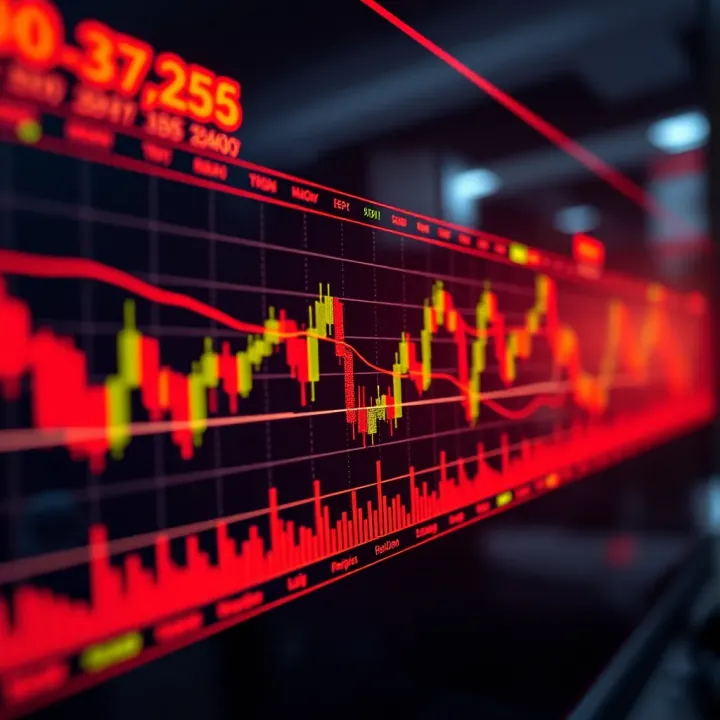
Master forex trading with practical strategies for Nigerian traders 📈. Learn risk tips, analysis methods, and how to build profits smartly in Nigeria's market 🇳🇬.
Based on 15 reviews