
Understanding Forex Trading for Nigerian Traders
💱 Understand forex trading: how the global currency market works, key players, methods, risks & rewards for Nigerian traders. Make smarter moves with forex insights today!
Edited By
Oliver Bennett
Forex trading, also known as foreign exchange trading, is the process of buying and selling currencies to profit from fluctuations in exchange rates. It is the largest financial market in the world, handling daily transactions worth trillions of dollars. Unlike the stock market, forex operates 24 hours a day across global financial centres, making it accessible to traders anywhere, including Nigeria.
At its core, forex trading involves pairs of currencies, such as USD/NGN or EUR/USD. When you buy one currency, you simultaneously sell another. For example, buying USD/NGN means you expect the US dollar to strengthen against the Nigerian naira. If the dollar rises as predicted, you can sell back your dollars at a higher naira value, making a profit.
The forex market includes a range of participants, from central banks and commercial banks to hedge funds, corporations, retail traders, and brokers. In Nigeria, retail forex trading has grown thanks to accessible platforms like Oanda and IG Group, allowing individuals to enter the market with relatively small capital.
However, the market can be volatile, and participants must understand the risks involved. Currency values are influenced by economic data, political events, interest rates set by central banks like the Central Bank of Nigeria (CBN), and global market sentiment.
Currency Pair: The two currencies involved in a trade. The first currency is the base, the second is the quote.
Pip: A unit measuring the change in the exchange rate, often the fourth decimal point.
Leverage: Borrowed funds that allow traders to control larger positions with smaller money, which can increase both profits and losses.
Spread: The difference between the buying (ask) price and selling (bid) price.
Understanding these terms is essential before placing any trades. Forex trading is not gambling; success requires education, strategy, and discipline.
Traders may use different approaches such as day trading, swing trading, or long-term position trading. Some rely on technical analysis that studies price charts, while others follow fundamental analysis focused on economic indicators and news.
Mastering forex trading means grasping these basics, knowing how global events affect currencies, and using the right tools and brokers that comply with Nigerian regulations. This foundation will help you steer the market confidently and avoid common pitfalls.
Forex trading refers to the buying and selling of foreign currencies. It's more than just exchanging cash while travelling abroad; it's a global market where currencies are traded to profit from fluctuations in their value. Understanding what forex trading means is essential before stepping into this fast-moving marketplace, especially for Nigerian traders who want to make informed decisions.
At its core, forex trading involves exchanging one currency for another based on expected changes in their relative values. For instance, a Nigerian trader might buy US dollars (USD) using naira, expecting the dollar to strengthen so they can sell back later at a profit. This kind of activity affects businesses that rely on imports and exports, individuals sending money abroad, and investors looking for returns outside traditional stock markets.
Forex trading is essentially the exchange of one nation's currency for another in a decentralised global market. Unlike fixed exchange rates set by governments, forex rates move continuously according to supply and demand. Traders attempt to capitalise on these movements by buying currencies they believe will increase in value and selling those expected to fall.
To offer a practical example, imagine a trader purchasing the euro (EUR) against the US dollar (USD). If the euro strengthens against the dollar, say from 1.10 to 1.15 USD, the trader benefits by selling the euro back at a higher rate. The profit arises from this small change in rate multiplied by the amount traded.
Currency exchange rates depend on various factors such as economic indicators, political events, central bank policies, and market sentiment. These rates represent how much one currency is worth compared to another, setting the price at which currencies trade.
In the forex market, currency is always quoted in pairs—like GBP/USD or USD/JPY—showing the value of one currency relative to the other. When you exchange currencies at a bureau de change or through a bank, the rates you see reflect real-time market values, adjusted to include a margin for profit.
Consider Nigeria's Central Bank policies. When the CBN adjusts interest rates or imposes foreign exchange controls, it can make the naira strengthen or weaken. For instance, during periods of naira volatility, forex traders watch closely for opportunities to buy or sell based on expected policy moves.
Understanding how currency exchange works helps traders anticipate market moves and manage risks. It’s not just about guessing which way rates move but recognising the economic forces at play.
In summary, grasping what forex trading means and how currency exchange operates sets the foundation for anyone interested in this market. Nigerian traders, especially, benefit from an awareness of local economic influences alongside global trends to navigate forex trading wisely.
Understanding how the forex market functions is key to navigating its complexities with confidence. The forex market operates as a global network where currencies are bought and sold. Its structure determines who trades, when they trade, and how accessible the market is to different participants. This knowledge helps traders and investors make informed decisions and plan their strategies effectively.
The forex market hosts a wide range of players, each serving distinct roles. Banks and financial institutions form the backbone, handling huge daily trades on behalf of clients and themselves. For example, a Nigerian commercial bank might exchange dollars for naira to support importers. Central banks like the Central Bank of Nigeria (CBN) intervene occasionally to stabilise their currencies or control inflation.
Besides these, corporate businesses engage in forex to pay for goods, services, or investments abroad. A Lagos-based company buying machinery from Germany will convert naira to euros. Retail traders, including individuals using online platforms like MT4 or local brokers, also participate, though their volumes are smaller. Lastly, hedge funds and speculators aim to profit from currency fluctuations, often using high leverage.
The diversity of forex participants ensures continuous trading activity and liquidity, making it the largest financial market globally.
Forex trading happens round the clock, five days a week, due to its global nature. Trading starts in Asia (Tokyo session), moves to Europe (London session), and ends in North America (New York session). For Nigerian traders, market active hours fall mostly between 3 pm and midnight WAT, coinciding with London and New York sessions when volatility tends to spike.
Access to the forex market has improved vastly with technology. Anyone with internet access can trade via online brokers offering platforms compatible with smartphones or PCs. However, trading during peak hours is crucial since liquidity and volume are higher, leading to tighter spreads and better price discovery.
Some practical considerations include:
Using brokers regulated by recognised bodies to avoid fraud
Checking server uptime to prevent disruptions during key market hours
Being mindful of daylight saving shifts abroad that affect session times
The forex market’s non-stop nature and wide accessibility mean Nigerian traders can tailor their activities to fit their schedules, whether trading full-time or on the side. Still, understanding when the market is active helps avoid low liquidity periods, reducing risks and improving trading conditions.
Grasping these operational aspects of the forex market gives traders a solid footing. It bridges the gap between theory and real-world application—especially in Nigerian contexts where exchange rates, global events, and local economic policies all impact forex pricing daily.
Grasping the key terms and concepts in forex trading is fundamental for anyone aiming to navigate Nigeria’s busy forex market effectively. These basics help traders understand the language of the market, communicate accurately, and make informed decisions when opening or closing trades.
Forex trading always involves buying one currency and selling another simultaneously; these are known as currency pairs. For example, consider the USD/NGN pair where the US dollar is the base currency and the Nigerian naira is the quote currency. If the quote reads 460, this means ₦460 is required to buy $1.
Currency pairs fall into three categories: major, minor, and exotic. Major pairs always include the US dollar, like EUR/USD or GBP/USD, and tend to be more liquid and stable. Exotic pairs, such as USD/ZAR or USD/TRY, involve less common currencies and often have wider spreads due to higher volatility and lower trading volume. Understanding this helps traders choose pairs that match their risk appetite and trading strategy.
Quotes reflect the exchange rate between the two currencies, showing the value of one unit of the base currency expressed in the quote currency. Traders watch these quotes closely, as small changes can lead to profit or loss.
In forex, pips are the standard unit measuring price movement. For most currency pairs, a pip equals 0.0001 of the quote currency. For example, if EUR/USD moves from 1.1000 to 1.1005, that’s a 5-pip change. Being able to calculate pip value lets traders quickly assess potential gains or losses.
Leverage allows traders to control much larger positions than their actual capital. For instance, if a broker offers 100:1 leverage, it means with just ₦10,000, a trader can control ₦1,000,000 worth of currency. Leverage is a double-edged sword: it can magnify profits, but also magnify losses, sometimes beyond the initial investment.
Margin is the amount of money required to open and maintain a leveraged position. If you want to trade ₦1,000,000 with 100:1 leverage, your margin is ₦10,000. Understanding margin calls and how margin works helps traders avoid unexpected liquidations.
Traders must always manage leverage and margin carefully, especially in volatile markets like forex, to prevent severe losses.
Mastering these terms—currency pairs with their quotes, pips for price changes, and the concepts of leverage and margin—gives traders the foundation to engage confidently and responsibly in forex trading.
Understanding the popular methods used in forex trading sheds light on how traders approach the market and manage risk. These methods vary from simple, straightforward trades to more complex strategies involving contracts and interest rates. Knowing the differences helps you choose the approach that suits your style and financial goals.
Spot trading is the most direct and common way to trade currencies. It involves buying or selling currency pairs at the current exchange rate, with immediate settlement, usually within two business days. For instance, if a trader in Lagos buys the EUR/USD pair at 1.1200, they expect to sell it later at a higher price to make a profit. The advantage of spot trading lies in its simplicity and liquidity — forex markets are highly active, so prices update every second. However, it demands constant attention since currency prices can swing quickly, especially during major economic news releases.
Futures and options offer more complex methods for forex trading, allowing traders to hedge or speculate with defined terms. A forex future is a contract to exchange a currency at a pre-agreed price on a future date. For example, an exporter expecting payment in dollars three months from now can lock in a rate today via a futures contract, avoiding the risk of naira depreciation. Options, on the other hand, grant the right but not the obligation to buy or sell currencies at a set price by a certain date. This flexibility suits traders who want to limit potential losses while keeping the possibility of profit open. Both instruments usually require a larger capital base and familiarity with contract terms.
Carry trade is a strategy where traders borrow in currencies with low interest rates to invest in currencies offering higher yields. For example, borrowing Japanese yen to buy South African rands could earn the interest rate difference. This method depends heavily on stable exchange rates; sudden volatility can wipe out gains. Besides carry trade, some traders use scalping, which involves quick trades for small profits, or swing trading that targets price movements over days or weeks. Each method carries its own risk and requires discipline, market knowledge, and solid risk management.
Knowing your trading method and how it fits your risk appetite is vital. Popular forex trading strategies offer various paths — from straightforward spot trades to sophisticated contracts — so understanding them well ensures better decision-making in Nigeria’s dynamic market.
Forex trading offers opportunities to profit but comes with significant risks that every trader must understand. This section highlights key risks and practical considerations to navigate the market effectively and protect your investment.
The forex market is known for its high volatility — currency prices can swing widely within short periods. While this volatility creates chances for gains, it also increases the risk of losses. For example, unexpected geopolitical events or sudden Central Bank policy decisions can cause rapid price shifts. Traders who are unprepared might see their positions wiped out very quickly.
Leverage, or trading on margin, amplifies both profits and losses. In Nigeria, some brokers offer leverage ratios as high as 1:500. This means you can control ₦500,000 worth of currency with just ₦1,000. Though attractive, this magnifies risk considerably. A small adverse move of just 0.2% could lead to a total loss of your initial margin. Take a practical approach by using conservative leverage and always applying stop-loss orders to limit exposure.
The forex market’s decentralised nature makes it vulnerable to fraud and scams, especially in markets with evolving regulation like Nigeria. The Nigerian Securities and Exchange Commission (SEC) oversees capital markets, including forex activities involving firms under its purview. Participation through SEC-registered brokers ensures some level of protection.
Nonetheless, unregulated platforms abound, luring traders with promises of huge returns or risk-free trading. Beware of schemes demanding upfront payments without clear licence or track record. Common fraud tactics include fake trading signals, Ponzi schemes, and cloned websites.
Always verify brokers and platforms through official regulatory bodies like the SEC before committing funds. Never rush into deals promising overnight riches—if it sounds too good to be true, it usually is.
In summary, understanding market volatility and leverage helps manage financial exposure wisely. Coupling this with awareness of regulatory standards guards you against fraud and unsafe trading environments. These considerations form the foundation for responsible trading and help reduce the risk of costly mistakes.
Balancing risk and reward is key, especially in Nigeria’s dynamic forex scene where market conditions and regulatory frameworks keep evolving.
💱 Understand forex trading: how the global currency market works, key players, methods, risks & rewards for Nigerian traders. Make smarter moves with forex insights today!
Start forex trading confidently in Nigeria! Learn how the market works, top strategies, risks to avoid, and tools for safe trading. 📈💰 Get practical tips now!
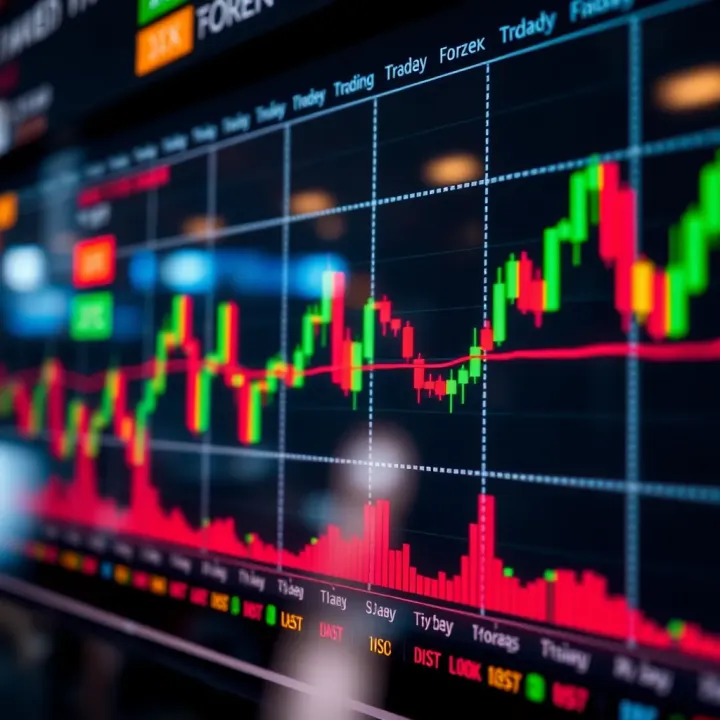
Learn the essentials of forex trading 📈: key concepts, risk management, trading methods, and factors that shape currency markets for smart decisions.
Learn forex trading basics, strategies, risks, and best platforms tailored for Nigerian traders. Gain practical tips to trade confidently and securely 📈💱🇳🇬
Based on 7 reviews