
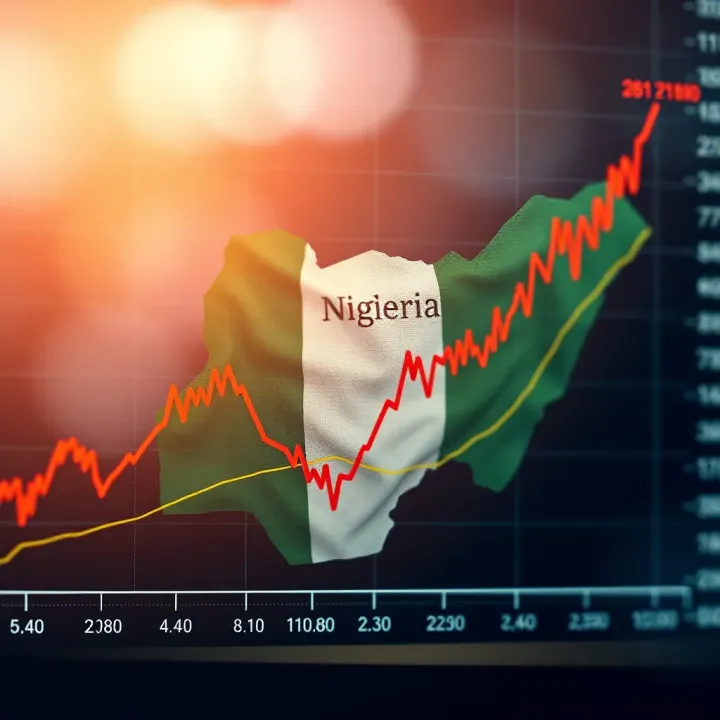
Benefits of Forex Trading for Nigerian Investors
Discover why forex trading is a smart move for Nigerian investors 🇳🇬. Benefit from flexible hours, easy market access, and real profit chances 📈💰.
Edited By
Isabella Evans
Forex trading has become an appealing option for many Nigerian investors seeking fresh ways to grow their wealth beyond traditional markets. At its core, forex trading involves buying and selling currencies on the international currency market, also known as the foreign exchange market. For Nigerians, this brings direct exposure to a vast and highly liquid market where daily trading volumes can exceed US$6 trillion.
One key advantage of forex trading for Nigerian investors is market accessibility. Unlike the stock market, forex allows individual investors to start trading with relatively small amounts of capital, often as low as ₦10,000 through platforms hosted by brokers registered with the Securities and Exchange Commission (SEC). The ability to trade 24 hours on business days also means investors can manage their positions around their schedules, making it flexible enough for both part-time traders and full-time professionals.

Liquidity is another major benefit. The forex market operates continuously during weekdays, providing immediate entry and exit points with narrow spreads, reducing trading costs considerably. This liquidity is especially important because it allows investors to react quickly to global events affecting currency values, such as changes in Central Bank of Nigeria policies, US Federal Reserve rate announcements, or geopolitical developments.
Moreover, forex trading offers a way to diversify investment portfolios. Many Nigerian investors put most of their capital into local stocks, real estate, or fixed income securities, which can be heavily influenced by the naira's fluctuations and domestic economy. By adding currency pairs like USD/NGN or EUR/USD to their holdings, traders can spread risk and potentially offset losses in other asset classes.
Due to the naira's volatility and changing economic conditions in Nigeria, forex trading presents an opportunity to take advantage of currency movements that may not be readily available through other investment avenues.
That said, forex trading is not without risk. Leverage offered by brokers amplifies both profits and losses, making risk management crucial. Nigerian investors should educate themselves thoroughly, use demo accounts, and engage responsible brokers before committing significant funds.
In summary, forex trading opens access to a global market characterised by round-the-clock trading, high liquidity, and diverse opportunities. For Nigerian investors prepared to navigate its risks carefully, it represents a practical channel for portfolio growth and wealth diversification.
Forex trading involves buying and selling currencies on the foreign exchange market to capitalise on fluctuations in exchange rates. Unlike stocks or commodities, forex trading focuses on pairs, such as USD/NGN or EUR/USD, where investors speculate on whether one currency will strengthen or weaken against another. This market operates 24 hours daily across global financial hubs, enabling continuous access for traders irrespective of their location.
At its core, forex trading is a straightforward concept: traders buy currencies they expect to appreciate and sell those likely to depreciate. Practical examples include a Nigerian investor anticipating the naira's devaluation might sell NGN and buy USD. Similarly, during global events affecting oil prices, investors often adjust positions rapidly as Nigeria’s economy is heavily linked to crude oil revenues.
What attracts Nigerian investors to forex trading stems from several factors. First, it permits access to a global market that is more liquid and dynamic than the Nigerian stock exchange. This liquidity means orders can be executed quickly without significant price changes, vital during volatile market periods influenced by local economic and political developments.
Secondly, forex trading requires relatively low capital to start. For example, many online brokers offer micro accounts allowing Nigerians to begin trading with as little as $50 (about ₦30,000). This low entry barrier appeals especially to young professionals and side hustlers looking for alternative income streams beyond traditional savings or stocks.
Moreover, the availability of numerous online trading platforms tailored to Nigerian users has increased accessibility. Platforms like MetaTrader 4 and local fintech firms provide tools for education, risk management, and real-time market data, making forex trading more approachable.
Lastly, the naira’s exchange rate volatility further fuels interest. Investors see forex as a way to hedge against inflation and currency depreciation, diversifying their investment beyond the local economy's constraints. This hedging advantage, alongside the potential for gains both in rising and falling markets, adds to the appeal.
Understanding both the mechanics of forex trading and its relevance to Nigeria’s economy helps investors make informed decisions. With its low entry costs, round-the-clock market access, and hedging potential, forex trading stands out as an accessible avenue for wealth growth.
In summary, forex trading consists of dealing in currency pairs with the goal of profiting from fluctuating exchange rates. Nigerian investors are drawn by its liquidity, accessibility, and practical benefits like risk diversification and hedging against naira instability. Grasping these foundations prepares traders to navigate the forex market thoughtfully and strategically.
Forex trading appeals to many Nigerian investors mainly because it doesn’t demand huge starting capital or complex setups. Its accessibility levels, alongside the proliferation of user-friendly platforms, have opened doors for Nigerians keen to tap into global currency markets without the traditional hurdles.
One of the main reasons forex trading is attractive is the relatively low capital needed to start. Unlike buying stocks on the Nigerian Exchange (NGX), where ₦20,000 or more may be necessary for some shares, forex platforms often allow trading with as little as ₦5,000 or lower. This lowers the barrier to entry, especially for young investors or those testing the waters. Furthermore, many brokers offer micro-accounts that let traders buy fractions of currency lots, reducing risk while allowing exposure to forex markets.
This low capital requirement makes forex ideal for part-time traders who can’t afford to tie up large sums. For example, a university graduate in Lagos might start with ₦7,000 to practise trading currencies like the USD/NGN pair, steadily building experience without risking their limited savings.
Online forex trading platforms have made accessing global currency markets simpler than ever for Nigerians. Firms like FXTM, OctaFX, and Alpari have established local presences, providing platforms tailored to Nigerian traders with interfaces in English and support via WhatsApp or Telegram. These platforms support mobile trading, which matters greatly in Nigeria where stable internet access on smartphones is common but desktops are less frequent.
The rise of fintech firms has also contributed, with some African-focused platforms integrating forex trading alongside other investment options. This integration means investors can manage forex trades, savings, and payments all in one app—improving convenience and reducing friction.
Many Nigerian traders appreciate the 24/5 availability of forex markets, allowing trading outside typical business hours when many are off work. This flexibility combined with accessible platforms means even working professionals can participate.
However, it's important to choose platforms regulated by credible bodies or registered with Nigeria’s Securities and Exchange Commission (SEC). This helps protect users from scams and ensures compliance with Nigerian financial laws.
In sum, the modest capital needed and the widespread access to robust online trading platforms make forex markets especially approachable for Nigerian investors. These factors remove traditional barriers, encouraging more people to diversify investments and engage with international financial markets directly.
Forex trading offers distinct advantages that appeal to Nigerian investors seeking diverse investment opportunities. Understanding these benefits helps investors position their portfolios strategically while managing inherent risks.
The forex market is the most liquid in the world, with daily trading volumes exceeding $6 trillion globally. This plentiful liquidity means investors can enter or exit positions swiftly without significant price disruption. Unlike the Nigerian Stock Exchange, where certain shares may face low turnover, forex currency pairs like USD/NGN or EUR/USD experience constant activity.
Additionally, the forex market operates 24 hours a day, five days a week. This allows Nigerian investors to trade anytime between Sunday evening and Friday evening WAT, accommodating different schedules without the constraints of fixed market hours. For example, a Lagos-based trader can respond to developments in Asian markets overnight or European markets early morning without waiting for local daytime sessions.
Continuous market hours combined with high liquidity create flexibility and help reduce slippage, making forex trading attractive for Nigerians balancing work, errands, and other commitments.
Unlike stock investment that primarily profits from price increases, forex trading allows investors to benefit from both upward and downward market movements. This is possible by easily opening long (buy) or short (sell) positions on currency pairs. For instance, if the naira is expected to weaken against the dollar due to a new CBN policy, an investor can short the naira/USD pair to gain from that decline.
This bi-directional profit potential provides a clear edge, especially in volatile economic environments like Nigeria’s, where currency fluctuations occur regularly due to factors like inflation rates and foreign exchange policies. It enables traders to adapt quickly to market sentiments rather than being limited to bullish trends.
Leverage allows traders to control larger positions with a smaller capital amount, amplifying potential returns. Nigerian forex brokers commonly offer leverage ratios ranging from 1:50 to 1:200. For example, with 1:100 leverage, a trader with ₦50,000 can control a position worth ₦5,000,000.
This magnification increases profit opportunities but also raises risk significantly if the market moves against the trader’s position. Hence, responsible use of leverage, combined with stop-loss orders and other risk management strategies, is vital. Still, for investors with limited capital, leverage offers a practical way to access larger market exposure beyond what their funds would otherwise allow.
In summary, the key advantages of forex trading—high liquidity, 24-hour market access, the ability to profit from both rising and falling markets, and leverage—make it a flexible investment avenue for Nigerian investors. These features particularly suit individuals who seek active involvement, fast execution, and dynamic portfolio growth amid Nigeria’s economic landscape.
Adding forex trading to an investment portfolio can broaden exposure beyond traditional assets like stocks, bonds, or real estate. Currency markets often move independently of other markets. This means that including forex instruments helps balance risks, especially during market downturns in Nigeria's local economy.
Currency trading can spread investment risk by involving multiple economies and financial systems. For instance, while the Nigerian stock market might suffer from political instability or power shortages, the US dollar or Euro can remain stable or move differently due to global economic factors. When you buy or sell foreign currencies, you aren’t tied to a single country's economic fate. This reduces the risk that your entire portfolio will drop sharply at once.
Consider a Nigerian investor whose funds are mostly in Nigerian shares and government bonds. By allocating a small portion—say 10%—to forex pairs such as USD/NGN or EUR/USD, they gain exposure to global economic trends that can offset local volatility. This approach limited losses during the naira recession in 2023, as the forex segment offered opportunities for gains while local assets underperformed.
Currency diversification isn’t about gambling on foreign exchange rates alone but managing the unpredictability of one market by balancing it with others.
The naira has experienced significant fluctuations over recent years, affected by factors like oil price shocks, inflation, and monetary policy shifts by the Central Bank of Nigeria (CBN). Investors with large naira-denominated portfolios face the risk of losing value through currency depreciation.
Forex trading offers a practical hedge. By taking positions in stable or strengthening currencies such as the US dollar or British pound, investors protect purchasing power when the naira weakens. For example, if an investor expects the naira to fall, they might buy USD/NGN on the forex market. If the naira indeed declines, their forex position gains, offsetting losses in naira assets.
This hedging ability is crucial for Nigerian investors who regularly send money abroad, trade imported goods, or plan for education and travel overseas. It offers a way to guard wealth amidst the naira’s instability.
In summary, including forex in investment portfolios supports better risk management through diversification and provides tools to shield assets from local currency swings. Nigerian investors who take a measured approach to forex trading can improve portfolio resilience in a challenging economic environment.
Trading forex in Nigeria offers opportunities but also comes with notable risks that every investor must understand. Market volatility, regulatory concerns, and risk management are critical areas to consider to protect your capital and make informed decisions.
Forex markets are known for sharp price swings, sometimes within seconds. This high volatility means profits can be significant, but losses can pile up quickly if you’re not careful. For example, when the Central Bank of Nigeria (CBN) changes the official exchange rate policy or when unexpected political developments come up, the naira can fluctuate against major currencies like the dollar or euro. Such shifts might wipe out a trader’s gains if they don’t anticipate or react swiftly. It’s essential to accept that losses are part of forex trading and prepare for them seriously.
Nigeria’s forex environment can present risks from unscrupulous brokers. Choosing a broker regulated by the Securities and Exchange Commission (SEC) in Nigeria or other reputable global bodies reduces chances of scams. Some foreign brokers might promise polished bonuses or high leverage but fail to meet regulatory standards, leaving you vulnerable. Legitimate brokers must provide clear terms, segregated client accounts, and reliable customer support. Always verify the broker’s licence and reviews before staking your funds.
Without a solid risk management approach, even seasoned traders face ruin. This means setting stop-loss orders that cut your losses at a predefined level and using only a small fraction of your trading capital on any single trade—often recommended at 1–2%. Diversifying your trades across different currency pairs can also smooth out unpredictability. For instance, avoiding putting all your funds on just USD/NGN but including major pairs like EUR/USD or GBP/USD could lower risk. Remember, managing your emotions and sticking strictly to your strategy is just as critical as understanding the market itself.
Traders who blend knowledge of market volatility with strong risk management and choose regulated brokers are better placed to navigate the forex market safely in Nigeria. Ignoring these considerations can lead to fast and irreversible losses.
By understanding these risks and putting concrete measures in place, Nigerian investors can make forex trading a worthwhile part of their portfolio while safeguarding their hard-earned naira.
Discover why forex trading is a smart move for Nigerian investors 🇳🇬. Benefit from flexible hours, easy market access, and real profit chances 📈💰.
📈 Learn how forex trading works for Nigerian investors 🇳🇬, including practical steps, risk tips, and navigating ₦ to maximise your profits in the forex market.
Explore the benefits of forex trading in Nigeria 🇳🇬—accessibility, liquidity, flexibility, and profit potential 💹. Learn key trader skills and risks to watch ⚠️.
📈 Master forex trading basics with this easy guide for Nigerians. Learn key terms, trading steps, risk controls & where to find helpful PDFs to start strong today.
Based on 14 reviews