
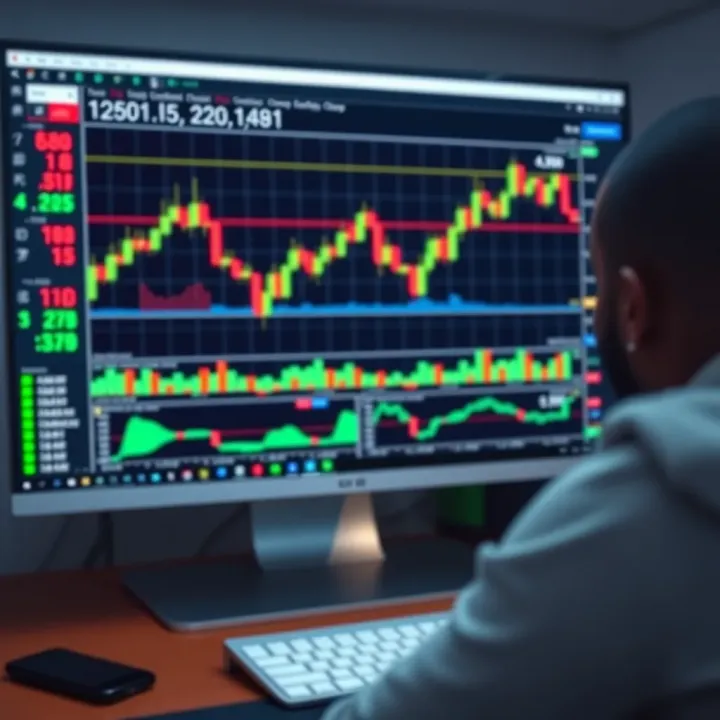
How to Start Forex Trading in Nigeria: A Beginner’s Guide
📈 Ready to trade forex in Nigeria? Learn how to pick brokers, set up accounts, manage risk, and avoid common mistakes. Build your trading skills today! ₦
Edited By
Amelia Sanders
Forex trading refers to the buying and selling of currencies on the foreign exchange market. It is a global marketplace where currencies like the US dollar, euro, and naira are exchanged against each other. For Nigerian traders, forex trading offers an opportunity to earn profits by speculating on currency price movements.
The forex market operates 24 hours a day, five days a week, allowing traders in Nigeria to participate at any convenient time. Unlike the stock market, forex trading is decentralised and mainly happens through electronic platforms provided by brokers. These platforms allow you to trade major currency pairs such as USD/NGN, EUR/USD, GBP/USD, and more.
Currency pairs: Forex trades involve pairs, where you buy one currency and sell another.
Pip: The smallest price movement in a currency pair, crucial for calculating gains or losses.
Leverage: Borrowing funds from brokers to increase trading size, which can amplify profits but also risks.
Spread: The difference between the buy and sell price, representing a broker’s fee.
Successful forex trading demands discipline, market knowledge, and risk management. It's not a get-rich-quick scheme.
In Nigeria, many brokers operate legally under the oversight of the Securities and Exchange Commission (SEC) and Central Bank of Nigeria (CBN). It’s essential to trade with regulated brokers to avoid falling into scams, which are quite common in the market.
For starters, opening an account with platforms that support naira deposits makes it easier to fund trading activities directly in local currency. Brokers like FXTM, HotForex, and locally popular fintech platforms offer interfaces tailored to Nigerian traders.
The advantages of forex trading in Nigeria include high liquidity, accessibility with small capital, and the flexibility of trading from smartphones or laptops. However, traders must be aware of risks such as currency volatility, leverage risks, and potential regulatory changes affecting the forex environment.
Understanding forex trading within Nigeria's financial landscape means recognising how the naira’s fluctuation against major currencies can impact trading choices and profit potential. For those keen to explore forex, a solid grip on fundamentals combined with continuous learning and cautious investing is the best path forward.
Grasping the core principles of forex trading is key for anyone aiming to navigate this fast-paced market successfully. In Nigeria, where the naira fluctuates against major currencies, understanding these basics provides a strong foundation for making informed trading decisions. Whether you’re an investor seeking to diversify portfolios or a trader looking to capitalise on short-term movements, knowing what forex trading involves is essential.
Forex trading, simply put, is the buying and selling of currencies. Traders try to profit from changes in currency values relative to each other. For instance, if you expect the US dollar to strengthen against the naira, you might buy USD/NGN hoping to sell it later at a higher rate. This constant exchange shapes the world’s largest financial market.
Understanding forex trading matters because it puts you at the heart of global commerce and finance. Companies import and export goods, investors manage funds, and central banks influence their economies through currency trades. So, forex trading isn’t just about speculation; it reflects broader economic trends.
Currency pairs are the building blocks of forex trading. One currency’s value is compared against another’s. The first currency in a pair is the base currency; the second is the quote currency. Take EUR/USD as an example: here, one euro’s value is expressed in US dollars.
Every trade involves simultaneously buying one currency and selling the other. If you believe the euro will appreciate against the dollar, you buy EUR/USD. If you think it will weaken, you sell that pair. Nigerian traders often focus on pairs involving the naira, like USD/NGN or EUR/NGN, although naira liquidity can be lower compared to major currencies.
The forex market operates 24 hours a day across different time zones, from Asian to European to American trading sessions. This continuous cycle lets traders react to news and events anywhere promptly. Unlike the stock market, forex lacks a central exchange; it’s a decentralized network of banks, brokers, and traders.
For Nigerians, this means there’s usually some market activity anytime during the day or night, allowing flexibility around personal schedules. However, trading volumes and volatility can vary depending on which global session is active, impacting trading opportunities.
A pip is the smallest price move a currency pair makes, usually the fourth decimal place (0.0001). For example, if USD/NGN shifts from 460.1500 to 460.1600, that’s one pip. Understanding pips helps traders measure gains or losses accurately.
The spread is the difference between the bid (price to sell) and ask (price to buy) prices. Brokers earn through this margin. Tight spreads mean lower costs to enter or exit trades, while wider spreads increase expenses.
Leverage allows traders to control larger positions with a smaller capital amount. For instance, a leverage of 1:100 means you can trade ₦100,000 with just ₦1,000. While leverage can boost profits, it also greatly increases risks, particularly in volatile markets like forex.
Trades use "lots" to denote currency amounts. A standard lot equals 100,000 units of the base currency, but many brokers offer mini or micro lots for smaller-sized trades, suiting Nigerian traders with limited capital.
Margin is the money you must set aside to open a leveraged position. Think of it as a security deposit. For example, to trade one standard lot with 1% margin, you need to provide ₦1,000 as margin for ₦100,000 worth of currency. Keep track of margin levels to avoid forced position closures by brokers.
The bid price is what buyers are willing to pay, while the ask price is what sellers want. These prices fluctuate constantly due to supply and demand.
Knowing bid and ask helps traders know the exact cost when entering or exiting a trade. If you buy at the ask and later sell at the bid, the difference (spread) is a cost. For Nigerian traders, pricing transparency matters since it affects profitability directly.
Forex trading boils down to understanding how money moves across borders. Getting familiar with these essential concepts empowers you to make strategic decisions in Nigeria's dynamic currency landscape.
This section equips you with the groundwork to explore forex trading further, from practical trading tactics to managing risks suitable for the Nigerian market.
To succeed in forex trading, understanding how it operates in daily practice is key. Unlike a place where you physically go to buy or sell, forex trading runs 24 hours across the globe, with active periods depending on various market sessions. Knowing this helps Nigerian traders pick the best times to participate and manage their trades effectively.
Forex trading happens across different time zones because major financial centres span the world—from Tokyo and London to New York. This means when markets in one region close, another opens. For example, Nigerian traders operating on West Africa Time (WAT) will notice the Asian markets winding down around 4 pm Nigerian time, while European markets get into full swing. Appreciating this helps you decide when to trade based on liquidity and volatility.
Since forex is so time-sensitive, trading during active hours usually reduces the spread and increases market liquidity, making it easier to enter or exit trades. For instance, trading the USD/JPY pair at the start of Tokyo's session can be very different from trading it hours later when liquidity thins.
The moments when different major markets operate simultaneously—such as London and New York between 2 pm and 5 pm WAT—are the busiest trading periods. During these overlaps, currency prices can move quickly with tighter spreads because traders from multiple regions compete actively. This period is particularly valuable for Nigerian traders who want to benefit from higher volume and more predictable price trends.
On the flip side, knowing when markets slow down after these overlaps can save you from unnecessary risks. Trading at off-peak hours risks encountering low liquidity, which can cause erratic price movements, making it harder to predict market direction.
When you place a trade, you choose either a market order or a limit order. A market order executes immediately at the best available price, ideal if you want to enter or exit a trade quickly. For example, if the naira suddenly weakens against the dollar and you want to sell immediately, a market order gets you out without delay.
A limit order, however, lets you specify the price at which you want to buy or sell. This is useful when you believe the price will hit a certain level but don't want to trade at the current rate. Say you think the USD/NGN rate will dip to ₦750, you could place a limit buy order at that price, and your trade only executes if the market reaches it.
Managing risks is vital, and stop-loss and take-profit orders help with this. A stop-loss automatically closes your trade at a predetermined loss level to prevent further damage. For example, if you buy EUR/USD at 1.1000, you might set a stop-loss at 1.0980 to limit losses to 20 pips.
Conversely, a take-profit order locks in profits when the price reaches your target. This prevents the common mistake of holding on too long and losing unrealised gains. Nigerian traders often use these tools to balance potential profit with acceptable risk, especially given forex's fast pace.
Understanding market hours, order types, and risk controls gives you the practical edge needed to navigate the forex market confidently. Knowledge of when and how to trade not only saves money but also helps capture the best opportunities in Nigeria's fast-evolving trading landscape.
Forex trading presents both significant opportunities and real dangers, especially for Nigerian traders navigating a complex financial environment. Assessing the risks and rewards is vital to trading wisely and protecting your capital while making the most of available market conditions.
Accessibility and market liquidity play a key role in making forex trading attractive. The forex market is open 24 hours on weekdays, giving Nigerian traders the flexibility to trade beyond local market hours. Unlike the Nigerian Stock Exchange, forex has immense liquidity — daily turnover worldwide is about $6.6 trillion, providing abundant opportunities for swift buy and sell transactions at almost any time. This liquidity means you can enter or exit positions without much delay, even with smaller funds. For example, a trader using a modest deposit on platforms like OPay or Kuda can still find buyers or sellers quickly due to the market’s depth.
Trading forex online also lowers entry barriers compared to traditional investing. You don’t need a large capital upfront; some brokers allow account funding as low as ₦10,000. This accessibility encourages participation from a wide range of Nigerians, from university students to small business owners.
Opportunities with naira and foreign currencies offer unique advantages as well. Because the naira fluctuates against major currencies like the US dollar or euro, traders can capitalise on these changes. Suppose the naira is weakening due to economic pressures; a forex trader may buy foreign currencies ahead of expected inflation to preserve value or profit from the exchange rate movement. This dynamic is particularly relevant given Nigeria’s history of currency volatility and evolving CBN policies.
Additionally, traders can access multiple currency pairs — not just naira-based ones — broadening their strategies. For instance, trading the EUR/USD or GBP/USD pairs lets Nigerian traders tap into global economic trends, reducing overreliance on local economic events.
Market volatility and leverage dangers must be carefully understood. Forex markets can swing quickly due to economic data releases, geopolitical events, or CBN policy announcements. While volatility presents profit chances, it also increases the risk of significant losses. Add leverage into the mix — which lets you trade with more money than you actually deposit — and the stakes rise. For example, a leverage ratio of 1:100 means a ₦10,000 deposit controls ₦1,000,000 worth of currency. Small price moves can cause large gains but also wipe out your account fast if a trade goes against you.
Nigerian traders should manage leverage with strict stop-loss orders and never risk more than they can afford to lose. Many often fall victim to overtrading or insufficient risk management.
Scams and unregulated brokers are unfortunately common hazards. The thousands of forex ads on social media promise huge returns with little effort, but many are fronts for fraudulent schemes. Nigerian regulators like the Securities and Exchange Commission (SEC) crack down on unauthorised brokers, but the market still has shady operators.
Red flags include promises of guaranteed profits, pressure to deposit large sums quickly, or lack of transparent company registration. Always verify broker licences through official SEC lists and avoid platforms that withdraw money without clear explanations. Trustworthy brokers typically have solid Nigerian and international presence, proper licensing, and positive user reviews.
Forex trading offers exciting rewards but also comes with risks that can cost you dearly if ignored. Being cautious and informed is your best defence.
To kick off your journey into forex trading, understanding the initial steps is key. Starting well sets a solid foundation, especially in Nigeria's unique financial landscape where aspects like regulation, funding methods, and accessible platforms all play big roles. Clear insights here help you avoid common pitfalls and trade confidently.
Knowing whether a broker operates legally in Nigeria is critical. The Central Bank of Nigeria (CBN) and Securities and Exchange Commission (SEC) oversee financial activities, including forex trading. Brokers registered with SEC have met minimum standards, which helps protect traders from fraud. Trading with unregulated brokers carries a high risk of losing funds due to scams or poor business practices.
For example, some Nigerians have fallen victim to fake brokers promising huge returns only to disappear with clients’ money. Sticking to licensed brokers means you get proper oversight and a formal process for complaints or disputes if things go wrong.
Nigerian traders frequently use well-known international brokers like FXTM, Alpari, and HotForex, which operate online and accept Nigerian clients. These platforms offer competitive spreads and multiple currency pairings including naira-related ones. Also, many offer local customer support and allow deposits in naira, smoothing the process for Nigerian traders.
Some brokers tailor services specifically for Nigerian users, providing WebTrader interfaces or apps compatible with low bandwidth and popular Nigerian payment options. Using familiar, reliable platforms helps you focus on trading without technical disruptions.
Opening an account requires identity verification to comply with Nigerian financial rules. Usually, you need your National Identification Number (NIN) and Bank Verification Number (BVN). These documents confirm your identity and reduce fraudulent accounts.
Besides, brokers may ask for proof of address, like a utility bill or tenancy agreement. Having these ready speeds up account activation, allowing you to start trading without unnecessary delays.
Funding your trading account in Nigeria often involves bank transfers, debit cards, or popular fintech wallets like OPay or Flutterwave. These options make it easy to move ₦ and convert it into foreign currency for forex trades.
Withdrawals also respect the local currency system and typically take between a few hours to two business days, depending on the broker’s policies. Knowing these methods upfront helps you plan cash flow and take profits out smoothly without hidden charges.
MetaTrader 4 (MT4) and MetaTrader 5 (MT5) dominate Nigerian forex trading. These platforms provide user-friendly interfaces, advanced charting tools, and automated trading options. Since most brokers support MT4/MT5, learning to use them is a practical starting point.
Other software like cTrader offers alternative features such as better order management and a cleaner design but may have steeper learning curves. Whichever platform you choose, ensure it matches your trading style and technical comfort.
Mobile apps have made forex trading accessible beyond Lagos offices and internet cafes. Brokers like FXTM, HotForex, and Alpari offer Android and iOS apps allowing you to trade anytime and anywhere—even during Lagos traffic jams or while waiting for your okada.
These apps sync with desktop accounts and include real-time price alerts, charting tools, and quick trade execution. In a country where mobile internet is widespread, mobile platforms keep you connected to the market without being tied to a computer.
Starting forex trading in Nigeria means balancing local realities like documentation and payment methods with global tools like MetaTrader. Choosing licensed brokers and trusted platforms protects your investment while opening doors to real trading opportunities.
Regulatory and legal safeguards form the backbone of a secure forex trading environment in Nigeria. Traders need to navigate these carefully to avoid falling prey to scams or unlicensed operators. Awareness of the roles of Nigerian financial authorities not only boosts confidence but also ensures compliance with local laws, which protects both capital and reputation. Practical knowledge here is crucial, especially considering Nigeria’s active online trading scene where fraudulent activities have occurred severally.
The Central Bank of Nigeria regulates the financial sector broadly, including forex market activities indirectly through monetary policy and currency control mechanisms. Its policies on foreign exchange availability, official rates, and exchange controls influence how forex trading functions in Nigeria. For instance, the CBN's effort to stabilise the naira impacts trading strategies that depend on currency volatility.
Furthermore, the CBN issues directives to banks and other financial institutions, affecting how traders fund accounts and withdraw proceeds. A trader locked out due to improper compliance with CBN regulations can suffer loss or delays. Thus, understanding CBN policies is vital for smooth transactions and to avoid running afoul of the law.
The SEC regulates capital markets in Nigeria, which includes authorising brokers and forex trading platforms operating within the country. Any forex broker that wishes to legally offer services in Nigeria must register with or be licensed by the SEC. This regulatory oversight aims to protect traders from fraud and unfair practices by ensuring that brokers meet minimum capital requirements and adhere to ethical standards.
For Nigerian traders, dealing with SEC-registered brokers ensures legal recourse when disputes arise. It also means their funds enjoy a level of protection provided by regulatory frameworks, unlike offshore or unregulated platforms. Traders should check the SEC’s official list of licensed entities before committing funds.
Licensed brokers operate transparently and comply with Nigeria’s financial regulations. Before signing up, verify the broker’s status via the SEC’s database or CBN announcements. Authentic brokers provide clear terms, have physical offices in Nigeria, and follow strict know-your-customer (KYC) rules requiring valid documents such as the National Identification Number (NIN) and Bank Verification Number (BVN).
Besides regulatory licensing, reliable brokers often have positive reviews from the trading community and offer customer support in Nigeria’s local context. Working with such brokers reduces risk and builds trust.
Many scams promise unusually high returns with little or no risk. Be wary of brokers or agents who pressurise you to deposit large sums quickly or guarantee consistent profits. Unlicensed platforms frequently lack proper contact details or regulatory disclosure.
Other warning signs include requests for payment through untraceable methods like cryptocurrency without clear processes, unsolicited messages via WhatsApp or email, and claims of insider trading secrets. Nigerian traders must remain vigilant, report suspicious behaviour to the SEC or CBN, and rely on trusted Nigerian platforms.
Protecting yourself in forex trading means knowing the regulators, confirming broker legitimacy, and recognising scams early. It's the surest way to trade with confidence in Nigeria's vibrant forex market.
📈 Ready to trade forex in Nigeria? Learn how to pick brokers, set up accounts, manage risk, and avoid common mistakes. Build your trading skills today! ₦
📈 Ready to start forex trading in Nigeria? Learn how to pick brokers, open accounts, understand key terms, apply winning strategies, and manage risks with confidence.
Learn how to earn from forex trading in Nigeria 🇳🇬 with practical steps: picking brokers, strategies, risk management, and top fintech tools to boost your ₦income 📈
📚 Discover top forex trading books for Nigerian investors eager to master strategies, risk management & market insights tailored to Nigeria’s economic landscape. 🇳🇬
Based on 13 reviews