

Understanding Forex Trading for Nigerian Traders
💱 Understand forex trading: how the global currency market works, key players, methods, risks & rewards for Nigerian traders. Make smarter moves with forex insights today!
Edited By
James Whitaker
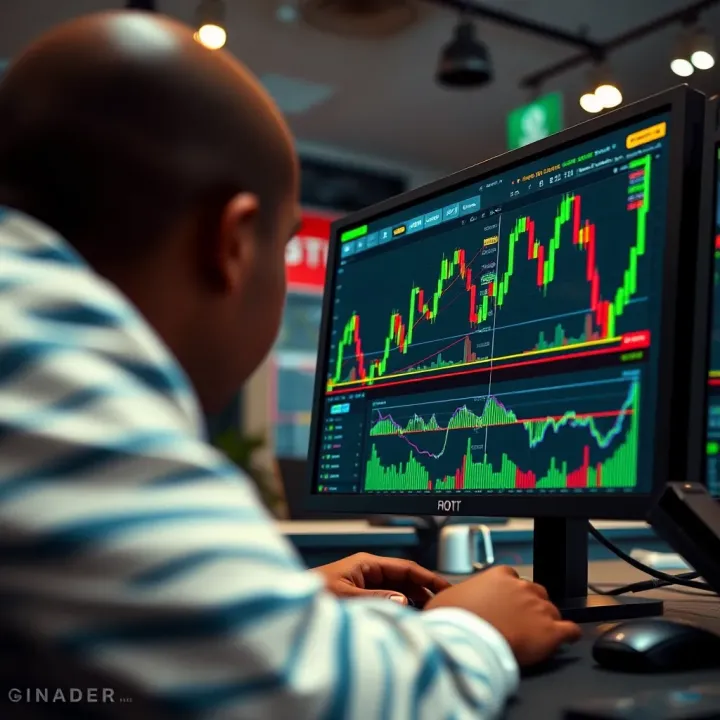
Forex trading bots have become popular tools among Nigerian traders aiming to automate their forex operations. Simply put, these are software programs designed to buy and sell currencies on your behalf based on set rules and algorithms. Instead of manually watching charts and placing trades, a bot can execute deals 24/7 without fatigue or emotional bias.
In Nigeria’s forex market, where volatility and fast price swings are common, bot forex trading offers a way to keep up with market movements efficiently. Many local traders use bots to manage positions on popular currency pairs like USD/NGN or GBP/USD. It helps them stick to strategies even when distractions or internet interruptions occur.
There are different types of forex bots Nigerian traders often encounter:
Trend-following bots: These detect general price direction and trade accordingly, ideally capturing gains during sustained moves.
Arbitrage bots: These find small price differences across different brokers or platforms, profiting from quick trades.
Scalping bots: Focused on very short-term trades, they target small profits from frequent market fluctuations.
While bots bring clear advantages such as speed, emotion-free trading, and reduced monitoring time, they also have drawbacks. For example, poor strategy coding can lead to repeated losses, and bots can struggle in unpredictable markets with sudden news or economic shifts.
Nigerian forex traders should carefully evaluate bot options, understand their strategies, and test thoroughly before live deployment. Blind reliance on bots without insight can worsen losses rather than prevent them.
Understanding how bots work and their specific risks helps you make smart choices whether you want to automate part of your trading or simply add tech support to your workflow. The following sections will cover detailed workings, pros and cons, types suited for Nigerian markets and safest practices that will guide Nigerian traders in navigating bot forex trading.
Understanding how forex trading bots work is essential for Nigerian traders who want to automate their trading activities effectively. These bots operate by following set algorithms, analysing market data as it updates, and making decisions without human intervention. This ability not only saves time but can help reduce human errors in trading — especially when fast market moves demand quick reactions.
Programming rules that guide trading decisions form the backbone of any forex bot. These rules are essentially if-then instructions coded to reflect specific strategies. For example, a bot might be programmed to buy the EUR/USD pair if its 50-day moving average crosses above the 200-day moving average, indicating an upward trend. These rules ensure the bot trades systematically, sticking strictly to pre-set criteria without emotions like fear or greed interfering.
Handling this part well is key because it determines when and how the bot enters or exits trades. In practical terms, a Nigerian trader who codes rules carefully can tailor the bot to suit local market conditions and their specific risk appetite.
Real-time market data processing allows forex bots to react to price changes and news as they happen. Unlike manual trading, bots can instantly evaluate fluctuating data, such as currency pair prices, volumes, and economic announcements. For example, if the bot is tuned to spot rapid naira depreciation against the dollar, it can quickly initiate trades to capitalise or protect investments.
Without this dynamic processing, bots would fall behind live markets, making delayed or irrelevant trading decisions. Nigerian traders benefit from this especially because local market hours and global forex activities overlap frequently, increasing trading opportunities round the clock.
Automatic entry and exit of positions means bots do not wait for human instruction to act. Once the programmed conditions are met, the bot places buy or sell orders straightaway. This rapid action can seize short-lived trading chances that may disappear in seconds.
For instance, during volatile periods influenced by factors like CBN policy announcements or geopolitical shifts in the West African region, bots can execute trades that human traders might miss due to slower reaction times or limited screen time.
Expert Advisors (EAs) on MetaTrader platforms are among the most popular tools for automated forex trading in Nigeria. EAs are custom scripts running on platforms like MetaTrader 4 or 5, designed to automate trades based on programmed algorithms. Their accessibility and ease of use make them a favourite among local retail traders who may lack advanced coding skills but want to deploy automation.
The simple interface of MetaTrader allows traders to test different EAs via demo accounts before going live, offering a low-risk way to explore bot trading.
Integration with APIs for direct market access lets more advanced traders connect their bots straight to brokerage systems or liquidity providers. This setup reduces latency, meaning trades execute faster without the middle layer of a trading platform interface. Nigerian traders who deal with major brokers that support APIs enjoy more control and quicker order execution, essential in fast-moving markets.
APIs also enable bots to pull detailed market statistics and place complex orders, supporting more sophisticated trading strategies.
Use of machine learning and indicators is an emerging trend in bot trading. Bots equipped with machine learning can adjust strategies by recognising new patterns in market data, improving future decision-making. For example, a bot might learn to predict naira exchange rate swings in response to oil price changes, updating its parameters accordingly.
Meanwhile, technical indicators such as RSI, Bollinger Bands, or MACD remain integral to forex bots, signalling moments to enter or exit trades. Nigerian traders keen on refining their bots can combine traditional indicators with machine learning to create smarter, more adaptive systems.
Automated forex trading brings speed and discipline to the table, but its success depends on understanding the underlying mechanics and choosing technologies suited to your trading style and environment.
Using trading bots in forex comes with several practical benefits, especially for Nigerian traders dealing with volatile markets and fluctuating naira exchange rates. By automating trades, these bots ensure a level of consistency and efficiency that manual trading rarely achieves. They can run complex strategies without fatigue, follow preset rules strictly, and adapt quickly based on programmed parameters, making them valuable tools for traders looking to stay competitive.

One major advantage of forex trading bots is their consistent application of trading strategies. Unlike human traders, bots don’t get tired or distracted. Once programmed, they follow the strategy exactly as intended, avoiding deviations that usually happen when emotions take over. For example, a trader who usually second-guesses their decisions during high volatility periods might find it difficult to stick rigidly to their plan. A bot, however, will keep executing trades as per the coded rules, maintaining discipline.
Emotions like fear and greed often lead traders to exit positions prematurely or hold losing trades too long, hurting overall profit margins. In the Nigerian market, where news about economic changes or forex policy updates can cause sudden jitters, impulsive reactions are common. Trading bots take these feelings out of the equation, removing the temptation to act when panic sets in. The result is more rational trading that can help preserve capital and avoid rash mistakes.
Forex markets operate non-stop across different time zones. Traders sitting in Lagos or Abuja may miss profitable opportunities during hours they’re asleep or off-duty. Bots solve this by monitoring price movements 24/7. They can enter or exit positions automatically whenever conditions meet their criteria, even when you’re away from your phone. This constant vigilance allows traders to catch fleeting market movements that might otherwise go unnoticed.
Since Nigeria is in the West Africa Time (WAT) zone, local traders often find some key forex sessions like the Pacific or Asian markets active during odd hours. Bots ensure you don’t have to stay up through the night to benefit from these periods. For instance, while you rest, your bot can trade the Japanese yen or Australian dollar pairs, maximising chances for profit without disrupting your daily routine.
Before risking real naira, traders can test their bot strategies using historical market data. This backtesting helps evaluate how a strategy would have performed over past market conditions, highlighting strengths and weaknesses. For example, a bot designed to trade the USD/NGN pair can be tested on data from previous months to see if it would have yielded profits during volatile periods linked to fuel subsidy changes or political events.
Backtesting results also provide a basis for refining the bot’s settings. Traders can adjust thresholds, stop-loss levels, or take-profit points to better fit the market environment. This optimisation ensures the strategy adapts to the nuances of the forex market rather than sticking rigidly to a one-size-fits-all approach. Continuous tweaking based on real results improves the bot’s performance and reduces potential losses, a necessity given Nigeria’s exchange rate volatility.
Automating forex trading with bots gives Nigerian traders a practical edge — from cutting out emotional bias to staying alert while they rest, bots bring a smart, disciplined approach essential for successful trading in our dynamic market.
Automated forex trading promises convenience, but it comes with challenges Nigerians must consider carefully. The local infrastructure and market conditions can seriously affect bot performance and returns, so understanding these risks helps traders avoid costly pitfalls.
One major issue is Nigeria’s unstable power supply, which can disrupt bot operations. Bots need constant power and device uptime to execute trades as programmed. Frequent blackouts force many to rely on generators, adding to costs and sometimes causing sudden interruptions during critical market moves.
Poor internet connectivity further complicates this. Forex bots depend on real-time market data and timely order execution. In Nigeria, slow or dropped connections can delay trade entry or exit, leading to slippage and losses. For instance, a bot trying to scalp tiny profits might miss its target due to connection lags, turning small gains into bigger losses.
Some traders overfit bots to historical market data, tweaking settings until past results look great. While it may seem promising, this over-optimisation means the bot tailors itself too tightly to past price behaviour, ignoring future market unpredictability.
As a result, such bots often struggle in live trading. When market conditions change suddenly—as they tend to do during geopolitical events or sudden naira volatility—the bot's rigid strategies fail. This reduced effectiveness wastes time and capital, especially if no limits or monitoring are in place.
The growing interest in forex bots has attracted fraudsters offering fake bots promising sky-high returns with minimal risk. Nigerian traders are targeted by slick adverts promising ₦500,000 monthly returns from a ₦50,000 investment, often without transparent logic or verifiable performance.
Due diligence becomes a must before purchase. Verify the bot provider’s reputation on platforms like Nairametrics or through trader forums. Check if the vendor offers trial periods or demo accounts. Transparent source codes and results backed by trading data reduce risks. Without proper checks, falling for scams can mean losing your trading capital altogether.
Automated trading can be a powerful tool, but in Nigeria, traders must navigate unstable infrastructure, market unpredictability, and fraud risks carefully to make it work effectively.
Keeping these challenges in mind helps Nigerian forex traders build realistic expectations and adopt mitigation strategies—like choosing reliable internet providers, testing bots on demo accounts, and avoiding dubious offers—to succeed with bot trading.
Forex trading bots automate decisions in a way that suits different trading styles. Nigerian traders often prefer specific types depending on market conditions and their risk appetite. Understanding which bot aligns with your trading approach can save time and reduce losses.
Trend following bots scan the market for established price movements, aiming to enter trades when a trend is confirmed. These bots rely on technical indicators such as moving averages or the Average Directional Index (ADX) to decide when to buy or sell. For instance, if the naira is weakening steadily against the dollar due to economic shifts, a trend bot would signal entry to ride the downward movement.
These bots fit well with currency pairs involving the naira because the naira often shows volatile swings driven by factors like policy changes or oil revenue fluctuations. A trend bot helps capture gains by sticking with the bigger market direction rather than reacting to every small fluctuation.
Scalping bots work by making numerous quick trades to take advantage of minor price changes. They aim for small profits repeatedly, which can add up over the day. For example, when trading USD/NGN during periods of relative stability, a scalping bot can exploit tiny differences caused by supply and demand.
However, scalping bots face challenges in Nigeria due to inconsistent internet connections and occasional power fluctuations. Delays of even a couple of seconds can cause missed trade opportunities or losses because scalping depends on speed and precision. Traders must consider the reliability of their internet and power sources before relying heavily on scalping bots.
Grid bots place multiple buy and sell orders at set price intervals to profit from market swings. They don't predict market direction but benefit from repeated price fluctuations within a range. For example, a trader might use a grid bot on the EUR/USD pair during choppy markets to capture profits as the price moves up and down.
Arbitrage bots spot price differences between platforms or markets and execute nearly simultaneous trades to lock in risk-free profits. Though rarer in the forex space, some Nigerian traders use these bots when discrepancies appear between local and international brokers.
The risks with grid and arbitrage bots relate mainly to sudden market shifts. If the market breaks its usual pattern—say, due to a political event or unexpected policy announcement—the bots may accumulate losses that outweigh their small gains. This is particularly relevant for currency pairs involving the naira, given its sensitivity to domestic news.
Nigerian traders should evaluate their internet stability and market understanding before committing to any bot. Each type offers benefits but demands specific conditions to work well.
Understand your trading style and risk tolerance.
Test bots in demo accounts first.
Monitor bot activity closely to avoid surprises.
Picking the right bot can be the difference between steady gains and avoidable losses, especially in Nigeria’s unique trading environment.
Nigerian forex traders face unique challenges that make understanding how to use trading bots effectively essential. From unstable power supply to varying internet quality, knowing the right steps when starting with bots can save time, money, and frustration. These key tips help you navigate the automation world safely and improve your chances of success.
Practising without risking real funds is crucial before going live with real money. Demo accounts mimic live market conditions but use virtual cash, allowing you to understand how a bot behaves without financial risk. For instance, if you are testing a trend-following bot, you can watch how it reacts to volatile pairs like USD/NGN or EUR/USD without fear of losing ₦50,000 upfront.
Evaluating bot performance realistically means avoiding blind trust in profit claims from sellers. The demo phase lets you assess the bot’s strengths and weaknesses under different market situations. Some bots might shine during trending markets but falter during sideways price action. Nigerians often fall for overhyped sales pitches; using a demo account helps avoid that trap by giving you real data on how your chosen bot performs.
Platforms supporting automated trading in Nigeria must be carefully chosen. Not all brokers allow bot integration or offer the necessary APIs. Look for brokers registered with the Securities and Exchange Commission (SEC) Nigeria and those with smooth MetaTrader 4 or 5 support since many bots run on these platforms. Examples include FXTM, HotForex, and local brokers with automated trading features.
Ensuring regulatory compliance and fund security protects your investment. Use brokers with clear licensing, transparent fee structures, and good reviews. The last thing you want is to lose your funds to unregulated operators promising impossible returns. Brokers compliant with Nigerian regulations also have stronger dispute resolution processes, giving you better recourse if issues arise.
Defining stop-loss and take-profit points is how you tell the bot when to exit trades to protect gains or limit losses. A bot set without these guards can quickly drain your account, especially in pairs affected by sudden naira fluctuations. Make sure your bot’s code or settings allow you to set these limits clearly.
Regularly monitoring bot activities remains vital even with automation. Bots can malfunction or encounter unexpected market conditions requiring intervention. Check your trades daily or at least every few hours to ensure the bot acts as expected. This habit reduces risks such as overtrading or executing numerous losing trades unnoticed.
Automation in forex trading does not mean handing over your account completely. Staying involved and informed makes forex bots a helpful tool rather than a gamble.
💱 Understand forex trading: how the global currency market works, key players, methods, risks & rewards for Nigerian traders. Make smarter moves with forex insights today!
📈 Learn how to master pips in forex trading Nigeria! Understand pip values, calculate profits in ₦, and boost your trading strategy for better returns in Nigeria's market.
Trading forex in Nigeria? Discover how top forex companies operate, their regulation, tips to spot reliable firms, and ways to avoid common risks 🏦💱
📈 Master forex trading quotes with our guide for Nigerian traders. Learn how to read quotes, understand market moves, and make smarter ₦ trades with confidence.
Based on 12 reviews