
Understanding Forex Trading for Nigerian Traders
💱 Understand forex trading: how the global currency market works, key players, methods, risks & rewards for Nigerian traders. Make smarter moves with forex insights today!
Edited By
Isabella Wright
Forex trading thrives on reading and understanding currency quotes accurately. For Nigerian traders, these quotes serve as windows into the global currency market, showing how much it costs to exchange one currency for another. Without knowing how to interpret these quotes, making smart buying or selling decisions becomes guesswork.
At its core, a forex quote presents two currency codes paired together—for example, USD/NGN represents the US dollar against the Nigerian naira. The number that follows shows how much of the counter currency (NGN here) you need to buy one unit of the base currency (USD). If the quote reads 460.50, it means ₦460.50 to buy one US dollar.
Understanding this structure is vital because every trade relies on such quotes to assess value and timing.
Base Currency: The first currency in the pair, which you buy or sell.
Quote Currency: The currency you use to pay or receive funds.
Bid Price: The price buyers are willing to pay to purchase the base currency.
Ask Price: The price sellers are willing to accept to sell the base currency.
Spread: The difference between bid and ask prices, representing transaction cost.
For instance, if USD/NGN has a bid of 460.20 and ask of 460.80, the spread is ₦0.60. Nigerian traders should pay attention here; wider spreads mean higher costs, especially in times of market volatility or low liquidity.
Many Nigerian traders deal with currency pairs involving the naira, but it’s just as crucial to understand major currency pairs like EUR/USD or GBP/USD since global economic factors affect their value and, indirectly, naira’s strength.
Traders must also watch for factors influencing forex quotes, including Central Bank of Nigeria (CBN) policies, international trade trends, oil prices, and geopolitical matters. These elements shift demand and supply, causing quotes to fluctuate rapidly.
By learning to read forex quotes clearly and recognising what drives their movement, Nigerian traders stand a better chance to time their buys and sells profitably, avoiding costly mistakes caused by ignorance or sudden market turns.
Forex trading quotes are the foundation of currency trading. Simply put, these quotes show the value of one currency compared to another at a given time. For Nigerian traders, understanding these quotes helps determine how much ₦ (Nigerian Naira) it costs to buy or sell a foreign currency like the US dollar (USD) or the euro (EUR). Without grasping forex quotes, you risk making poor trading decisions or misinterpreting market moves.
A forex quote always involves two currencies, called a currency pair. The first currency in the pair is the base currency, while the second is the quote currency. For example, in the pair USD/NGN, the USD is the base and NGN the quote currency. The quote tells you how many naira it takes to buy one US dollar. Traders focus on pairs because currencies are never traded alone; they're exchanged against other currencies. This setup allows Nigerian traders to see the relative strength or weakness of their naira compared to major currencies like USD, EUR, or GBP.
Forex quotes come with two prices: the bid and the ask. The bid price is what buyers are willing to pay for the base currency, while the ask price is what sellers want in return. Using USD/NGN again, if the bid is ₦770 and the ask is ₦775, it means buyers will pay ₦770 for one dollar, but sellers want ₦775. The difference between these two, known as the spread, represents a trader's cost and the broker's profit margin. For Nigerian traders, knowing the bid and ask helps decide the best moment to enter or exit the market.
Traders rely on forex quotes every second to make choices. A rising quote in USD/NGN means your naira is weak, so buying dollars might cost more naira. Conversely, a falling quote shows naira strengthening. These changes often influence whether traders buy or sell a currency. For example, if the Central Bank of Nigeria (CBN) announces a policy affecting naira supply, traders watch quotes closely to adjust positions before prices shift significantly.
Beyond simple buying and selling, forex quotes serve as indicators of broader economic conditions. Sharp movements in quotes can signal economic instability, political tensions, or major news. Nigerian traders can use quote trends to anticipate shifts in inflation, interest rates, or foreign investment flows. For instance, a sudden drop in the NGN/USD rate might hint at foreign capital flight or worsening trade imbalances. Observing these indicators helps traders manage risks and forecast market behaviour more effectively.
Mastering forex quotes lets Nigerian traders read the pulse of currency markets, making it easier to spot opportunities or avoid costly mistakes early on.
Understanding forex quotes is not just for experts. It equips you with a practical tool to navigate trading, especially in a volatile environment like Nigeria’s financial market, where currency values respond quickly to local and global events.
Understanding how to read forex trading quotes is essential for anyone serious about trading currencies in Nigeria. Forex quotes tell you exactly how much of one currency you need to buy one unit of another. This knowledge is pivotal when deciding whether to buy or sell a currency pair and anticipating how much profit or loss you might make.
Forex quotes can seem tricky at first, but once you comprehend their structure and what each number means, you gain a powerful tool. For Nigerian traders, who often deal with currency fluctuations affected by both global forces and local factors like CBN policies, reading quotes accurately means smarter trades and better risk management.
In any forex quote, you'll see two currencies separated by a slash, like USD/NGN or EUR/USD. The first currency listed is the base currency, and it represents one unit of that currency. The second is the quote currency, showing you how much of that currency you’ll need to buy one unit of the base.
For example, if the USD/NGN quote says 460.50, it means one US dollar (base) costs 460.50 Nigerian naira (quote). In practice, if you want to buy one US dollar, you must pay ₦460.50. Knowing which currency is base and which is quote helps you understand the actual trading price and evaluate market movements effectively.
Forex quotes generally follow the format of "Base currency / Quote currency" followed by a price. Taking EUR/USD 1.1500 as an example, it tells you that one euro costs $1.15. The decimal figure shows the current exchange rate between the two currencies.
This format is straightforward but crucial. If the EUR/USD moves from 1.1500 to 1.1600, the euro has increased in value relative to the US dollar. For a Nigerian trader watching GBP/USD or USD/NGN, similar shifts can mean opportunities or losses, depending on your trading position.
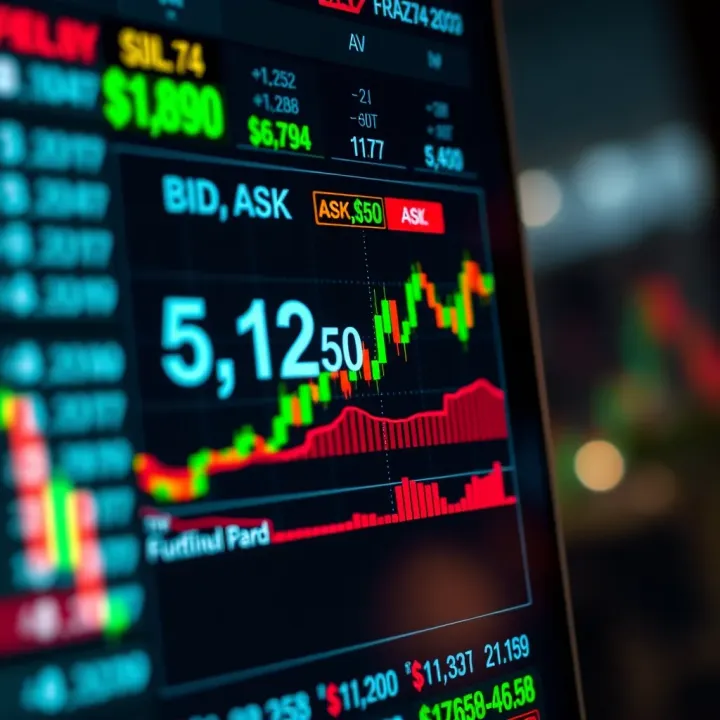
The bid price is the highest price a buyer is willing to pay for the base currency. If you want to sell a currency pair, you’ll do so at the bid price. For instance, if the USD/NGN bid price is 460.40, that's the rate buyers offer for selling US dollars.
This is key for Nigerian traders since selling at the right moment and price determines your returns. Knowing the bid lets you understand demand in the market and when to lock in profits or cut losses.
The ask price (sometimes called the offer price) is the lowest price a seller will accept for the base currency. If you’re buying USD/NGN, the ask price tells you how much naira you must pay per dollar. For example, an ask price of 460.60 means you pay ₦460.60 for each US dollar.
Understanding the ask price ensures you don’t overpay when entering a position. It also shows you actual market supply and the cost of acquiring the currency you want.
The spread is the difference between the bid and ask prices. If the bid for USD/NGN is 460.40 and the ask is 460.60, the spread is 0.20 naira.
For Nigerian traders, spreads add to trading costs — the narrower the spread, the less you pay to enter and exit trades. During volatile times, like just after a CBN announcement or geopolitical event, spreads may widen, increasing costs. Being aware of the spread means you can plan trades better, especially when trading with smaller accounts where every kobo counts.
Traders who grasp bid, ask, and spread can minimise unnecessary costs and make more informed decisions in the Nigerian forex market.
Mastering how to read and interpret forex trading quotes gives Nigerian traders an edge in navigating both local and international currency markets. It grounds decisions in real numbers and sharp market insights, crucial in a landscape shaped by naira volatility and global pressures.
Understanding what influences forex quotes in Nigeria is essential for traders to make informed decisions. Forex prices do not move randomly — they respond to a mix of global and local forces. Grasping these factors helps Nigerian traders anticipate market changes and manage risk better.
Central banks around the world, especially the US Federal Reserve and the European Central Bank, shape forex quotes significantly. When the Fed raises interest rates, for example, it usually strengthens the US dollar against other currencies, including the naira. Nigerian traders should watch these decisions closely because they can affect the relative value of the naira in the forex market.
For instance, a tightening monetary policy in the US often leads to capital flight from emerging markets like Nigeria, putting depreciation pressure on the naira. This impacts forex quotes such as USD/NGN and EUR/NGN, making timely reactions vital to protect investments.
Geopolitical events like wars, sanctions, or trade conflicts also impact forex quotes globally. When tensions rise in oil-producing regions, crude prices swing, affecting Nigeria’s oil-dependent economy and, by extension, the naira’s value.
Consider tensions in the Middle East that disrupt oil supply. Such moments often cause the naira to weaken due to anticipated lower foreign exchange inflows from oil exports. Nigerian traders reacting quickly to these geopolitical cues can avoid unnecessary losses or capitalise on price swings.
The Central Bank of Nigeria (CBN) directly affects forex quotes through its monetary policy decisions, especially the monetary policy rate (MPR). When the CBN raises the MPR, it’s an attempt to curb inflation and stabilise the naira. This often leads to a tighter forex market and reduced volatility in currency pairs involving the naira.
For example, if inflation rises aggressively, the CBN may hike rates to defend the naira. Such moves typically make holding naira assets more attractive, which can strengthen the currency’s position and influence related forex quotes.
Forex trading in Nigeria operates under strict regulatory oversight by the CBN. Policies like the restriction of access to forex for certain imports or the management of the interbank market affect liquidity and price discovery. These regulations can cause sudden shifts in forex quotes that traders must anticipate.
In 2023, new rules limiting access to forex for some non-essential imports affected the naira's stability. Traders who understand these controls can better forecast price trends and avoid trading during highly regulated periods that may cause spreads to widen or quotes to jump unexpectedly.
What Nigerian traders must realise is that both global events and local policies continually shape forex quotes. Staying updated on these factors is crucial to trading smarter in the volatile Nigerian forex market.
Understanding common forex quote terms is essential for Nigerian traders who want to navigate currency markets effectively. These terms like pips, pipettes, and lot sizes help traders measure price movements and position themselves properly to manage risks and profit potential. Let's break down these terms and see how they impact daily trading decisions.
A pip is the smallest price change that a currency pair’s quote can make, typically representing 0.0001 for most major pairs like EUR/USD. For example, if the EUR/USD moves from 1.1500 to 1.1505, it has moved 5 pips. Some brokers break this down further into pipettes, which are one-tenth of a pip (0.00001). This finer measurement helps traders be more precise, especially when scalping or trading small price changes.
Pips and pipettes allow traders to quantify market moves so they can set targets and stops properly. Without knowing how much a pip change is worth, it’s difficult to calculate potential gains or risks.
In practical terms, the value of a pip translates to real money depending on your lot size and the currency pair. For example, trading one standard lot (100,000 units) in EUR/USD, 1 pip usually equals $10. That means a 10-pip movement can result in ₦4,000 to ₦5,000 gain or loss at current exchange rates, which shows why understanding pips is crucial in gauging market shifts clearly.
Lot size refers to the volume of currency units you buy or sell. There are three main types: standard lots (100,000 units), mini lots (10,000 units), and micro lots (1,000 units). For new traders in Nigeria, micro or mini lots provide a less risky way to trade since exposure to gains or losses is smaller. This makes it easier to test strategies without risking too much of your capital.
Lot size directly affects how much changes in forex quotes impact your trading account. Larger lots magnify profit or loss from each pip move; smaller lots reduce them. For instance, moving 5 pips on a standard lot impacts your capital much more than the same movement on a micro lot.
Always align lot size with your risk tolerance and capital. Choosing the right lot size is a practical way to manage your forex trading risks effectively.
Understanding forex quotes is one thing, but using that knowledge practically can make all the difference for Nigerian traders. Forex trading isn’t just about spotting prices but also about making smart choices based on reliable information and strategic risk management. This section offers focused tips Nigerian traders can apply right away to navigate the forex market more confidently and efficiently.
Many Nigerian traders rely on platforms like GT247, Chaka, and easyMarkets because they provide access to local and global forex markets. These platforms are popular due to their user-friendly interfaces and compliance with Nigerian regulations. Choosing a well-established broker with good reviews ensures you get accurate forex quotes without delay or manipulation. For instance, platforms integrated with local payment options such as bank transfers using BVN verification make the whole process smoother.
Access to real-time forex data is critical because prices can change by the second. Delayed quotes mean you might end up buying or selling at a worse rate. Many Nigerian traders have faced loss simply because their data provider was slow or unreliable. To avoid this, use forex platforms that offer streaming quotes updated every millisecond or second. Always test the latency before committing funds; sometimes high lag indicates poor infrastructure or server location too far from Nigeria.
A stop-loss order helps you cap losses when the market moves against you unexpectedly. Given the volatility of forex, this tool is a lifesaver. For example, if you buy USD/NGN at ₦480 and want to limit your losses to ₦5, you set a stop-loss at ₦475. If the price dips below ₦475, the platform automatically sells your position, protecting your capital. From experience, Nigerian traders who neglect stop-losses often find themselves chasing losses, which rarely ends well.
Spreads—the difference between bid and ask prices—can widen sharply during political unrest, policy changes by the Central Bank of Nigeria, or global economic shocks. Wider spreads mean higher trading costs. Nigerian traders should watch out for this, especially during local elections or sudden naira devaluations. Monitoring spread movement helps you avoid entering trades when costs spike, preserving your potential profit margin.
Paying close attention to your platform’s quotes and market dynamics can transform your trading experience from guesswork into informed action.
Each tip here encourages Nigerian traders to approach forex trading with caution and discipline, turning knowledge into practical gains.
💱 Understand forex trading: how the global currency market works, key players, methods, risks & rewards for Nigerian traders. Make smarter moves with forex insights today!
📈 Discover how forex trading signals can guide Nigerian traders to make smarter currency moves, manage risks effectively, and boost profits in Nigeria's market.
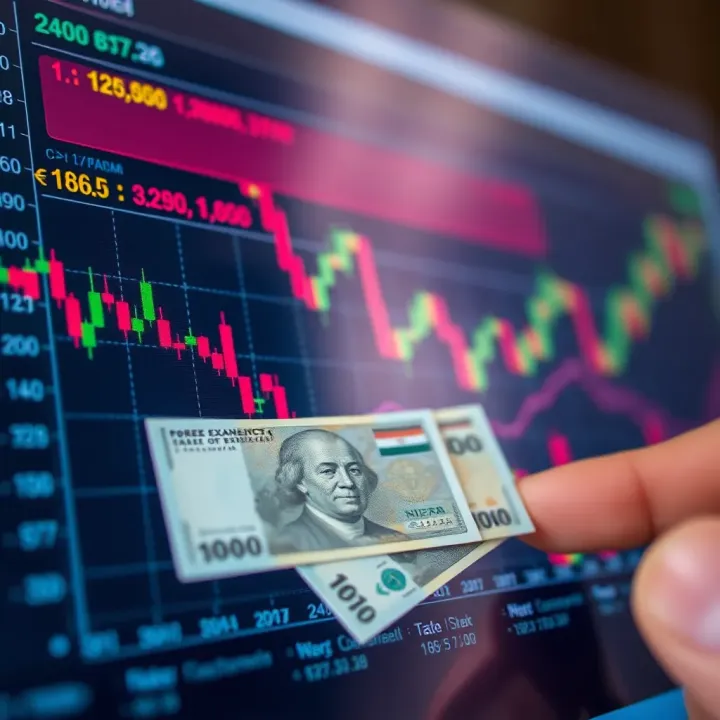
Explore how forex trading companies in Nigeria operate, their regulations, top firms to watch, risks involved, and tips to pick a reliable forex investment partner. 💹🇳🇬
📈 Understand pips in forex trading, how to calculate their value in ₦, and make smarter trading moves. Perfect guide for Nigerian traders looking to profit well!
Based on 12 reviews