
Risk Management Process Explained for Nigerian Businesses
Learn how to spot, assess, and handle risks effectively 📊. This guide helps Nigerian businesses and individuals build solid risk plans to protect their interests wisely.
Edited By
Daniel Hughes
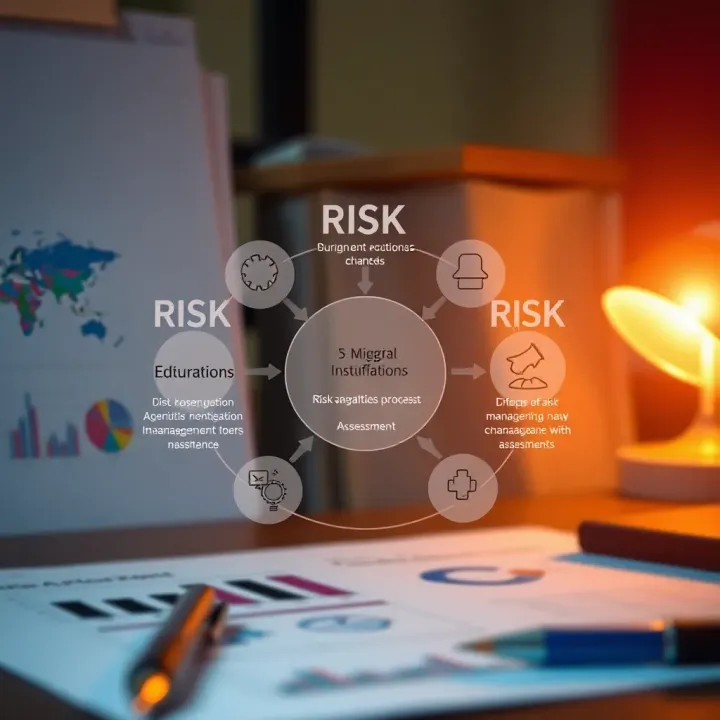
Risk management is an integral part of both business and personal financial planning. It is the process of identifying potential threats, evaluating their impact, and putting controls in place to reduce or eliminate risks. Without a clear understanding of this process, investors, traders, brokers, and analysts may expose themselves to avoidable losses or missed opportunities.
The starting point in risk management is risk identification. This involves spotting possible challenges that could disrupt operations or affect investments. For example, a trader may identify currency fluctuations or sudden regulatory changes as risks to their portfolio. Similarly, a manufacturing company might consider supply chain interruptions or equipment failure as threats.

After risks are recognised, the next step is risk assessment. Here, you analyse how likely each risk is to occur and the potential damage it might cause. This assessment can be qualitative—like rating risks as high, medium, or low impact—or quantitative, such as estimating financial loss figures. An analyst assessing stock market investments may use historical price data and volatility indexes to gauge risk levels.
Once risks are assessed, the focus shifts to risk control—implementing strategies to manage or mitigate risks. Options include avoiding certain actions, transferring risk through insurance, reducing exposure via diversification, or accepting the risk when the cost of control exceeds the potential loss. For example, a broker might diversify clients’ portfolios across sectors to spread market risk.
Ongoing monitoring and review is crucial because risk profiles often change with new data or market conditions. Traders should review their positions regularly, while investors might adjust strategies in response to economic shifts or policy updates. This dynamic approach ensures controls remain effective and adjustments are timely.
Effective risk management is not about avoiding risk altogether but about making informed decisions that balance potential losses with expected gains.
In Nigeria's complex economic environment—marked by naira fluctuations, power supply challenges, and changing regulatory landscapes—mastering these steps is particularly vital. Using the right tools, such as risk matrices, scenario analysis, and digital risk platforms, helps organisations stay ahead and protect their investments.
Understanding this core process equips you to face uncertainties with confidence and safeguard your financial and business interests against unexpected shocks.
Risk management serves as the backbone for sound decision-making in business and investments. Grasping its basics means appreciating how to spot threats, judge their potential effect, and figure out what to do next. Traders, investors, and brokers all face daily uncertainties — from market volatility to regulatory shifts — that can derail ambitious plans if not managed smartly.
Risk means any chance of loss or harm. It could be financial, operational, or reputational. For example, consider a trader who invests heavily in a particular stock without checking its volatility. If the stock plunges, their portfolio suffers a huge hit. That potential loss is the risk. Its impact goes beyond just money — it can shake confidence or drain resources needed elsewhere.
Different types of risk call for different awareness. Market risk, such as sudden exchange rate swings affecting forex traders, directly impacts returns. Operational risk, like a software glitch disrupting broker activities, may cause delays or errors. Understanding these nuances helps you pinpoint which risks matter most for your specific role or business.
Risk management is not about avoiding every risk — that would paralyse action and kill opportunity. Instead, it helps control or limit risks in a way that aligns with your goals and limits damage. In practice, this could mean diversifying your investment to avoid putting all your money into one sector. Or it might mean purchasing insurance to cover losses from unforeseen disasters.
Beyond protecting assets, effective risk management promotes confidence among investors, partners, and clients. For instance, a fintech startup in Lagos with solid risk controls is more likely to secure funding than one without. Also, regulatory bodies expect companies to demonstrate how risks are managed to uphold compliance and transparency.
Good risk management turns uncertainty from a threat into a guide. It allows you to navigate challenges while positioning yourself for success, rather than being caught unprepared.
In essence, mastering the basics equips you to spot risks early, understand their potential fallout, and apply fitting responses. This foundation supports every stage of the risk process, increasing your chance of reaching objectives with fewer surprises.
Identifying risks is a crucial early step in managing uncertainty for businesses and individuals alike. Without a clear view of what could go wrong, efforts to protect assets or investments remain half-baked at best. This process shines a light on potential threats before they escalate, allowing stakeholders to address issues early, reduce surprises, and plan effectively. Traders, investors, and brokers who take time to spot risks tend to navigate volatile markets with more confidence and fewer losses.
Risks can come from many directions, making their sources often diverse and mixed. For example, in business, risks may arise from market fluctuations, supply chain disruptions, or regulatory changes. A Nigerian agribusiness might face drought, pests, or new tariffs affecting exports. On the personal front, risks include health emergencies, job loss, or unexpected expenses like car repairs or a visit to the hospital.
Economic factors like inflation and currency volatility also weigh heavily on businesses and investors. For instance, the sharp naira devaluation can suddenly increase the cost of imported equipment, impacting profit margins. Additionally, technology failures, such as losing access to online trading platforms during market hours, represent operational risks worth identifying beforehand.
Systematic approaches help uncover risks you might overlook in daily operations. One widely used method is brainstorming with diverse teams, which draws out different perspectives on what might go wrong. For example, a bank’s risk team might hold sessions with IT, compliance, and finance units to map out possible vulnerabilities.
Another effective technique is the SWOT analysis—examining strengths, weaknesses, opportunities, and threats—to reveal external and internal risk areas. In practice, a small business can use SWOT to evaluate supplier reliability, customer payment behaviours, or competitor moves.

You can also review historical data to spot patterns, such as past market crashes or project delays. External reports from institutions like the Central Bank of Nigeria or economic forecasts provide additional clues about emerging risks.
Being thorough during the identification phase builds a strong foundation for later stages. The better you know the risks upfront, the sharper your response will be.
In short, identifying risks is not a one-off task but a continuous habit. Whether it’s watching news headlines, checking industry reports, or listening to customer feedback, staying alert to changing conditions helps you keep risk exposure under control. For Nigerian traders and investors especially, paying close attention to risks related to local market quirks, infrastructure challenges, and regulatory shifts can make a big difference to success and survival.
Assessing and evaluating risks is where you move from spotting potential threats to understanding their real effect on your business or investments. This step is critical because it helps you separate the serious risks from the minor ones and decide where to focus your limited resources. For example, a trader might face the risk of sudden market volatility due to political changes in Nigeria or global commodity price shifts. Without assessing how likely these risks are and what damage they could cause, it's hard to prepare adequately.
Estimating the likelihood and impact of a risk involves two main questions: How probable is this risk occurring? And if it does, how severe would the consequences be? These assessments should be as objective as possible, based on data and past trends rather than guesswork. For instance, an investor may look at historical stock price movements during election years in Nigeria to estimate volatility likelihood. The impact measure could be financial loss in naira terms or disruption to business operations.
A risk that is very likely but with low impact might require a different approach than a rare risk that could cause a huge financial hit. Also, consider the ripple effects; say, power outages affecting a manufacturing company could delay production and hurt supply chains. Using simple scales (such as low, medium, high) or numerical scores helps communicate these estimates clearly across teams.
Understanding both the chance and effect of a risk lets you plan smarter and avoid wasting effort on unlikely minor issues.
Once you have a clear picture of risks’ likelihood and impact, you rank them to decide which deserve immediate attention. Prioritisation focuses your risk management efforts where they matter most, preventing overwhelm and boosting efficiency. For example, a broker dealing with currency trading might prioritise risks from Nigeria’s foreign exchange restrictions over less urgent concerns like supplier delays.
Effective prioritisation often combines qualitative insights from experts with quantitative methods like risk matrices or heat maps. These tools visually represent each risk’s urgency, helping decision-makers grasp the big picture fast. It's good practice to review priorities regularly, especially when external factors like regulatory changes or economic shocks shift the risk landscape.
In summary, assessing and evaluating risks ensure you know what could go wrong, how bad it might be, and which problems to fix first. This clarity translates to stronger control over your investments or business operations in an environment that’s always shifting.
Responding to risks is the stage where plans come alive to protect your business or investments from potential threats. After identifying and assessing risks, how you react determines whether those risks cause harm or become manageable challenges. Effective response minimises losses, protects resources, and sometimes even creates opportunities. For example, if a trader spots potential currency volatility, acting swiftly can prevent severe losses or help capture gains.
Avoidance involves steering clear of activities or decisions that could expose one to risk. It's the most straightforward method: if you don't do something risky, you remove the possibility of loss tied to it. A practical example is a broker refusing to deal in highly volatile stocks known for sudden crashes. While it might reduce profit chances, it protects them from severe financial hits. However, avoiding all risks can also limit growth, so it's mostly practical for threats with high impact but low opportunity.
Risk reduction means taking measures to lessen the likelihood or impact of a risk. This approach recognises that some risks cannot be eliminated entirely, so efforts focus on controlling them. For instance, an investor might diversify their portfolio across sectors like tech, agriculture, and oil to reduce the impact if one sector falters. On another hand, a business could install fire safety equipment to lower damage should a fire break out. This strategy requires ongoing monitoring and adjustments as conditions change.
Sharing or transferring risk means passing some or all of the consequences to another party, usually through insurance or contracts. For Nigerian businesses, buying insurance against fire, theft, or business interruption is a common example. A company might also outsource part of its operations, shifting related risks to specialized firms. While this protects the business, it comes at a cost—insurance premiums or service fees—so weighing this expense against potential losses is crucial.
Sometimes, the best choice is to accept the risk, especially when the cost of mitigation outweighs potential damage. Small risks with minor impact often fall here. For example, a small trader might accept occasional power outages instead of investing heavily in backup generators, balancing the inconvenience with the cost. Accepting risk doesn't mean ignoring it but rather preparing mentally and financially to handle possible outcomes without major disruptions.
Not all risks fit neatly into one response strategy. The choice depends on the risk's nature, likelihood, impact, and your organisation's capacity. High-impact risks with severe consequences often call for avoidance or transfer, while lower-impact risks might be suited for reduction or acceptance. Additionally, combining approaches works well; for example, a company could reduce risks through safety measures and transfer residual risks with insurance. Regularly revisiting and adjusting these strategies ensures they fit changing circumstances and business goals.
Proper risk response plans are not just about stopping bad outcomes but about making smart, balanced decisions that support continued growth and resilience.
Choosing the right risk response is a dynamic process—adjust with changing realities, and always align choices to your risk appetite and business objectives.
Monitoring and reviewing risk management ensures that your strategies remain effective, especially as market conditions and external factors shift. Without this constant watchfulness, risks can evolve unnoticed, exposing investments or businesses to unexpected losses. In Nigeria's dynamic economic environment, with fluctuating exchange rates and regulatory changes, keeping an eye on risks is more than a routine—it’s a necessity.
Tracking risks involves regularly observing how identified risks develop or new risks emerge. This means setting up checkpoints—monthly, quarterly, or according to the nature of investment or business activity—to compare expected risk levels against reality. For example, a trader dealing in the stock market should monitor geopolitical events or changes in CBN policies that affect market volatility. Similarly, an investor in real estate might track infrastructure developments or shifts in land use regulations in Lagos or Abuja.
Using risk registers or software tools helps record these changes systematically. These tools can flag when a risk level crosses a threshold, prompting timely review or action. Regular tracking helps avoid surprises, like a sudden spike in inflation that rapidly erodes returns, or a disruption in supply chains affecting a small business's ability to serve customers.
Risk management is not set-and-forget. New developments require revisiting and updating your plans. When fresh information comes in—like sudden legislation changes, emerging technologies, or shifts in consumer behaviour—you must adjust your strategies accordingly.
For instance, fintech companies in Nigeria often need to update their fraud detection approaches as scammers develop new methods. Similarly, investors must recalibrate portfolios after Nigeria’s budget announcements or during periods of exchange rate instability.
Updating risk plans involves assessing the impact of new data, consulting with experts or analysts, and revisiting your risk appetite. This process ensures decisions remain relevant and grounded in current realities. It also builds resilience, preparing you to respond quickly should risks materialise.
Effective risk management depends on continuous awareness and flexibility. Without ongoing monitoring and timely updates, even well-crafted plans can become obsolete, leaving you exposed.
Through diligent monitoring and adaptive review, traders, investors, and brokers can safeguard assets and improve outcomes while navigating Nigeria’s often unpredictable market terrain.
Managing risk without the right tools and practices can feel like driving through Lagos traffic without a map. You might eventually reach your destination, but it will be stressful and inefficient. Risk registers and specialised software help organise your risks clearly, while a risk-aware culture ensures everyone understands their role in spotting and handling these threats.
A risk register acts like a daily planner for risk management. It lists identified risks, their potential impact, likelihood, and current status. This living document helps traders, investors, and brokers keep track of emerging issues. For example, a securities broker might use a risk register to monitor market volatility risks and regulatory changes that could affect client portfolios.
Software tools such as Resolver, LogicManager, or even customised Excel templates provide automation benefits. They allow for real-time updates, risk scoring, and reporting. In Nigerian stock markets, where rapid shifts happen, these tools help analysts react quickly rather than struggle with manual tracking.
An effective risk register details:
Description of each risk
Impact level and probability
Responsible person or team
Mitigation measures
Review dates
Keeping this updated ensures that risks don't fall through the cracks, especially in fast-moving sectors like fintech or oil and gas.
Beyond tools, establishing a culture where everyone buys into risk management matters most. This means workers at all levels — from the MD down to the 'mama put' around the workplace — understand risks and their impact. When people are risk-aware, they spot hazards early and act without waiting for instructions.
Creating this culture involves regular training, open communication, and rewarding proactive behaviour. Companies like GTBank and Access Bank invest severally in risk culture by embedding risk discussions in daily meetings and performance reviews.
Encouraging employees to report incidents without fear of blame also improves transparency. Risk-aware cultures reduce surprises, allowing quick adjustments amid challenges such as naira fluctuations or power supply interruptions.
A strong risk-aware culture complements tools by making risk management a shared responsibility, rather than a task for a few.
In summary, using proper risk registers and software provides structure and clarity. Meanwhile, building a risk-aware culture ensures these structures are effective and responsive. Nigerian markets, with their unique uncertainties, benefit greatly from combining both approaches for solid risk control and sustainable growth.
Learn how to spot, assess, and handle risks effectively 📊. This guide helps Nigerian businesses and individuals build solid risk plans to protect their interests wisely.

📊 Learn how risk shapes business choices in Nigeria. Understand definitions, types, and evaluation to manage risks and protect your investment efficiently.

Protect your Nigerian business from currency swings, power shocks, and changing laws with clear risk management steps 🔍💼. Stay resilient and grow your assets.

📊 Understand risk management essentials in Nigeria: identifying threats, assessing dangers, and applying smart strategies to protect your business from losses and boost decisions.
Based on 6 reviews